
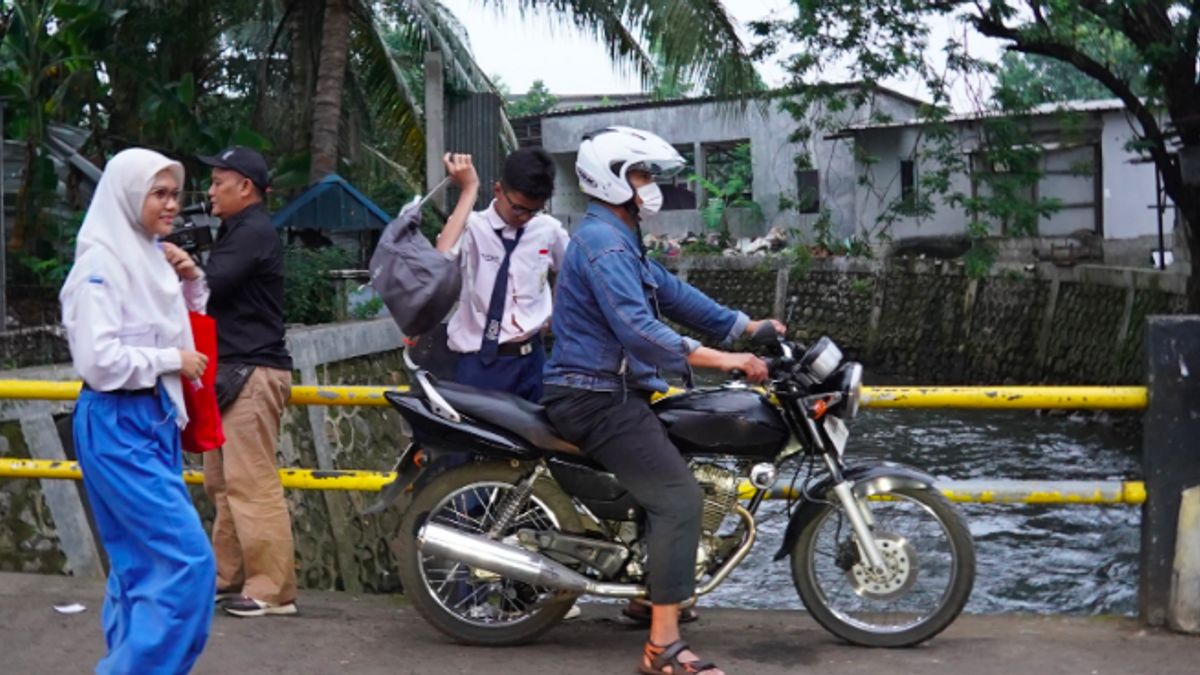


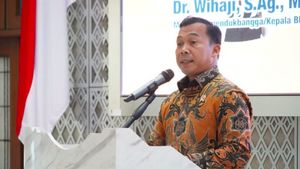
JAKARTA Starting a new spirit in children's character education, the Minister of Population and Family Development as well as the Head of BKKBN, Dr. Wihaji, S.Ag, M.Pd, attended SMAN 9 Jakarta on Monday morning, July 14, 2025 in order to review the implementation of the Father's Movement for Children on the First Day of School.
This movement was initiated to rebuild father's active involvement in the role of parenting that has been mostly borne by mothers.
This activity is part of the integral of the Indonesian Exemplary Father Movement (GATI) campaign, which is included in the Quick Wins program from the Ministry of Education and Culture/BKKBN. Through this activity, the ministry wants to instill awareness that the presence of a father figure is very important to shape a complete, resilient, and balanced child's personality.
In his remarks as a ceremony coach, Minister Wihaji emphasized that this movement was a symbol of shifting values in parenting in Indonesia. From what was originally centered on the role of mothers, now directed towards equal and collaborative parenting between father and mother.
The legal umbrella for this activity is a Circular Letter of the Minister of Population and Family Development/Head of BKKBN Number 7 of 2025, addressed to all ASN within the Ministry of Education and Culture/BKKBN.
However, the values raised are considered very relevant to be applied nationally as part of the comprehensive implementation of the GATI campaign.
When interacting directly with students, Minister Wihaji opened a discussion about the fatherless crisis, namely the condition of the lack of father role in children's lives, both physically and emotionally.
He revealed that high school age children often experience obstacles in communication with their parents, especially fathers, because they feel that they are mature enough or ashamed to establish closeness.
This problem is exacerbated by the presence of technology, especially smartphones, which are starting to take over the family position as a source of major interaction.
"Based on data, 20.9 percent of Indonesian children experience fatherless or lose their father," said Minister Wihaji, from the official statement of the Ministry of Education and Culture/BKKBN.
SEE ALSO:


He highlighted the results of a survey showing that children on average use gadgets for 8.5 hours per day. This very long time reduces opportunities for children to interact with their parents, so emotional relationships become tenuous.
"I rarely talk to my parents. When I came home, my parents hadn't come home. When my parents came home, I was already sleeping. In one week I talked in just 30 minutes," said one student.
Dalam dialog yang berlangsung antara Menteri dan para ayah siswa, disampaikan kekhawatiran terhadap kebernculan generasi muda yang disebut sebagai pidana generation, yaitu generasi yang tampak kuat dan menarik, tetapi mudah hancur saat menghadapi tekanan.
"Our children today seem to have lost their parents, there are but they don't seem to exist. This is because there is a cellphone that I call a new family," said Minister Wihaji.
"So, don't blame the child if they don't obey our words because of the fact that they interact with their cellphones longer," he continued.
According to him, excessive use of gadgets has replaced the role of parents in paying attention and emotional closeness.
The absence of a father figure has a direct impact on the formation of a child's character, and is one of the causes of the emergence of a less resilient generation facing the challenges of life.
This activity was also attended by the Deputy Head of the DKI Jakarta Education Office, Sarjoko, MM, who also emphasized the importance of cooperation between family and school. He explained seven daily habits that became the foundation of the character of Indonesian children who were great, namely getting up early, worshiping, sports, consuming healthy and nutritious food, learning regularly, interacting with the community, and sleeping on time.
Sarjoko highlighted that these habits can not only be formed in the school environment, but also in the house with the family. He regretted the current condition in which one family can sit together in the same room, but not interact with each other because each of them is busy with their devices.
"This is a part of our daily life, both activities in family and school which begin with morning waking activities, worship, exercise, nutritious healthy eating, places to study, community life, fast sleep," said Sarjoko.
Sarjoko also reminded that educating children is not only the responsibility of school. In other words, parents take on a role when their children are with their families.
"Let's play our part together, both at school and at home." said Sarjoko.
The English, Chinese, Japanese, Arabic, and French versions are automatically generated by the AI. So there may still be inaccuracies in translating, please always see Indonesian as our main language. (system supported by DigitalSiber.id)


