


YOGYAKARTA - Sneezing on cats may sound cute and adorable, but as an anabul owners, it's important for you to understand the cause in order to give the right attention. This is an explanation of the various causes of cat sneezing constantly.
The most common cause of sneezing cats is small particles such as dust, powder, or even cat hair itself that irritates the nose. When the nose is compromised with a small particle, the cat's body's natural reaction is to sneezing to clean the airways. If you sneezing only once in a while and the cat looks healthy, this is nothing to worry about.
Although allergies are not very common in cats, some anabuls can indeed experience allergies to home dust, mushrooms, or household perfume. Cats with allergies usually also experience other symptoms such as watery eyes, slow coughs, and itchy skin.
Infections such as flu paints are usually caused by viruses such as felinefusavirus or calicivirus. These infections are characterized by cats who often sneezing and repeat themselves. Symptoms are not only sneezing, but can be accompanied by clear breathers, watery eyes, kudisan, lack of appetite, and lethargic. Quoting WebMD, Wednesday, July 9, although many cases can improve in 1 3 weeks, some need a veterinarian if the cat's health condition worsens.
chronic inflammation of sinuses and noses is called chronic rhinitis. Inflammatory in the respiratory area, can cause repeated sneezing. In addition, the nose comes out thick yellow or green, snoring, and sometimes sneezing. Diagnosis for sinusitis and rinitis, usually requires further examinations such as riboscopy or laboratory tests.
The cat's upper teeth are very close to the nasal cavity. If infection occurs, germs can move to sinuses and trigger sneezing. Kuman can move mainly from cat food. So cat owners need to make sure their favorite anabul has teeth and clean food.
Cats can inhale small flakes such as grass, fur, or dirt trapped in the nasal cavity. As explained above, small particles entering the nose can cause sneezing. In addition, abnormal tumors or abnormal growth such as polyps can cause sneezing, sometimes accompanied by blood.
Although rare, fungal infections such as Cryptococcus can cause more severe sneezing andUNching. Handling requires specific tests and antijamur treatment.
SEE ALSO:
-
 | LIFESTYLE
7 Bahan Sofa Anti Cakar Kucing, Nggak Khawatir Lagi sama Tingkah Anabul
08 Februari 2025, 23:04 -
 | LIFESTYLE
6 Cara Merawat Kucing saat Musim Hujan, Biar Gak Cacingan dan Sakit-sakitan
14 November 2024, 13:47
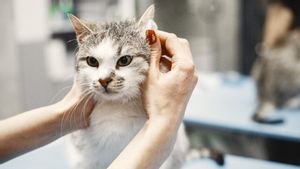
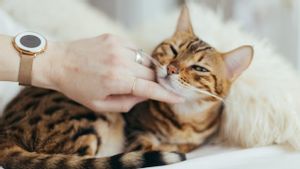
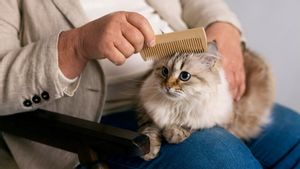
As a precaution for sneezing cats, it is important for you to do the simplest treatment at home. First, keep the home environment clean. Second, choose a low-dust liter to reduce the fine particle inhaled by the cat. Third, carry out complete vaccinations to prevent your favorite anabul from being exposed to the calicivirus and herpesvirus. Plus, it's important to do cat tooth care and monitor the diet and habits of everyday cats.
After knowing what causes the cat to sneezing, it is important to be aware of some conditions. When sneezing for several days or repeatedly, immediately bring your favorite anabul to check with the veterinarian. Especially when accompanied by other symptoms, such as nasal and runny eyes, fever, lethargy, decreased appetite, and the presence of blood in mucus or nose, and when the cat appears to have difficulty breathing.
The English, Chinese, Japanese, Arabic, and French versions are automatically generated by the AI. So there may still be inaccuracies in translating, please always see Indonesian as our main language. (system supported by DigitalSiber.id)


