
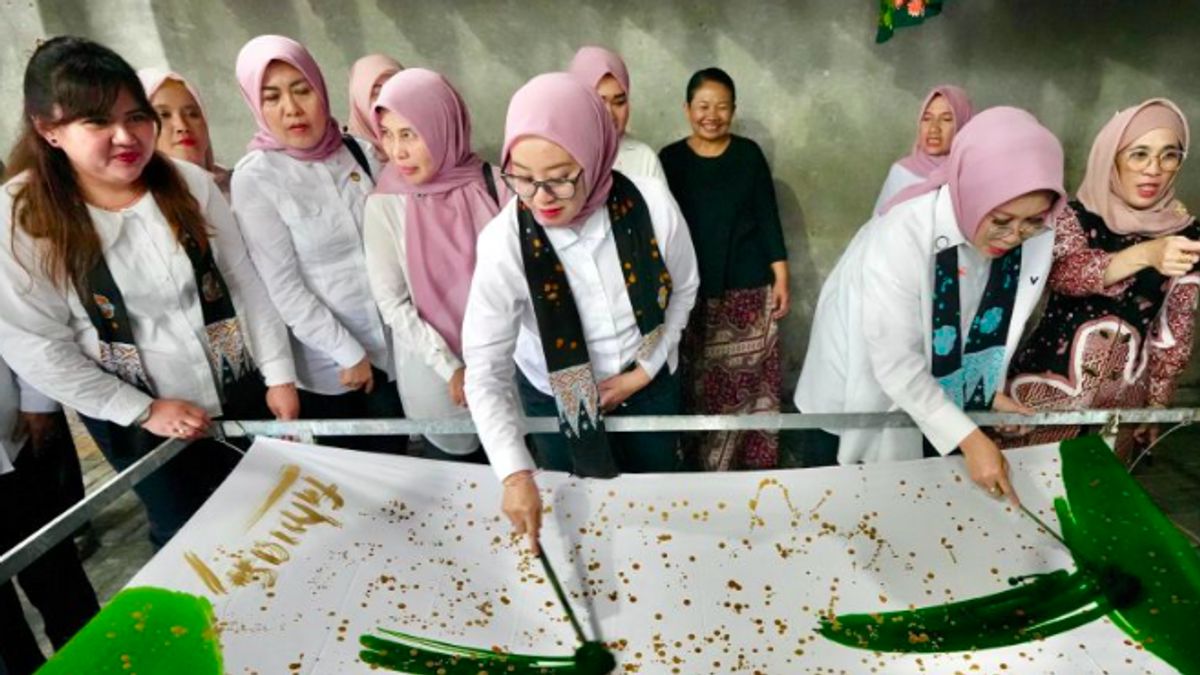


JAKARTA - Batik cloth is not just a cultural heritage, but also a window of hope for people with disabilities in Blitar, East Java. With the support of batik raw materials, craftsmen at Rumah Kinasih show physical or mental limitations that do not prevent them from working and being economically independent.
dyes, canting, mori fabrics, and other supporting equipment are important capital that not only raises enthusiasm, but also paves the way for the independence of life.
Quoting ANTARA, as many as 25 disabled craftsmen who are members of Rumah Kinasih received raw material assistance worth more than Rp37 million. This assistance was channeled through a social rehabilitation program by government agencies and handed over directly by representatives of women's organizations from the relevant ministries and social institutions.
The assistance is not only material support, but also a symbol of partiality to vulnerable groups that are often marginalized. With access to production tools, disabled batik craftsmen are encouraged to continue to be productive and improve their quality of life in a sustainable manner.
"This can be a tangible manifestation of the state's presence in supporting the survival and empowerment of people in need, including people with disabilities," said Advisor I of the Ministry of Social Affairs' DWP Fatma Saifullah Yusuf, as quoted by ANTARA.
The Kinasih house, which was established in 2017, functions as a training room as well as a place to live for people with disabilities from various regions such as Blitar, Jombang, Surabaya, to Kalimantan. The main focus is to batik batik techniques that allow free and spontaneous expressions, and can be accessed by anyone without physical restrictions.
Edi Cahyono, founder of Rumah Kinasih, said that more than 50 residents actively participated in routine training in the fields of batik, environmental cleanliness, worship, and self-development. Around 20 of them live full time because they do not have a family or return.
"More than 20 people live in Kinasih House because they do not have a caring family," he said.
In a day, each craftsman is able to produce five to six sheets of cibrat batik cloth. Even though their income is not fixed, many of them have achieved financial independence. Some are even able to save, buy private vehicles, and contribute to the needs of their families.
One example is Yuni, a person with denganese disabilities, who managed to buy a motorbike in cash and has personal savings. Meanwhile, Harianto, another craftsman, was able to help renovate his family's house thanks to the income from batik.
SEE ALSO:
-
 | LIFESTYLE
Tantangan Pengrajin untuk Menarik Minat Generasi Muda Mengenakan Batik
02 Oktober 2024, 20:25
According to Edi, this transformation is very meaningful, especially because many of the previous residents were considered a burden by their families. Now, they show they are able to become productive and valuable individuals.
Barcirate batik products from Rumah Kinasih include fabrics, clothing, wallets, and bags, and have been marketed to various regions. Edi emphasized that the public is expected to buy this product not only because of empathy, but because of the quality and uniqueness of the work.
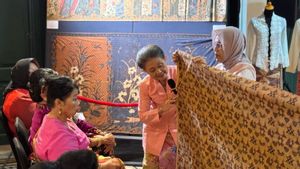
As a form of acknowledgment of the work of craftsmen, a policy has also been implemented within social institutions to wear cassava batik on certain days. This step is expected to encourage more people to know and appreciate the work of persons with disabilities.
During a field visit, administrators of women's organizations and social institutions also directly reviewed the batik manufacturing process. They give appreciation to the persistence of the craftsmen, including those with mental disabilities, who have succeeded in producing high-value works of art.
The English, Chinese, Japanese, Arabic, and French versions are automatically generated by the AI. So there may still be inaccuracies in translating, please always see Indonesian as our main language. (system supported by DigitalSiber.id)


