



JAKARTA - Daily SPFs are important steps in skin care routines. This helps prevent skin cancer and premature aging in all types and skin tones. However, those who have sensitive skin and are prone to acne often think twice before applying any product, including sunscreen to the face. The fear that sunscreen or sunscreen can cause or worsen acne can make them not use it as recommended.
Because dermatologists strongly recommend using (and re-implement) sunscreen every day, VOI reports the Byrdie page, Friday, asking for advice from board-certified dermatologist Elizabeth Hale, MD, and Dustin Portela, DO, FAAD, on how to choose sunscreen for prone skin acne.
"Like almost all cosmetic products, for some people, some types of sunscreen have the potential to cause acne," said Portela.
Hale also added that "[like] many other things, it depends on your own skin and its sensitivity."
Portela notes that sunscreens aimed at the body are more likely to cause acne on the face. Fortunately, many brands formulate sunscreens specifically for faces even, the two experts say some facial sunscreens contain ingredients that can fight and cure acne.
If you want to avoid the onset or aggravating acne with daily sunscreen, Hale and Portela have several recommendations. First, Portela recommends looking for facial sunscreen, not for the body, because this sunscreen is formulated differently.
"This sunscreen tends to have a lighter texture and also contains ingredients such as niacinamide which can help reduce the risk of acne," he explained.
Next, pay close attention to the list of ingredients. Not all sunscreens are made the same. Some formulas contain known acne-causing ingredients, while others can actually improve the appearance of acne. Second, Hale warns that the skin sensitivity of each person is different, but the following are ingredients that are generally recommended for those with prone skin acne:
Niacinamide: Portela calls niacinamide one of her personal favorites for prone skin acne.
"Niacinamide has various properties, including helping to treat acne, reducing oil production, overcoming unwanted color changes, and repairing texture," he said, adding that the material is now often found in sunscreen.
"Zinc oxide: Generally, most mineral-based sunscreens formulated with zinc oxide can help deal with acne," said Hale.
"Zinc oxide is not only anti-inflammatory, but also helps regulate sebum production in the skin," he explained.
Antioxidant: Portela recommends looking for a formula with antioxidant content, which can help reduce acne-causing inflammation.
Squalane or ceramide: Sunscreen contains squalane or ceramide boosting the moisture of healthy skin, which Portela says, can help reduce the risk of acne.
Fragrant-free: Hale warns against using sunscreen with additional fragrances for skin prone to acne.
In addition to looking for ingredients that can fight acne, experts suggest avoiding materials that are known to cause acne. Some of these ingredients are added to sunscreen to increase the sense of lotion in the skin, while others are a type of sunscreen. If you experience a reaction to certain sunscreens, pay attention to the ingredients in the formula and look for alternatives.
Heavy and occlusive formulas: Portela warns that sunscreens with severe occlusive content can worsen acne. These ingredients include coconut oil, cocoa butter, mineral oil, and bee wax.
Chemical SPF filters: Hale notifies that chemical SPF filters, such as avobenzone, can cause reactions to susceptible skin acne. Consider mineral-based sunscreen instead.
SEE ALSO:
-
 | LIFESTYLE
Cara Melakukan Reapply Sunscreen dengan Benar untuk Perlindungan Maksimal
14 Maret 2025, 14:55 -
 | LIFESTYLE
Cara Mencegah dan Mengatasi Dampak Buruk Sinar Matahari pada Kulit
14 November 2024, 13:25
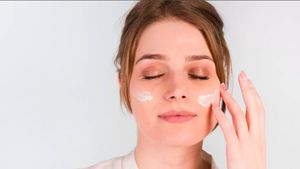

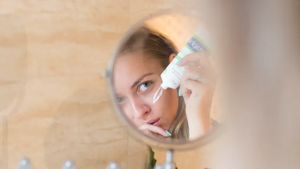
Additional fragrances: As mentioned earlier, Hale said additional fragrances increase the risk of irritation, potentially causing acne.
Therefore, for those of you with acne skin, it is very important to avoid acne-causing ingredients in the sunscreen and thanks to the innovation in the sunscreen formulation, it is not too difficult to do.
dermatologists Hale and Portela recommend using formulas with ingredients such as niacinamide and zinc oxide, which can help prevent and treat acne. The need for sunscreen persists even after acne subsides, as SPF can help prevent further color change and scar tissue.
The English, Chinese, Japanese, Arabic, and French versions are automatically generated by the AI. So there may still be inaccuracies in translating, please always see Indonesian as our main language. (system supported by DigitalSiber.id)
Most Popular Tags
#Prabowo Subianto #donald trump #2026 World Cup #Febrie Adriansyah #8791Popular


