

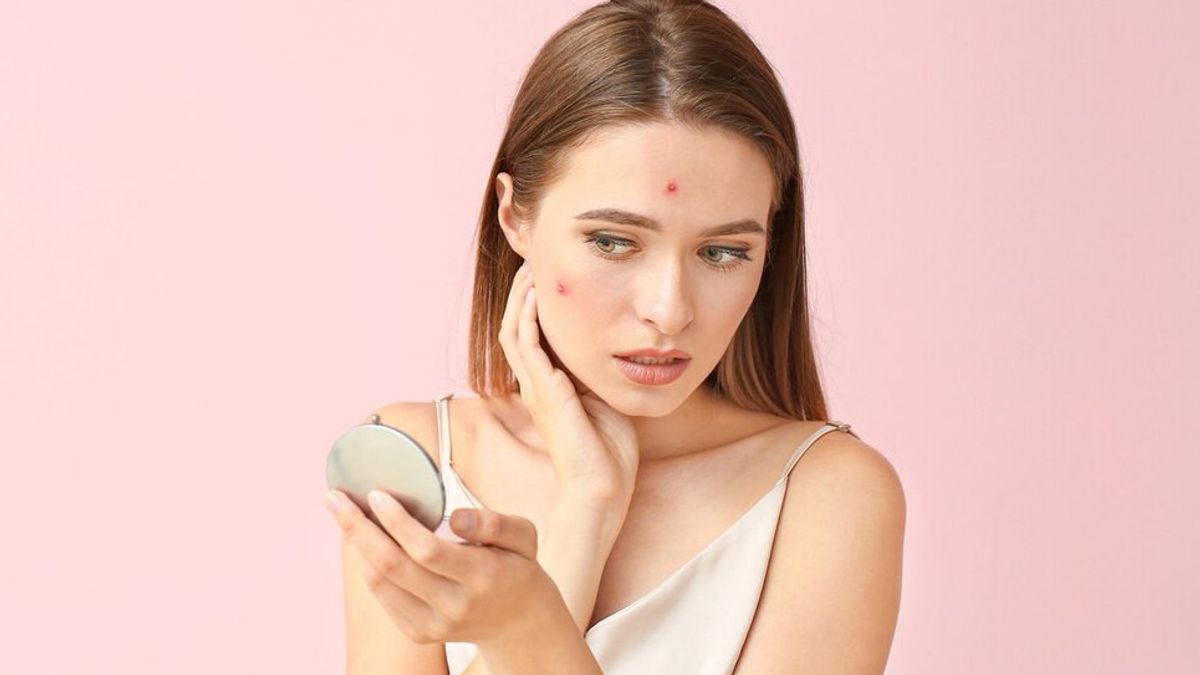


JAKARTA - Many people believe that what is consumed directly affects the condition of the skin, especially about acne. Not infrequently, certain foods immediately become scapegoats every time acne appears. In fact, not all assumptions about food and acne are true.
In fact, acne is a complex skin condition that can be influenced by various factors, ranging from hormones, stress, to lifestyles. Here are 5 myths of foods that cause acne that should not be immediately trusted, as reported by the Healthline page on Monday, May 12.
1. Chocolate
Chocolate is often considered the main enemy of clean skin. But is it true that eating chocolate makes acne? So far, research has not found strong evidence that chocolate causes acne.
Some minor studies do indicate possible relationships, but the results are inconsistent. More likely to be the cause of the sugar and milk content in chocolate, not chocolate itself.
If you feel your skin reacts after eating chocolate, you could be sensitive to additional ingredients. Try changing to lower black chocolate sugar as an alternative.
2. Oily Food
Good news for those of you who like to eat fried foods. Eating oily food does not cause acne. There is no scientific evidence to prove that oily foods directly cause acne.
However, a high diet of fried foods and low nutrients can trigger inflammation in the body, which in the end can affect skin conditions.
If you eat fried food by hand and then touch your face without washing your hands, the oil from the food can clog the pores. So it's not the wrong food, but the habit after eating that needs to be considered.
3. Milk products
Milk and processed products such as cheese and ice cream are often associated with acne. Indeed, there are several studies that show a relationship between milk consumption (especially skim milk) and acne, but the results are inconsistent.
There is no strong evidence that milk directly causes acne in everyone. If you feel acne worsens after drinking milk, you can try to avoid it for a while and see the effect.
4. Fat food
Fat is often seen as bad for health, including skin health. In fact, the body also needs fat, especially healthy fats such as omega-3 from fish, nuts, and avocado.
Instead of completely avoiding fat, it can actually help reduce inflammation that plays a role in the formation of acne. So it's not about fat, but the type of fat you eat.
5. Gluten
Gluten is a protein found in wheat. Gluten is often used as a scapegoat in various health problems, including acne. But in reality, there is no strong scientific evidence linking gluten consumption to acne, except for those of you who have celiac disease or gluten intolerance.
Avoiding gluten without medical reasons can actually cause stress and lack of nutrients, which can even worsen skin conditions. Inaccurate food restrictions can trigger stress and lack of nutrients that actually worsen acne.
The English, Chinese, Japanese, Arabic, and French versions are automatically generated by the AI. So there may still be inaccuracies in translating, please always see Indonesian as our main language. (system supported by DigitalSiber.id)
Most Popular Tags
#Prabowo Subianto #donald trump #firearm #8791 #giias 2026Popular


