

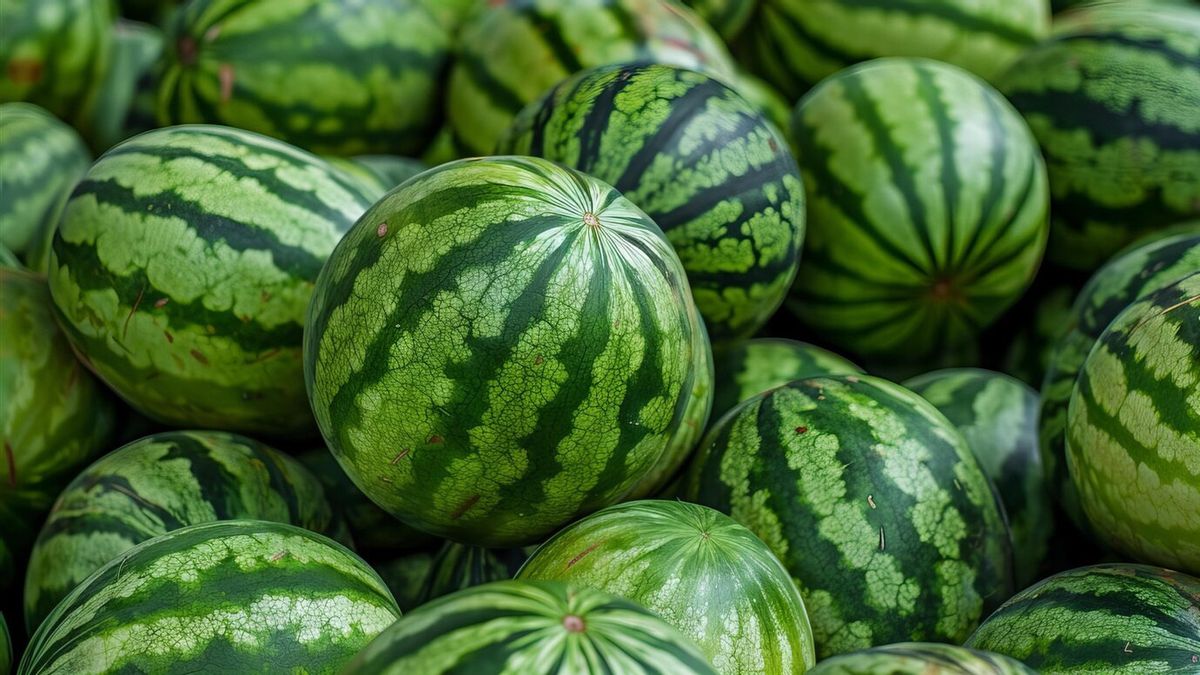


The gap without seeds is now increasingly popular among consumers, because it offers attractive opportunities for farmers to meet market demand. Interestingly, watermelon cultivation without seeds is easy for beginners to do.
This article will thoroughly explore the intricacies of non-grainy watermelon cultivation, ranging from the selection of superior seeds to appropriate care techniques to produce high quality harvests.
Reporting from the Digitani IPB page, here are how to cultivate watermelons without seeds:
The first step in cultivating seedsless watermelons is to prepare planting areas.
First, the soil needs to be processed first through the process of congestion or piracy to condense the soil structure and ensure good air circulation and water flow.
After the embedding, then make it with a size that is adjusted to the existing land conditions, and it is important to create drainage channels or irrigation in the vicinity. With this, it will later become a place to plant watermelon seeds.
After the planting area is ready, the next stage is the provision of basic fertilizers. The recommended type of fertilizer is organic fertilizer such as manure because it is rich in nutrients that support the initial growth of plants.
This fertilizer is distributed evenly on the bed and mixed with soil. After the maturation, the land is left for approximately 10 to 15 days so that the fertilizer can be absorbed properly by the soil.
During this period, routine watering is needed to maintain soil moisture.
After the fertilizer is absorbed and the soil is ready, it is covered using plastic mulsas which functions to maintain soil moisture and suppress the growth of disruptive plants (gulma). Mulsa was then perforated with a planting distance of about 50 to 60 cm.
Also read articles discussing Food and Drinks That Cannot Be Consumed Together Semang
Choosing seeds without seeds is very crucial. Make sure the seeds are obtained from trusted seed sellers.
Before planting, the seeds were soaked in warm water for approximately one hour to stimulate the sub-district. After the immersion, the seeds are sliced and the ends are slightly sandwiched so that the outer layer of the seeds opens.
Furthermore, the seeds are wrapped using paper or damp cloth to speed up the process of growing shoots. This stage aims to produce seeds that have uniformity in size and speed of growth.
After seeds without seeds that have shown the sub-district are ready to be moved to the planted area that has been prepared. The process of transferring seeds is carried out carefully so as not to damage the parts of the plant.
The trick is to place the seeds on the planted holes that have been made, then cover them with soil or other planting media. After planting is complete, do enough watering to maintain soil moisture around the seeds.
Treatment of seedsless watermelon plants includes watering activities, further fertilization, and pruning. Watering is done regularly, ideally twice a day or adjusted to soil humidity conditions.
In addition, the provision of aftershocks is also needed, with a time of about 10 days after the seeds are planted (HST).
Tips: use NPK fertilizer with a dose of 5 grams dissolved in 300 ml of water for each plant, and apply the fertilizer solution by pouring it on the plant's assembler area.
Then pruning is also important to optimize plant growth. Tunas and branches that appear in the first and second leaf sections should be removed so that plant nutrition can focus on fruit growth.
One of the obstacles in growing seedsless watermelons is the polynation process, because dariflowers without seeds are unable to perform their own fertilization.
Therefore, the presence of seeded watermelon plants around the planting area is necessary to assist the pollination process. Generally, about 10% of the total population of plants in the land must consist of grained watermelons.
The raids are carried out manually by taking sari powder from the flower of the grained watermelon plant and applying it to the head of the nutik (canon fruit) flower without seeds.
SEE ALSO:



Seedless seeds are generally ready to be harvested after about 70 to 80 days of age since planting, but depending on environmental factors and maintenance intensity.
The characteristics of ripe fruit are usually fruit skin that looks glossy, and when tapped it will produce a sound that tends to be heavy, signaling that the fruit meat is sweet and ready to be picked.
In addition to grainless watermelon cultivation, follow other interesting articles too. Want to know other interesting information? Don't miss it, keep an eye on the updated news from VOI and follow all its social media accounts!
The English, Chinese, Japanese, Arabic, and French versions are automatically generated by the AI. So there may still be inaccuracies in translating, please always see Indonesian as our main language. (system supported by DigitalSiber.id)


