
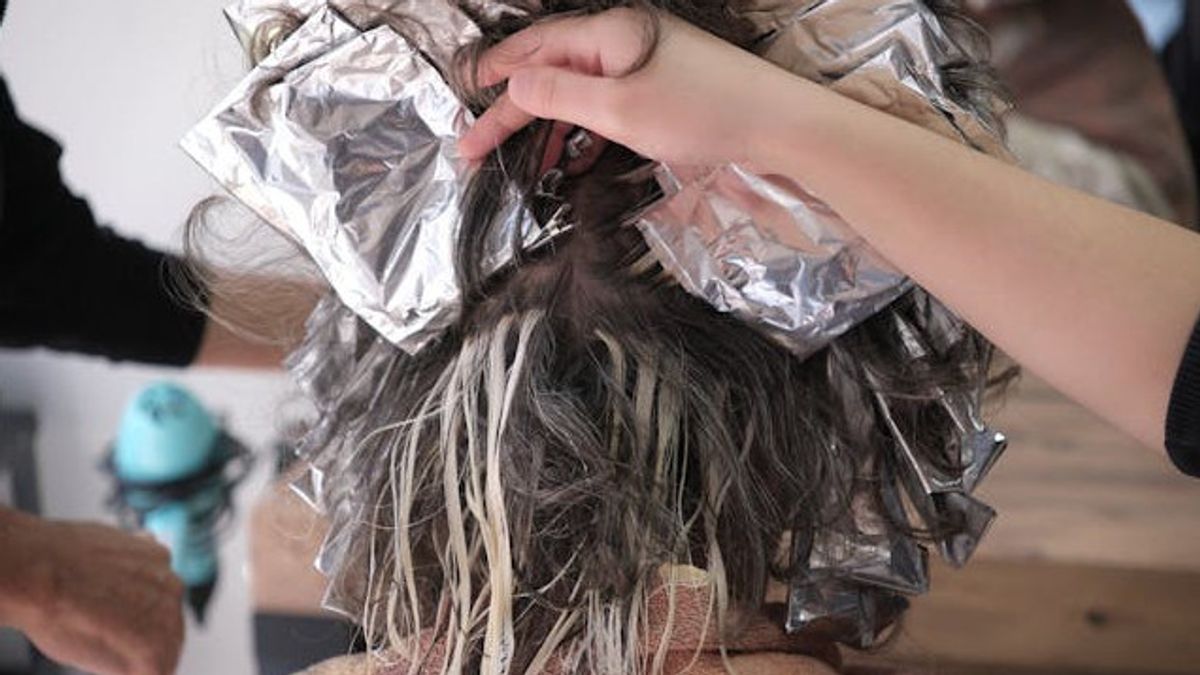


JAKARTA - Changing hair color can be a fun way to refresh your appearance and express your personality. However, often coloring hair has a risk that can affect the health of hair, condition of the scalp, and even overall health.
Although occasional hair coloring may not cause severe damage, excessive use of dyes can have long-term consequences. The following is an in-depth explanation of the harmful side effects of frequent hair coloring, reported by the VOI from the Times of India, Tuesday, March 18.
One of the direct effects of frequently coloring hair is hair damage. Hair coloring contains harsh chemicals such as ammonia and hydrogen peroxide, which removes natural oil from your hair. Over time, this weakens hair stems, makes them fragile, dry, and prone to fractures. Bleaching and hair coloring too often also damage the structure of hair proteins, causing hair to branch and fall out excessively.
Chemical hair coloring can cause irritation of the facial skin, redness, itching, and even severe allergic reactions in some people. Materials such as paraphenylenediamine (PPD), a common component in permanent dyes, can trigger contact dermatitis. If you frequently color hair and feel itching or continuous rash, it could be a sign that the scalp reacts negatively to these chemicals. In extreme cases, this allergic reaction can cause swelling and painful lepto as well as other problems.
Overuse of hair dyes can weaken hair roots and cause hair thinning over time. Hard chemicals used in coloring remove nutrients and essential oils from the scalp, causing hair structure to become weak. Too often exposed to ammonia-based dyes can interfere with the natural balance of the scalp, so hair is more prone to fall out. Over time, this can cause hair to fall out in significant amounts and decrease hair density.
If you often paint your hair, you will realize that hair no longer feels the same. If hair used to be soft and easy to regulate now can turn rough, tangled, and difficult to organize. The repeated use of hard hair dyes can change hair citcula permanently, making your hair strands dull, porous, lifeless, and difficult to regulate.
Several studies have raised concerns about potential relationships between the use of hair dyes and serious health conditions. Some hair dyes contain carcinogenic compounds attributed to increased cancer risk, particularly bladder and breast cancer. In addition, repeated exposure to these chemicals can cause hormonal imbalance and disrupt the body's endocrine system. While research is still ongoing, it is recommended to be aware of the long-term potential risks of the same thing.
SEE ALSO:
-
 | LIFESTYLE
Biar Enggak Salah Pilih, Begini Aturan Main Mewarnai Rambut Sesuai Tone Kulit
29 Agustus 2024, 10:48 -
 | LIFESTYLE
Tren Warna Rambut Tahun 2022 untuk Tampilan Cantik dan Percaya Diri
28 Januari 2022, 14:43 -
 | LIFESTYLE
Inspirasi Warna Rambut untuk Pemilik Kulit Sawo Matang, Kamu Suka yang Mana?
20 September 2022, 12:47

Rammed hair requires extra care and hydration to maintain his health. Unfortunately, exposure to hair dyes is too frequent sometimes causes excessive drought, makes hair look dull and lifeless. The natural moisture balance of hair is disturbed, and without proper conditionary care, the hair becomes easily tangled and looks dull.
If hair dye hits the eye or skin, it can cause serious irritation. Accidental spills can cause red eyes, swelling, and even burns due to chemicals in severe cases. Exposure to prolonged hair dyes on the skin can result in issues of pigmentation, rashes, or burns, so it is very important to handle these products very carefully.
The impact of hair dye is not only limited to personal health; but also affects the environment. Many chemical dyes contain harmful substances that contribute to water pollution when disposed of into sewers. Disposal of products containing these chemicals contributes to environmental degradation, thus affecting marine life and water quality.
The English, Chinese, Japanese, Arabic, and French versions are automatically generated by the AI. So there may still be inaccuracies in translating, please always see Indonesian as our main language. (system supported by DigitalSiber.id)


