
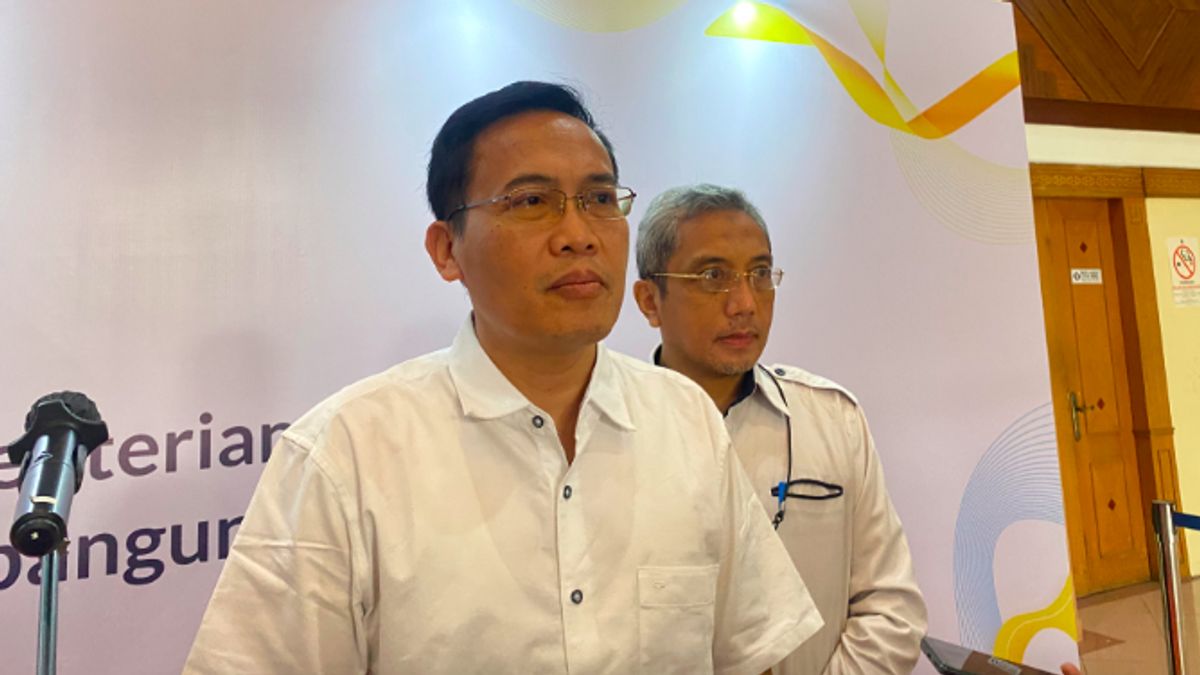


JAKARTA - The Ministry of Population and Family Development (Kemenduk bangga)/BKKBN revealed that as many as 61 million people of productive age in Indonesia still have to bear the burden of people who are at an unproductive age.
This statement is based on data from the Central Statistics Agency (BPS) which shows an imbalance in contribution in the tax and development sector.
Secretary of the Ministry of Education and Culture/BKKBN, Budi Setiyono, explained that out of a total of 190 million Indonesians who are at productive age, only about 61 million have Taxpayer Identification Numbers (NPWP).
'This is the context towards demographics in 2030. Currently, according to BPS data, around 190 million people are of productive age. However, if you look at the reality on the ground, only 61 million people have NPWP," said Budi, when met at the Ministry of Education and Culture's office, East Jakarta on Thursday, January 16, 2025.
Furthermore, Budi highlighted that of this amount, not all NPWP owners are actively paying taxes.
"Of the 61 million, it could be that many only have NPWP without actively contributing to tax payments. This is a big challenge for state revenue," he said.
This inequality is a serious problem in infrastructure development and public services.
"In the context of development, such as building schools or bridges, all residents of productive age should contribute. However, in reality only about 30-40% pay taxes, while they must bear the needs of other 60-70% of the population," explained Budi.
He also highlighted the lack of comprehensive population data as one of the main causes of this inequality.
SEE ALSO:
-
 | LIFESTYLE
Cara Menjadi Orang Sukses Menurut Alquran, Bisa Diamalkan Siapa Saja
21 Desember 2024, 08:54 -
 | LIFESTYLE
Mengenal Metode 3-3-3 Time Management, Atur Waktu Harian Jadi dengan Sederhana!
19 Desember 2024, 19:26 -
 | INFO SEHAT
Kenapa Pola Pikir Berkembang Penting? Kenali 10 Caranya Mengembangkan
16 Desember 2024, 19:47
"We do not have comprehensive data and policies based on careful planning. This causes a lack of alignment between work figures that appear every year and the availability of job vacancies," he added.
To overcome this challenge, Budi emphasized the need for better labor planning.
"Every year, there needs to be clear data regarding the number of new workforces and the availability of job opportunities. If there is a gap, the relevant ministries must immediately take steps to create more job vacancies," he said.
He also emphasized the importance of improving the population and family data system.
"We will improve population data, especially family data, so that it can be a reliable reference for other ministries in formulating policies." said Budi.
The English, Chinese, Japanese, Arabic, and French versions are automatically generated by the AI. So there may still be inaccuracies in translating, please always see Indonesian as our main language. (system supported by DigitalSiber.id)
Most Popular Tags
#Prabowo Subianto #donald trump #Febrie Adriansyah #8791 #giias 2026Popular


