

JAKARTA - Herbal is not just a healthy drink, but part of a way of life, namely concocted with patience, delicious to drink, and passed down through stories.
But time goes on. Generations change, lifestyles change, and the way people enjoy things also transform. In the midst of the fast-paced rhythm of the city, a question arises, does jamu still have a place?
The answer turns out to be not just still, but actually developing. In Pantai Indah Kapuk (PIK) 2, Jakarta, an area that is synonymous with an urban lifestyle, jamu presents a different face.
Not abandoning its traditional roots, but appearing through a closer approach to the current generation, namely a comfortable space, practical presentation, and a narrative that makes people understand what they are drinking.
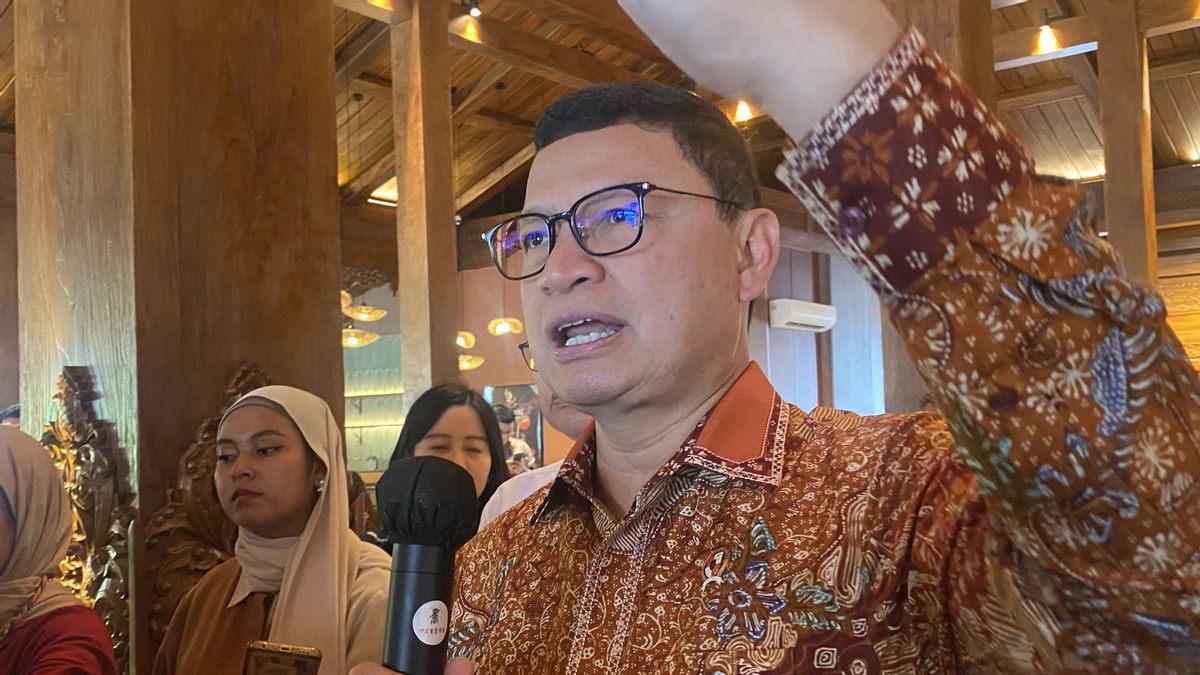
At this moment, the Head of the Food and Drug Supervisory Agency (BPOM), Taruna Ikrar, emphasized that herbal medicine is not only a legacy of the past, but also a future asset. This was revealed at the inauguration of the Acaraki PIK 2.
"Currently, there are almost 20 thousand distribution permits for herbal or herbal products that we have confirmed," said Taruna Ikrar, when met at Acaraki PIK 2, North Jakarta, Wednesday, February 4, 2026.
He added that herbal medicine should no longer be seen as something old-fashioned and synonymous with bitter taste only.
"This wealth that has been recognized by UNESCO has a very large economic value, around Rp. 350 trillion per year, plus the extraordinary cultural value. Herbal medicine is the icon of our country. If people talk about herbal medicine, people immediately remember Indonesia," said Taruna.
According to him, Indonesian herbal medicine has the opportunity to go global not only because of the quality of its natural ingredients, but also because of the taste and presentation which is now more practical.
"Now herbal medicine can be packaged in the form of sachets, easy to brew like tea or coffee in hotels. This shows that Indonesia can go global through herbal medicine, not only its quality, but also its taste," he said.
Taruna also highlighted the importance of the role of MSMEs. From the millions of drug and food business actors, about 1.7 million are engaged in traditional drinks and medicines.
"We have a responsibility to raise them. Herbal products consumed by the public must be safe, standardized, and the claims can be proven. BPOM is preparing rules so that small business actors can gradually rise in class," he explained.
"If we love our own herbal culture, the world will see and want to try. I am optimistic, this is a huge economic potential and has not been worked on optimally," he added.
The same spirit was also voiced by business actors who are now trying to bridge the tradition and modern lifestyle. This concept is carried by PT Acaraki Nusantara Persada (acaraki).
According to Jony Yuwono, Founder & Director of Acaraki, this new approach is not to change the identity of herbal medicine, but to expand the way people know it.
"Acaraki is present to expand the way people know and enjoy herbal medicine. It does not replace tradition, but brings it back to everyday life, especially the younger generation who live in the midst of modern culture," he said.
In their hands, herbal medicine is not only present in the form of a warm drink, but also more practical innovations such as herbal capsules. Even so, the message that is brought is still the same, namely modernization does not have to cut off the roots of culture.
This is where the role of the state and business actors meet. BPOM encourages innovation, but still emphasizes safety and quality standards. On the other hand, industry players are trying to translate the wealth of Indonesian natural ingredients into formats that are relevant to today's market.
Taruna Ikrar himself gave a simple personal example. He admitted that he routinely drank ginger jam every morning. For him, this small habit is a symbol that good traditions do not need to be abandoned, just adjust the language so that it is understood by the times.
"Supervision remains a priority. The circulation of illegal herbal medicine or those mixed with dangerous chemicals must be eradicated so that public confidence remains intact. Only with strong standards, Indonesian herbal medicine can be truly accepted in the global market," said Taruna.
The big idea about the future of herbal medicine is no longer just a discourse. It is beginning to be seen in new spaces that bring together tradition, science, and modern lifestyles, as presented in the concept of the Indonesian Jamu Cafe at PIK 2.
It is in places like these that herbal medicine finds its new chapter, still rooted in local wisdom, but confidently stepping onto the world stage.
The English, Chinese, Japanese, Arabic, and French versions are automatically generated by the AI. So there may still be inaccuracies in translating, please always see Indonesian as our main language. (system supported by DigitalSiber.id)
Most Popular Tags
#Prabowo Subianto #donald trump #firearm #8791 #giias 2026Popular