
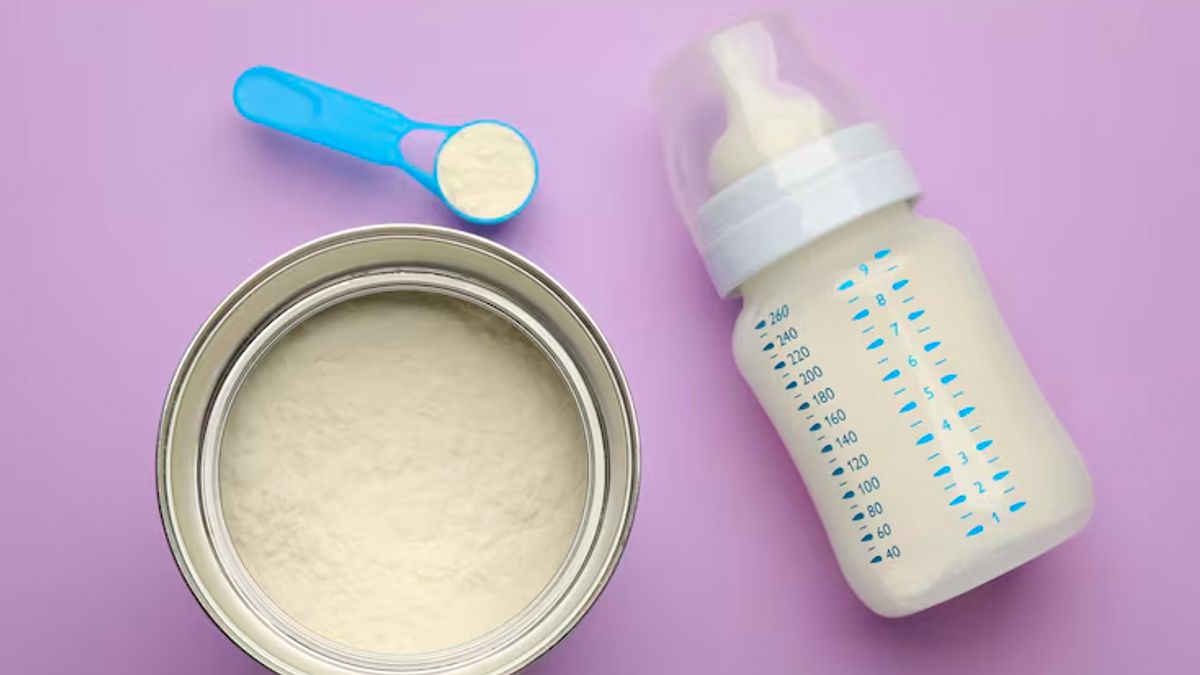


JAKARTA - The Indonesian Food and Drug Supervisory Agency (BPOM) has provided clarification regarding the recall of Nestlé's baby formula products that have occurred in 49 countries. This step was taken following a global food safety warning regarding the potential for harmful contamination in a number of baby formula products.
The recall includes several Nestlé baby formula brands such as SMA, BEBA, and NAN that are sold in various countries, especially in Europe, Turkey, and South America.
Based on a Reuters report, the recall process has been underway since last December after the possibility of contamination with cereulide toxin, a toxic compound produced by the bacterium Bacillus cereus and can cause serious health problems, such as nausea and severe vomiting.
In response to this, Nestlé emphasized that consumer safety, especially infants, is the company's main focus in dealing with this issue.
Nestlé also stated that to date there have been no reports of health cases directly related to the consumption of the recalled baby formula products. The company ensures that its baby formula products that are on sale in the United States are not included in the recall list.
BPOM RI explained that his party received a notification from the European Union Rapid Alert System for Food and Feed (EURASFF) and the International Food Safety Authorities Network (INFOSAN) regarding this global food safety warning.
In a public explanation numbered HM.01.1.01.26.04 dated January 14, 2026, BPOM explained that the withdrawal was carried out on Nestlé Suisse SA baby formula products, Konolfingen Factory, Switzerland.
BPOM revealed that the affected products were specifically S-26 Promil Gold pHPro 1 for infants aged 0-6 months, with the distribution permit number ML 562209063696 and the bets51530017C2 and 51540017A1 numbers. The product is suspected of potentially being contaminated with cereulide toxin in certain arachidonic acid (ARA) oil raw materials.
Based on the results of the import data search, BPOM stated that the two bets products had indeed entered Indonesia. However, laboratory test results showed that cereulide toxin was not detected in the samples tested.
"The results of testing samples from two affected product bets showed that cereulide toxin was not detected, with a limit of quantification (LoQ) of less than 0.20 µg/kg," BPOM explained in its statement, quoted from the BPOM official website.
Although the test results show no contamination, BPOM insists on prioritizing the principle of caution given that the product is consumed by vulnerable groups, namely infants. Therefore, BPOM has instructed PT Nestlé Indonesia to stop distribution and temporarily stop importing related products.
In line with the direction, PT Nestlé Indonesia has carried out a voluntary recall of all baby formula products with the affected bet numbers under the supervision of BPOM.
BPOM also ensures that until this explanation is published, there have been no reports of illness in Indonesia that have been confirmed in relation to the consumption of the baby formula product.
BPOM explained that cereulide toxin is heat-resistant and cannot be destroyed by boiling hot water or normal cooking processes. Symptoms due to exposure to this toxin generally appear within 30 minutes to 6 hours after consumption, in the form of severe vomiting, diarrhea, and unusual lethargy.
Therefore, BPOM appeals to the public who have S-26 Promil Gold pHPro 1 products with bet numbers 51530017C2 and 51540017A1 to immediately stop using them and return them to the place of purchase or contact PT Nestlé Indonesia's customer service.
BPOM emphasized that the public did not need to worry about other Nestlé products, including S-26 Promil Gold pHPro 1 products with bets numbers outside those mentioned. Pre-market and post-market supervision will continue to be tightened, and coordination with international food regulatory authorities will continue.
In conclusion, BPOM invites the public to always be smart consumers by applying the principles of Check KLIK, Packaging, Label, Distribution Permit, and Expiration Date before buying or consuming processed food products.
The English, Chinese, Japanese, Arabic, and French versions are automatically generated by the AI. So there may still be inaccuracies in translating, please always see Indonesian as our main language. (system supported by DigitalSiber.id)
Most Popular Tags
#Prabowo Subianto #donald trump #2026 World Cup #Febrie Adriansyah #8791Popular


