
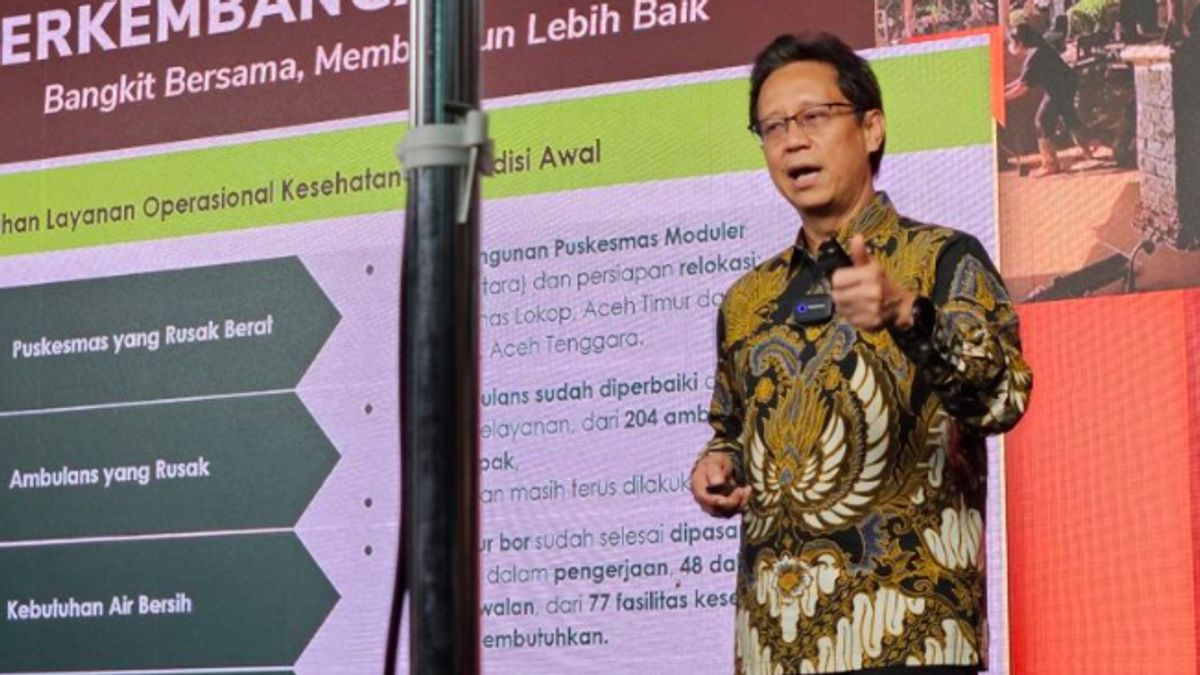


SUMATERA - The Ministry of Health (Kemenkes) has accelerated the implementation of measles immunization in a number of disaster-affected areas on the island of Sumatra since the beginning of this week. This step is being taken as an effort to prevent the transmission of infectious diseases, especially in children living in evacuation sites.
Health Minister Budi Gunadi Sadikin in Jakarta, Wednesday, January 7 explained that the results of health monitoring in the field showed that a number of diseases that were most experienced by refugees, including acute respiratory tract infections (ISPA), skin diseases, and diarrhea. To deal with these conditions, the Ministry of Health has distributed medicines according to the needs of the affected areas.
"The infectious disease that we monitor closely is measles. This disease has a very high transmission rate. Compared to COVID-19 in terms of reproduction rate, measles is one of the most easily transmitted," said Budi.
He added that the potential for measles transmission was identified in five districts. Following up on the findings, the Ministry of Health immediately carried out a special immunization program for children in the region since Monday (6/1). "This immunization program has been running in the areas that we have identified as having a risk or case of measles," he said.
In addition to measles, the Ministry of Health is also looking at the potential for other infectious diseases such as tuberculosis (TB) and leptospirosis to emerge in the refugee area. According to Budi, immunization is an important step to protect children from the risk of diseases that can be prevented by vaccines.
On the same occasion, the Minister of Health conveyed that around 4,000 volunteers had been deployed to various disaster-affected areas in Sumatra. The volunteers consisted of health workers who were tasked with handling not only physical health, but also the mental health of survivors.
Budi gave an example, a number of health workers and psychologists held activities to play with children in the refugee camp. "Every time we send, we include about 30 to 35 clinical psychologists. Their task is to accompany, tell stories, entertain, and help children to stay cheerful, because the impact of disasters is not always visible physically," he said.
The English, Chinese, Japanese, Arabic, and French versions are automatically generated by the AI. So there may still be inaccuracies in translating, please always see Indonesian as our main language. (system supported by DigitalSiber.id)
Most Popular Tags
#Prabowo Subianto #donald trump #Febrie Adriansyah #8791 #giias 2026Popular


