
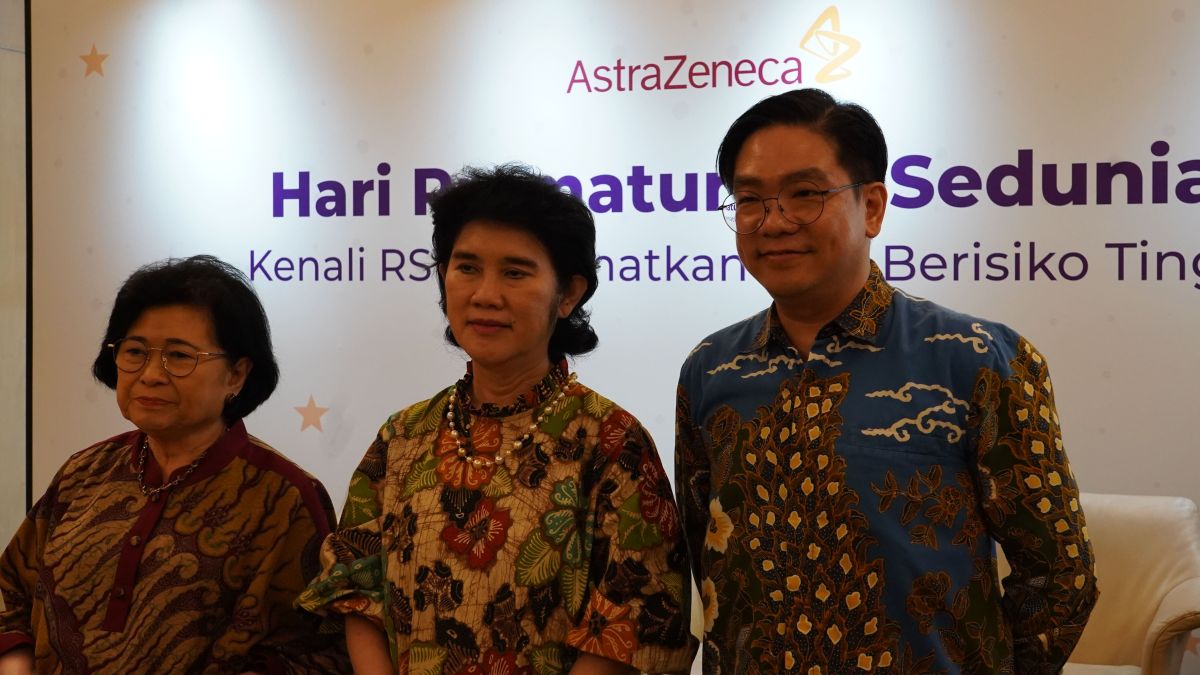


JAKARTA Every year, more than 675,000 premature babies are born in Indonesia, placing Indonesia in 5th place in the world with the highest number of premature births. This 37-week-old baby has an imperfect immune system.
In commemoration of World Premature Day and World Pneumonia Day, AstraZeneca Indonesia held an educational session entitled Kenali RSV, Save High Risky Babies'. This activity aims to increase public awareness of the dangers of the Respiratory Syncitial Virus (RSV), especially in premature babies who have an immune and lung system that is not yet perfect, and emphasizes the importance of early prevention to support their growth and long-term quality of life.
'Prematured babies have a higher risk because their lungs have not developed perfectly. In addition, premature babies also have not had time to receive optimal transfer of protective antibodies from their mothers during pregnancy, so that their immune system is still very weak and susceptible to various infections. Compared to babies for a month, they may have two to three times greater chance of being hospitalized due to RSV infection in the first year of their life. These infections often develop rapidly and can require longer and intensive care," said Prof. Dr. dr. Rinawati Rosantmo, Sp.A, Subsp. Neo., Neonatology Subspecaliist Child Specialist.
RSV is the main cause of lower respiratory tract infection with a contribution of about 60 80% to broncholitis and 30% pneumonia in infants and children in the world. Initial symptoms of RSV are often misinterpreted as common flu due to similar symptoms, such as colds, sneezing, and mild coughs. Whereas RSV infection can rapidly develop into severe respiratory problems and even leave a long-term impact including an increased risk of asthma, chronic wheezing (driving), as well as a decrease in lung function in the future To distinguish RSV from other respiratory diseases, it is important to recognize the differences in symptoms. Based on one study, it is estimated that 1 in 10 infants in Indonesia died from lower respiratory tract infections due to RSV.
According to the National Foundation for Infectious Diseases (NFIDs), common colds generally cause mild symptoms such as fatigue, muscle aches, and sore throats, but are rarely accompanied by fever. Flu (Influenza) comes suddenly with high fever, muscle aches, fatigue, and sore throat, but rarely causes shortness of breath. Meanwhile, COVID-19 has flu-like symptoms but is often accompanied by shortness of breath, severe fatigue, and sometimes loss of sense of smell or taste. In contrast to all three, RSVs often attack infants and small children with symptoms of cough, mild fever, heezing (driving), and difficulty breathing. In the early stages, RSV infections usually resemble common colds with colds (rhinorrhea), sneezing nose, and stuffy nose[10], but in babies with high risk, including premature babies, symptoms can quickly develop into serious respiratory problems.
RSV is often not a major concern for parents, even though this virus can have a significant impact on children's respiratory health. Studies in Indonesia show that RSV is included in the two most common viruses found in children with the same age group identifying RSV as one of the main pathogens that causes pneumonia in children. Therefore, it is important for the community, especially parents with high-risk babies such as premature babies, to raise awareness and take preventive measures as early as possible so that the baby remains protected, "explained Prof. Dr. Cissy Rachiana Sudjana Prawira, Sp.A(K), MSc, Ph.D., Child Specialist Consultant Consultant in Child Respirology.
"Based on the RSV Consensus of the Indonesian Pediatrician Association (IDAI) in 2024, RSV early identification and the administration of monoclonal antibodies such as Palivizumab as a prophylaxis of severe RSV infection, is recommended for infants with high risk. This group includes premature babies, babies with dysplasia's bronze dysplasia (BPD) conditions and babies with congenital heart disease (CHD). This step is an important preventive measure that parents need to realize. Palivizumab itself has been shown to reduce hospitalization rates due to RSV to more than 50% in high-risk babies, "added Prof. Cissy.
SEE ALSO:
-
 | LIFESTYLE
Eksklusif Celine Evangelista: Antara Tanggung Jawab Profesional dan Panggilan Hati
14 November 2025, 10:10 -
 | LIFESTYLE
Budaya Kerja Sehat yang Bikin Karyawan Betah dan Semakin Produktif
28 Agustus 2025, 19:35


Parents have a major role in keeping premature babies healthy and growing strongly. Preventing one infection means giving babies one more chance to breathe more freely, laugh longer, and grow with greater expectations. In addition to passive immunization by giving monoclonal antibodies such as Palivizumab, parents must also take simple steps in everyday life to prevent premature babies from being exposed to RSV. These efforts include diligently washing hands with soap, maintaining environmental hygiene, avoiding contact with sick people, ensuring air circulation at home remains good, and limiting activities in crowded places.' added Prof. Rina.
In addition to parents' efforts to maintain premature baby health, educational support and information from the medical side remain an important part in preventing the risk of infection with RSV. Efforts to reduce the risk of infection RSV not only depends on clinical-based actions, but also on parental awareness and preventive measures. As the frontline in maintaining children's health, parents play an important role in understanding how to transmit the virus and get used to clean living behavior early on. AstraZeneca Indonesia is committed to supporting sustainable education to increase understanding and protection for high-risk babies," said dr. Feddy, Medical Director of AstraZeneca Indonesia.
In the end, public awareness is an important factor to reduce the burden of RSV disease in Indonesia, especially in premature babies as part of risk groups. Cross-sector collaboration such as the government, medical personnel, professional organizations, and the health industry also plays a major role in expanding public education regarding this infection.
As part of our long-term commitment, AstraZeneca seeks to protect those most vulnerable, including infants at high risk of developing severe RSV infections. We continue to develop knowledge and expand understanding of RSV to help reduce the burden of respiratory disease on children. Educational activities like this are an important momentum to increase public awareness about respiratory health, especially for high-risk babies. We believe that with sustainable education and appropriate preventive measures, every baby in Indonesia can grow with better protection and optimal quality of life," concluded Esra Erkomay, President Director of AstraZeneca Indonesia.
The English, Chinese, Japanese, Arabic, and French versions are automatically generated by the AI. So there may still be inaccuracies in translating, please always see Indonesian as our main language. (system supported by DigitalSiber.id)
Most Popular Tags
#Prabowo Subianto #donald trump #firearm #8791 #giias 2026Popular


