
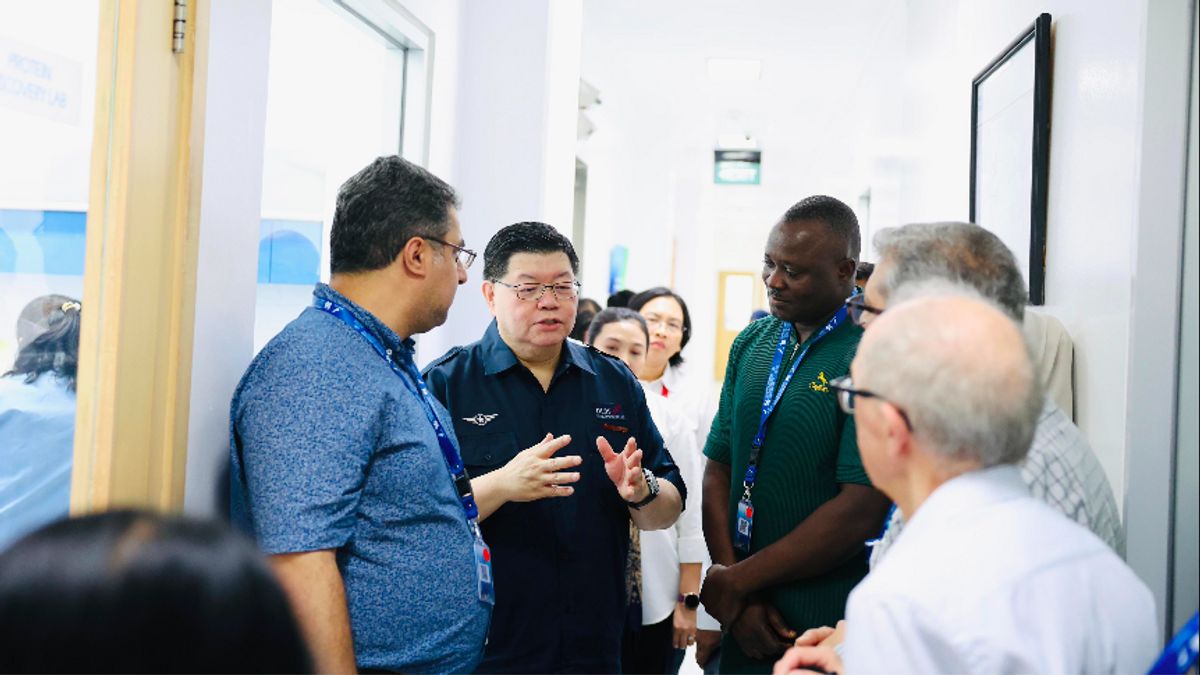


JAKARTA - The development of medical innovation is now not only focused on synthetic drugs, but also on the development of environmentally friendly natural-based drugs. The Global Green Pharmacy concept is a new direction for the modern pharmaceutical world by emphasizing sustainable research, utilizing biodiversity responsibly, as well as energy efficiency and minimal waste production.
Indonesia, with its abundant biological wealth, is considered to have great potential to become a center for the development of natural-based drugs at the global level. One example of the application of the concept can be seen in Dexa Laboratories of Biomolecular Sciences (DLBS).
The World Health Organization (WHO) delegation together with the Food and Drug Supervisory Agency (BPOM) visited the DLBS research facility in Cikarang, West Java, to review the development of Indonesia's biodiversity-based Modern Natural Medicine (OMAI).
Prof. Raymond Tjandrawinata, Director of Business Development and Scientific Affairs of PT Dexa Medica, explained that since 2005 DLBS has developed drugs from natural sources, including animal ingredients such as earthworms (Lumbricus rublelus) for Disolf products that help promote blood circulation.
He emphasized that phytopharmaca research was carried out scientifically through the Tandem Chemistry Bioassay System (T-CEBS) system to clinical trials to ensure the safety and effectiveness of products.
"If the research design is good from raw materials to finished products, then biodiversity-based herbal medicines can have the same quality as chemical drugs," said Prof. Raymond.
However, he highlighted regulatory challenges, such as the absence of natural ingredients into JKN National Formulaium, in contrast to countries such as India or China which have integrated traditional medicine in their national health system.
SEE ALSO:
-
 | INFO SEHAT
Nggak Perlu Resep Dokter, Ini Obat Pegal Linu dan Nyeri Sendi di Apotek yang Ampuh
07 Oktober 2025, 05:55 -
 | KESEHATAN
19 Produk Herbal Ilegal Ditarik BPOM, Bisa Sebabkan Masalah Jantung hingga Risiko Kematian
23 September 2025, 14:07
From the government side, Dian Putri Anggraweni, Director of Standardization of Traditional Medicines, Health Supplements, and Cosmetics of BPOM RI, called DLBS innovation an example of the development of global standard natural medicines that can be used as a reference for the national pharmaceutical industry.
Meanwhile, Dr. Pradeep Kumar Dua of the WHO-IRC Secretariat emphasized that fitofarmaka development efforts in Indonesia are in line with the WHO Global Traditional Medicine Strategy 20252034, which emphasizes the importance of regulation, security, and scientific evidence in the development of traditional and complementary medicines.
The WHO and BPOM's visit to DLBS is also a momentum to strengthen collaboration between international institutions, governments, and industries in building a sustainable pharmaceutical research ecosystem.
"Dexa shows how innovation and collaboration can go hand in hand in developing drugs based on biodiversity. Cross-sectoral collaborations like this are important to bring wider benefits to society," said Dr. Pradeep.
Through scientific approaches, strong regulations, and international support, Indonesia has the potential to become one of the centers of tropical phytopharmaca research and a pioneer of green pharmacy at the world level.
The English, Chinese, Japanese, Arabic, and French versions are automatically generated by the AI. So there may still be inaccuracies in translating, please always see Indonesian as our main language. (system supported by DigitalSiber.id)
Most Popular Tags
#Prabowo Subianto #donald trump #2026 World Cup #Febrie Adriansyah #8791Popular


