
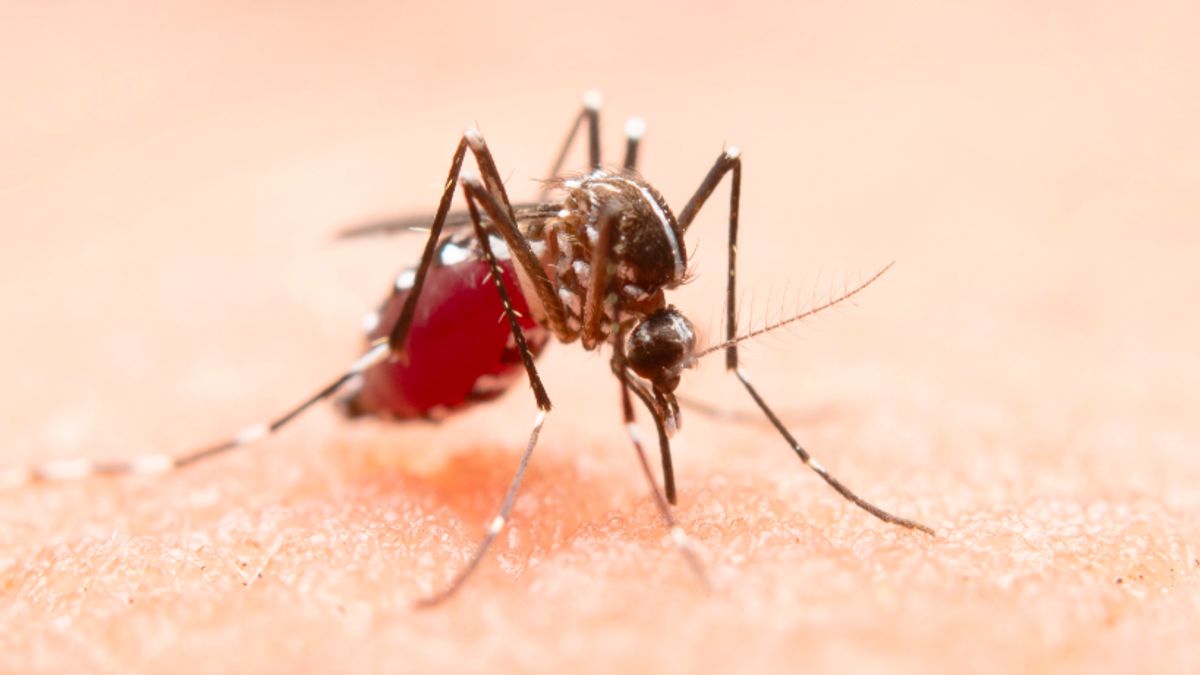


JAKARTA - Diseases that have been synonymous with the tropics are now increasingly emerging in Europe. Health experts warn that dangerous virus-carrying mosquitoes such as chikungunya, dengue, and West Nile Virus (WNV) are now growing rapidly on the "blue" continent.
The European Centers for Disease Prevention and Control (ECDC) announced that the transmission of mosquito congenital diseases has increased dramatically in recent years.
"Europe is entering a new phase, the transmission of a longer, wider, and intense mosquito congenital disease is now a new normal," said Director of ECDC, Dr. Pamela Rendi-Wagner, quoted from The Sun's page.
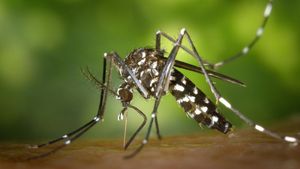
Climate change that makes the temperature warmer, summer longer, and winter lighter is the main trigger for mosquitoes such as the Aedes albopictus (Asian tiger camp) to be more comfortable living in Europe. Currently, these mosquitoes have spread in 16 countries with 369 regions, up from only 114 regions a decade ago.
Popular countries such as France, Italy, Spain, and Greece reported a spike in cases of mosquito disease. By 2025, France recorded more than 100 cases of local chikungunya, while Italy also discovered new clusters.
In addition, dengue hemorrhagic fever was also recorded in France, Italy, and Portugal. Meanwhile, West Nile Virus is the most widely reported with more than 300 local cases in eight countries, including Italy, Greece, and Spain.
According to the ECDC, this trend will continue to increase as weather conditions support transmission.
"The distribution of West Nilevirus cases in Europe continues to shift, and is found every year in new regions," the ECDC report said.
More worrying things, mosquitoes carrying the virus can be carried away in a suitcase or plane without realizing it.
"There is a small risk of airport infection, where the infected mosquito arrives in England by plane and then escapes. The spread of disease to the population that has never been exposed has always been a serious thing," explained Professor Paul Hunter of the University of East Anglia.
Although most cases in the UK still come from abroad, the increasing reports of local transmission indicate a greater risk.
SEE ALSO:
-
 | BERITA
China Catat 7.000 Kasus Chikungunya, Wacanakan Kebijakan Seperti COVID-19
05 Agustus 2025, 16:02 -
 | KESEHATAN
Virus Nyamuk Chikungunya Merebak di China, Hampir 5.000 Kasus Tercatat
05 Agustus 2025, 14:55 -
 | INFO SEHAT
Kenali Fase Penyakit Chikungunya, dari Demam Akut hingga Nyeri Kronis
11 April 2025, 19:25

Dangers Of Each Disease
- Chikungunya: It causes fever, severe joint pain, headache, and skin rash. Although rarely fatal, this disease can be dangerous for the elderly and people with certain health conditions.
- Dengue: In mild cases it only causes fever and rashes, but the severe shape can trigger internal bleeding to death.
- West Nile Virus: Most people don't show symptoms, but a small part can develop inflammation of the brain or meningitis.
- Malaria: Although not widely transmitted in Europe, local cases have been recorded in Mayotte, France.
"Along with the development of mosquito congenital diseases, more people in Europe will be at risk in the future. Prevention is becoming more important than ever, both through public health measures and personal protection," said Dr. Céline Gossner of the ECDC.
For tourists, simple steps can make big differences, including:
- Use anti-brawl drugs with DEET or picaridin.
- Wear closed clothes when doing activities outside.
- Sleeping under an insecticide mosquito.
- Consult health before traveling to vulnerable areas.
- Immediately seek medical help if symptoms appear such as fever, joint pain, or rash.
The ECDC says traveling to Europe is still safe, including to countries that report cases. However, with the increasing population of Aedes albopictus mosquitoes, the risk of local transmission is increasingly real.
The key is vigilance. With the right self-protection, tourists can still enjoy the holidays without having to worry too much about the threat of mosquitoes.
The English, Chinese, Japanese, Arabic, and French versions are automatically generated by the AI. So there may still be inaccuracies in translating, please always see Indonesian as our main language. (system supported by DigitalSiber.id)
Most Popular Tags
#Prabowo Subianto #donald trump #2026 World Cup #Febrie Adriansyah #8791Popular


