
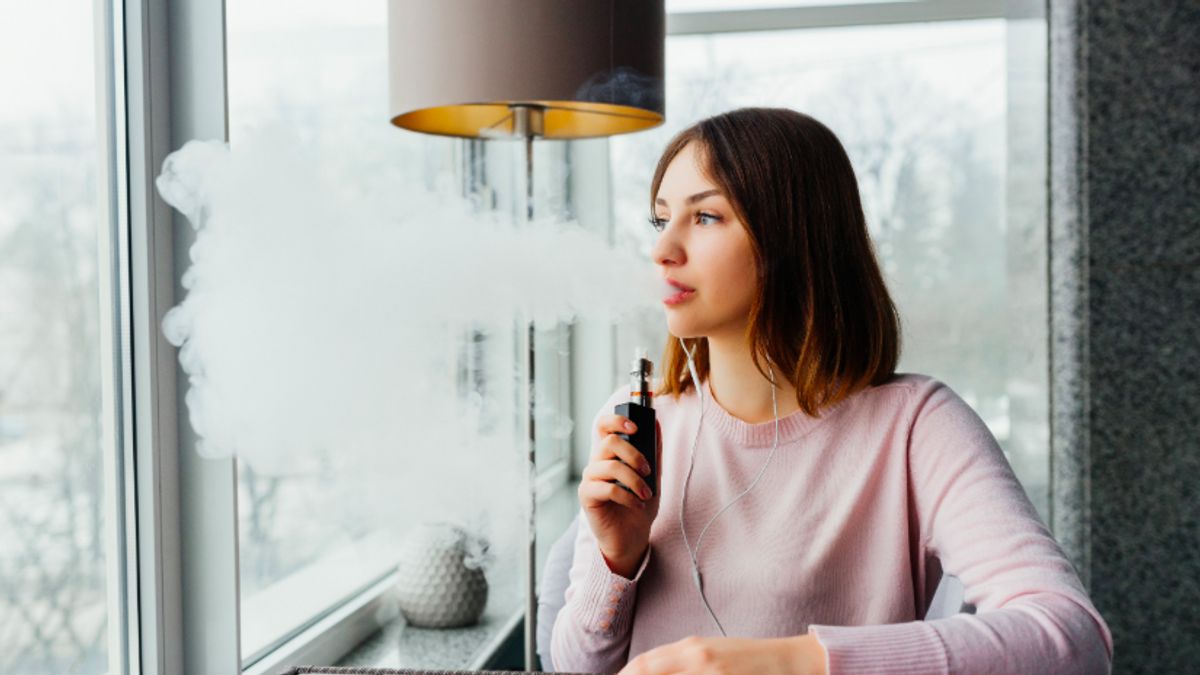


JAKARTA - The Singapore government is increasingly tightening regulations on electronic cigarettes or vapes. Starting this year, vaping will be treated as a drug problem, not just a light violation like tobacco.
Prime Minister Lawrence Wong in his speech at the National Day Rally 2025 at the ITE College Ang Mo Kio campus emphasized that this policy was taken because of the widespread use of illegal vapes among young people.
"So far we have treated vaping like tobacco, at the most we only give fines. But that's not enough," Wong said, quoted from the Channel News Asia page.
Wong explained that the government will impose much heavier penalties, including prison sentences and harsh sanctions for vape sellers who contain harmful substances. He emphasized that vape is not just an ordinary electronic cigarette, but can be an entry point for harmful substances that are very risky to health.
"Vape is just a protective tool. The real danger is in it. Currently, the substance is etomoidate. In the future it could be something worse, stronger, much more dangerous," said Wong.
SEE ALSO:
-
 | KESEHATAN
Waspadai 21 Skincare Ditarik BPOM, Produk 'Doktif' Masuk Daftar Hitam
09 Agustus 2025, 21:05


So what is etholidate?
Quoted from the page of the Islamic University of Indonesia, ethodidate is an intravenous drug that is widely used to calm patients before medical treatment, especially because of its ability to maintain stability of blood pressure and heart pressure. Although considered effective, this drug also brings serious side effects that make its use very limited.
Etomade was first discovered in 1964, then began to be used in clinical practice in 1972 as a safer alternative to other anesthesia. Initially, this drug was seen as a major breakthrough because it did not lower blood pressure or breathing as strong as tiopental.
However, in the 1980s, medical research found that etholidates could inhibit the production of steroid hormones in the adrenal glands, thereby increasing the risk of death in critical patients. These findings make its use now more directed only to induction short-term anesthesia.
Etomade works by strengthening GABA (gamma-aminobutirat) activity, a chemical in the brain that plays a role in calming the nervous system. This drug sticks to the GABA-A receptor, then increases the entry of ion chloride into the nerve cells. As a result, nerve activity is suppressed so that patients are quickly sleepy and fall asleep in just a few seconds.
In addition to influencing nerves, ethodidates also have an effect on blood vessels. Studies on rabbits aorta show this drug can inhibit calcium flow which makes blood vessel walls muscles more relaxed.
However, this effect is relatively small compared to other anesthesia, which rarely causes a drastic drop in blood pressure or heart rate. This condition makes the etomodite an option for patients with weak heart or in a state of shock.
Compared to Propofol and barbiturat, the effect of etholidate is lighter on the respiratory system. Patients usually fall asleep within 30'60 seconds after injection, and the anesthetic effect disappears in 3'5 minutes, because it is quickly metabolized by liver enzymes.
Risks and Side Effects
Behind its excesses, the ethodite stores some major risks. This drug is shown to inhibit 11 kiosk-hydroxyllase enzymes in the adrenal glands, an enzyme important for the production of cortisols. The impact can occur after one administration and lasts for 68 hours. This increases the risk of infection and metabolic disorders, especially in critical conditions.
Other side effects that often appear are pain at the injection site (experiencing 2050% of patients) and myoclonus, namely uncontrolled muscle movements that are similar to seizures. In a small part of the cases, especially elderly patients or with serious head injuries, etholidates can also trigger a decrease in blood pressure due to the effect of blood vessel widening.
The inappropriate use, such as in illegal vape products, can pose a fatal hazard, ranging from loss of consciousness, apnea (stopping breath), to death. A case report in China says a 47-year-old man died from oral ethodite poisoning, which caused a pulmonary eedema and liver damage. When mixed with opioids (for example fentanyl) or other stimulants, the risk of overdose increases sharply.
The English, Chinese, Japanese, Arabic, and French versions are automatically generated by the AI. So there may still be inaccuracies in translating, please always see Indonesian as our main language. (system supported by DigitalSiber.id)


