



JAKARTA - Elephant legs or filariasis are infectious diseases caused by filariat worms and transmitted through mosquito bites.
These infections can cause extreme swelling in the legs, hands, or other organs of the body, which if left unchecked will become a chronic condition and affect the daily activities of the sufferer.
Although rarely causing death, elephant legs can cause permanent disabilities, social stigma, and economic burdens for patients and their families.
To prevent the spread of this disease, the West Pasaman District Health Office, West Sumatra continues to carry out systematic monitoring and supervision. The Head of Disease Prevention and Control (P2P) of the Health Service, Gina Alecia, said that surveillance was carried out in the initial area of determining the endemicity of the filariasis, namely Mandiangin and Katiagan, Kinali District.
Since 2015, there have been 39 chronic cases of filararias in the working area of 14 puskesmas. Currently, this number has shrunk to only three cases, namely two patients at the Kinali Health Center and one patient at the Sungai Aur Health Center. These three patients are currently undergoing treatment according to standards to monitor the development of diseases and prevent complications.
"The monitoring and supervision or ongoing surveillance is carried out by conducting surveys for the initial area to determine the determination of the filarisation endemic, namely the Mandiangin and Katiagan areas of Kinali District," said Head of Disease Prevention and Control (P2P) of the Health Office Gina Alecia at Simpang Empat, as quoted by ANTARA.
SEE ALSO:
-
 | OLAHRAGA
Rekomendasi dan Anjuran Olahraga untuk Penderita Jantung yang Aman
31 Desember 2023, 10:07

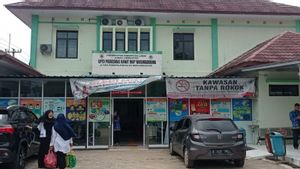

Monitoring is carried out when patients with initial symptoms are found, such as pain at the groin, leg swelling that appears and disappears, or repeated fever. Patients suspected of being infected will undergo a finger blood test at the puskesmas, then the samples are tested cross-over at the Regional Health Laboratory of West Sumatra Province.
In addition to medical treatment, patients are also given education to take care of themselves independently, maintain cleanliness, and prevent secondary infection. The Health Office also intensively conducts socialization at the Kinali Health Center and Sungai Aur Health Center regarding the prevention of filarisas and patient assistance.
Mass prevention efforts in West Pasaman began in 2005, after a night finger blood survey showed the area was endemic to a filariasis. The mass treatment program was carried out for two years, followed by an evaluation survey, and continued two years of mass treatment until 2010. The results of the BAT survey in 2016 and 2020 showed that West Pasaman passed the elimination test.
The latest assessment by the Ministry of Health on July 25, 2025, reiterated that West Pasaman managed to maintain its filarisic elimination status, without any new cases since the mass treatment program began.
"Now our focus is on monitoring the remaining three cases so that their condition does not worsen," concluded Gina.
The English, Chinese, Japanese, Arabic, and French versions are automatically generated by the AI. So there may still be inaccuracies in translating, please always see Indonesian as our main language. (system supported by DigitalSiber.id)
Most Popular Tags
#Prabowo Subianto #donald trump #Febrie Adriansyah #8791 #giias 2026Popular


