


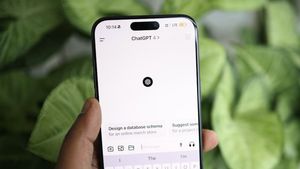
JAKARTA - In the midst of the rapid development of digital technology, the use of artificial intelligence such as ChatGPT has begun to be used by the public as an initial tool in examining health conditions.
The fast and easy question-answer feature makes ChatGPT the choice of many people to seek information on disease symptoms. However, the Ministry of Health (Kemenkes) reminded that this technology should be used as an initial reference, not as a substitute for medical consultation.
Expert Staff for Health Technology at the Ministry of Health, Setiaji, stated that although AI such as ChatGPT can provide an early picture of a person's health condition, the reliability of the diagnosis must still be confirmed by professional medical personnel.
"AI cannot be trusted completely. To find out symptoms or just increase awareness, it is okay, but it must still be consulted with a doctor," Setiaji said as quoted by ANTARA.
He added that the presence of AI technology really helps the public to get access to health information quickly. In fact, now more and more people are starting to proactively check symptoms of disease or find out the first step in self-help.
Even so, Setiaji advised the public to remain critical when receiving information from AI platforms such as ChatGPT. One easy way to assess the reliability of information is to compare answers from various relevant sources.
If the answer is different, it should be an alarm. That is, further clarification is needed, "explained Setiaji, who also serves as Chair of the Ministry of Health's Technology Transformation and Health Digitization Team (TTDK).
SEE ALSO:
-
 | TEKNOLOGI
Penggunaan ChatGPT Melonjak Hingga 2,5 Miliar Permintaan Setiap Harinya
22 Juli 2025, 20:05 -
 | INFO SEHAT
Cek Kesehatan Gratis Dimulai Hari Ini, Begini Langkah Daftar dan Syaratnya
10 Februari 2025, 10:25


Setiaji also reminded ChatGPT to mostly use databases from abroad, so there is most likely information that is not in accordance with the Indonesian public health context.
Therefore, he suggested the use of local platforms such as Sahabat AI which were developed by considering domestic data and needs.
In addition, according to him, AI does not yet have sufficient sensitivity and accuracy to replace clinical diagnosis. ChatGPT can indeed help map symptoms and possible diseases, but it cannot provide accurate predictions of cure rates or prognosis.
"For example, if the input is in the form of an image that is not clear, the results are not accurate. The current AI still has limitations in terms of sensitivity and accuracy," he said.
Therefore, he continued, the public needs to use AI as an initial information aid, not as a substitute for medical personnel. After receiving information from AI, it should be followed up immediately by direct examination, both in health facilities and through online medical services.
"Don't wait for the pain to act. If you have received a recommendation from the ChatGPT, don't just read it, but it will also be followed up," said Setiaji.
The English, Chinese, Japanese, Arabic, and French versions are automatically generated by the AI. So there may still be inaccuracies in translating, please always see Indonesian as our main language. (system supported by DigitalSiber.id)
Most Popular Tags
#Prabowo Subianto #donald trump #firearm #8791 #giias 2026Popular


