


JAKARTA - Understanding local food has an important role in shaping children's healthy eating habits from an early age. Educating elementary school students about the diversity of foodstuffs that grow around them not only encourages food independence, but also helps build appreciation for Indonesia's culinary wealth.
Through the introduction of a healthy and nutritious local menu, children are invited to recognize that sources of nutrition do not always have to come from imported products.
This is reflected in the results of an evaluation of the Free Nutrition Food Program (MBG) which was held at SD Negeri 50, Banda Raya District, Banda Aceh City, Aceh Province. According to the National Nutrition Agency (BGN), the program shows a positive impact in increasing students' knowledge of local food.
"From a study at SD Negeri 50 Banda Raya with 90 students as a sample, it can be seen that children are starting to recognize more types of local food," said BGN Nutrition Expert Ikeu Tanziha, at an online press conference in Jakarta, as quoted by ANTARA.
Ikeu explained that the introduction also shaped students' preferences for food available in the surrounding environment, as well as reduced dependence on instant food or foreign products. In addition, students are also getting used to the variety of healthy menus, including simple but nutritious food processing methods.
SEE ALSO:
-
 | INFO SEHAT
Dibongkar Harvard, Ini Pola Makan Simpel yang Bikin Tetap Fit di Usia Senja
08 April 2025, 11:25 -
 | INFO SEHAT
Camilan Unik dengan Nol Kalori di China, Tusuk Sate dengan Varian Bumbu
03 April 2025, 20:00 -
 | INFO SEHAT
Jaga Pola Makan saat Lebaran, Hindari Konsumsi Berlebihan demi Kesehatan
26 Maret 2025, 14:25

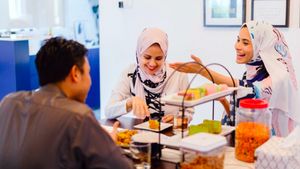
"Children not only know the food ingredients, but also how the food is served in a healthy way. This is an important first step in shaping a better consumption pattern," he said.
He added that students' understanding of balanced nutrition has the potential to have a chain effect in the family environment. When children understand, they can be able to convey nutritional information to parents at home.
"Hopefully, these children will become agents of change, which brings healthy eating habits into their household. That way, consumption in the family will also become more balanced, safe, and nutritious," Ikeu continued.
In terms of nutritional status, this intervention also shows positive development. Based on measurements of the body mass index according to age, there was an increase in the average score from 0.01 to 0.03. This figure reflects the improvement in the nutritional condition of children who take part in the program.
"The nutritious food program in schools is not just food, but is the foundation in producing a healthy and quality Indonesian generation towards 2045. Therefore, participation from local governments, the private sector, community organizations, the media, to families is very important to maintain continuity and strengthening of this program," concluded Ikeu.
The English, Chinese, Japanese, Arabic, and French versions are automatically generated by the AI. So there may still be inaccuracies in translating, please always see Indonesian as our main language. (system supported by DigitalSiber.id)
Most Popular Tags
#Prabowo Subianto #donald trump #Febrie Adriansyah #8791 #giias 2026Popular


