
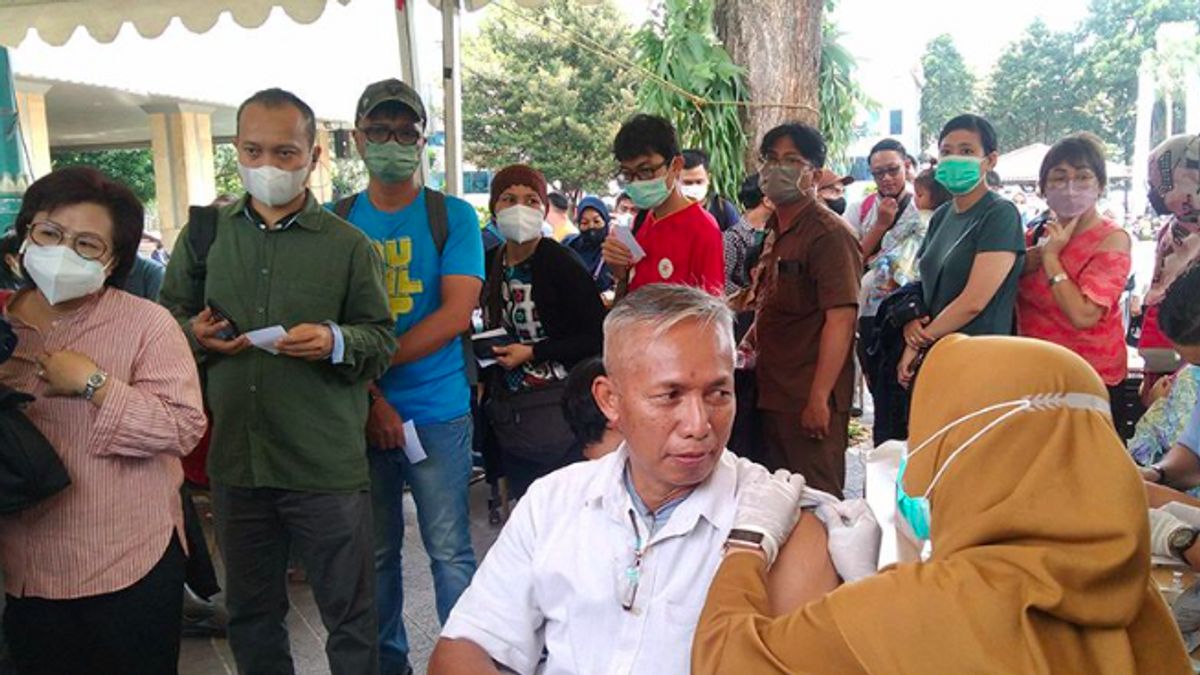


JAKARTA - The World Health Organization (WHO) again reminds all countries to remain vigilant against the potential increase in COVID-19 cases in various parts of the world.
The WHO emphasizes the importance of risk-based integrated strategies, including early detection of new variants and ongoing vaccination efforts, especially for vulnerable groups.
Responding to this development, the Chairman of the Honorary Council of the Indonesian Lung Doctors Association (PDPI), Prof. Tjandra Yoga Aditama, explained seven important points from the latest WHO report regarding global COVID-19 conditions.
In a written statement in Jakarta, Thursday, Prof. Tjandra revealed that at the end of May 2025, COVID-19 was again included in the WHO Disease Outbreak News (DONs), which means that this pandemic situation is still a global concern.
According to the Adjunct Professor from Griffith University, since mid-February 2025 there has been an increase in the number of cases of SARS-CoV-2 infection globally. This can be seen from the soaring level of positivity of COVID-19 test results, which has now reached 11 percent of the number that has not appeared since July 2024.
Furthermore, he explained that this increase mainly occurred in three regions of WHO: the Eastern Mediterranean, Southeast Asia and the West Pacific. "Indonesia is included in the scope of the region, so we need to be more vigilant," said Prof. Tjandra, as quoted by ANTARA.
SEE ALSO:



He also said that the mutation of the COVID-19 virus continues to grow. The LP.8.1 variant, which previously dominated, has now decreased, while the new variant NB.1.8.1 is starting to show an upward trend. This variant has been included in the WHO's Variant Under Monitoring (VUM) list, with global prevalence reaching 10.7 percent.
"Until now, there has been no official report regarding the existence of the NB.1.8.1 variant in Indonesia," he explained.
In response to this condition, WHO encourages countries to continue to strengthen their health control and response systems through a holistic approach. The recommended COVID-19 control strategy includes vaccination promotion, especially for high risk groups such as the elderly and individuals with comorbidities.
Prof. Tjandra, who once served as Director of Infectious Diseases of WHO Southeast Asia (2018) also emphasized that vaccination remains the main pillar in reducing the risk of severe symptoms and deaths from COVID-19.
"Vaccination must be part of a comprehensive COVID-19 control program," he said.
The English, Chinese, Japanese, Arabic, and French versions are automatically generated by the AI. So there may still be inaccuracies in translating, please always see Indonesian as our main language. (system supported by DigitalSiber.id)
Most Popular Tags
#Prabowo Subianto #donald trump #Febrie Adriansyah #8791 #giias 2026Popular


