


The rise of illegal cosmetic trafficking has returned to the spotlight after the Food and Drug Supervisory Agency (BPOM) revealed major violations in the production and distribution of beauty products without a distribution permit.
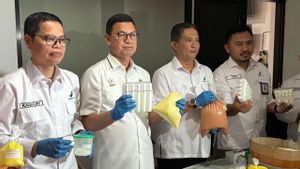
In the national supervision carried out in February 2025, BPOM found violations worth more than Rp31.7 billion which jumped dramatically compared to the previous year.
The head of BPOM, Taruna Ikrar, in his official statement in Jakarta on Friday (the date according to context), said that the findings were the result of simultaneous surveillance activities in various parts of Indonesia on February 10, 2025.
This supervision targets various parties involved in illegal cosmetic distribution chains, ranging from producers, importers, brand owners, to beauty clinics, retailers, and resellers found selling products without distribution permits.
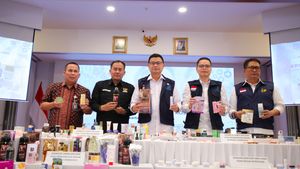
Of the 709 business locations examined, 340 of them "or about 48 percent" were identified for violating regulations. Officers found more than 205,000 illegal cosmetic units consisting of 4,334 types / variants of 91 brands. These findings include products that do not have a distribution permit (about 80 percent), contain hazardous materials (17.4 percent), expire (2.6 percent), and injection products without permits (0.1 percent).
The majority of these illegal products are imported products, most of which are circulating through online platforms and are often promoted massively by influencers without considering their safety aspects. BPOM emphasizes that these products are very risky to consumer health.
SEE ALSO:
-
 | BERITA
Pasutri di Ciputat Produksi Kosmetik Ilegal Beromzet Rp1 Miliar Per Bulan
19 Maret 2025, 20:10 -
 | KESEHATAN
Temukan 91 Merek Ilegal, BPOM Perketat Pengawasan Kosmetik di Awal 2025
24 Februari 2025, 17:25
Furthermore, BPOM also found allegations of criminal acts in the form of cosmetic production using prohibited materials such as hydroquinon, retinoate acid, antibiotics, and steroids, including the practice of mass production of skincare labeled blue illegally and repeated violations by business actors.
Geographically, the Yogyakarta area was recorded as the area with the highest finding value reaching Rp11.2 billion, followed by Jakarta (Rp10.3 billion), Bogor (Rp4.8 billion), Palembang (Rp1.7 billion), and Makassar (Rp1.3 billion).
The cadets said that the high number reflects the massive circulation of illegal cosmetics, especially in areas with high consumption of beauty products. He emphasized the importance of complying with regulations, including the provisions in the BPOM Regulation No. 18 of 2024 concerning markers, promotions, and cosmetic advertisements.
Through this surveillance intensification program, BPOM hopes that all parties, including producers, distributors, and consumers, can work together in breaking the chain of illegal cosmetic trafficking. Not only endangering public health, the circulation of illegal products also has a negative impact on the growth of the domestic and national cosmetic industries in general.
BPOM also invites content creators and influencers to be more responsible for providing product reviews. It is hoped that they will participate in educating the public about the importance of choosing cosmetics that are safe, legal, and registered.
In addition, business actors are asked to commit to running their business according to the rules, ensuring that the products they market have met safety, benefit, and quality standards. Consumers are also advised to become smart users by applying the KICK Check principle, namely checking packaging, labels, distribution permits, and expiration before buying products, especially on online platforms.
"Make sure to only buy products from shops or selling facilities that can be accounted for, especially when shopping for cosmetics online," said Taruna.
The English, Chinese, Japanese, Arabic, and French versions are automatically generated by the AI. So there may still be inaccuracies in translating, please always see Indonesian as our main language. (system supported by DigitalSiber.id)


