
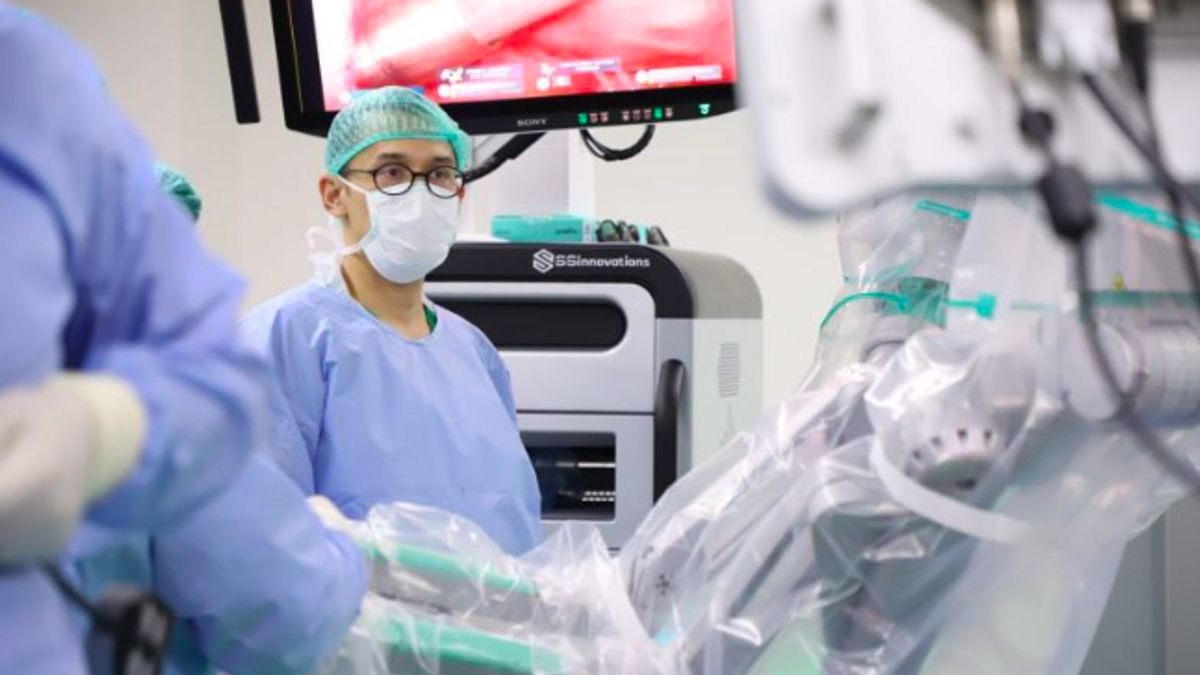


JAKARTA - Innovation in the field of surgery is progressing with the presence of second-generation robotic surgery technology which is now being adopted in Indonesia. This technology is a significant step in realizing a more modern, accurate, and optimal recovery-oriented health care system for patients.
The President Director of Bundamedik, Agus Heru Darjono, stated that the application of this technology is not only a form of modernizing health facilities, but is also a long-term strategic investment that focuses on improving the quality of life of patients and developing the ability of medical personnel.
"This technology is not only sophisticated, but also has a major impact on the effectiveness of treatment and efficiency of the recovery process," he explained as quoted by ANTARA.
Meanwhile, dr. Ivan Rizal Sini, one of the pioneers of robotic surgery in the country, explained that this latest generation system has a number of advantages over the previous technology used at the Bunda Hospital in Jakarta. These advantages include robotic arms that can move with full rotation and high stability, high-definition 3D cameras that can enlarge surgical areas up to ten times, as well as tremor-reducing features that maximize the accuracy of medical actions.
He added that this procedure only requires 3 to 5 small incisions measuring 510 mm, much less than traditional surgery which requires large incisions of 1020 cm. The lack of incision wounds also reduces the risk of infection and bleeding, and accelerates the recovery period without compromising the function of vital organs.
SEE ALSO:
-
 | BERITA
RS KPJ Kuching Perkenalkan Pembedahan Robotik Pertama Wilayah Borneo
26 September 2023, 14:33
"This technology will continue to be developed in order to answer the needs of patients from various special fields," he said.
Since it was first implemented in 2012, this technology has helped more than 750 patients undergo surgery with a minimal invasive approach. Ivan said the existence of this technology marked the start of a new era in surgical practices that prioritized precision and efficiency in Indonesia.
As part of the development of human resources in this field, Bundamedik has also built a training ecosystem for doctors to be able to master robotic technology as a whole. One of them is through a workshop entitled "The Latest Innovation In Surgical Field" which was attended by more than 100 doctors from various specialties on April 28, 2025.
The workshop includes theoretical training, direct simulations, and discussion of real cases from various fields such as urology, midwifery, digestif, and toraks. All participants received a Professional Credit Unit (SKP) from the Ministry of Health as an acknowledgment of their competence development.
Currently, more than 16 specialist doctors have joined robotic surgical services and are continuing to undergo ongoing training to maximize the use of this technology in daily medical practice.
Agus hopes that this technology can spread evenly to various regions, so that the wider community in Indonesia has access to modern surgical services that are safer, faster, and more precise.
The English, Chinese, Japanese, Arabic, and French versions are automatically generated by the AI. So there may still be inaccuracies in translating, please always see Indonesian as our main language. (system supported by DigitalSiber.id)


