
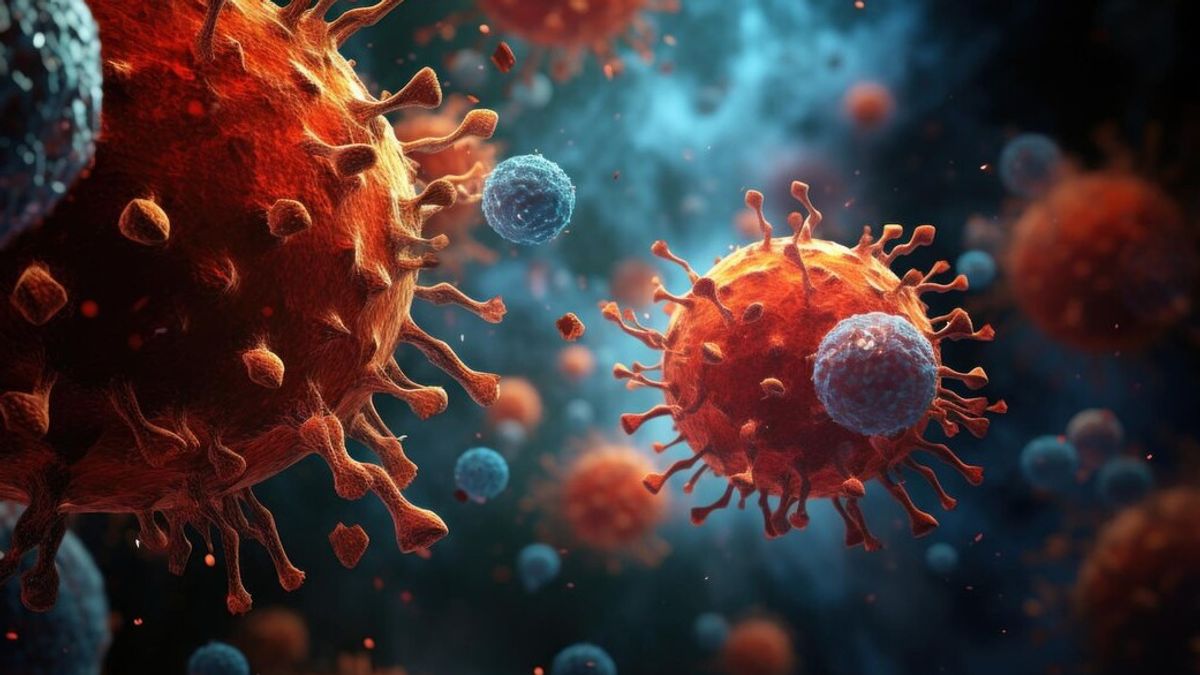


The Covid-19 pandemic is over, but the risk of a new virus re-triggering a global outbreak. Scientists discovered a new type of coronavirus in bats in Brazil that raised concerns. This virus is similar to the deadly MERS virus, although researchers have not been able to confirm whether this virus is harmful to humans or not.
Reporting from the Times of India page, the study was published in the Journal of Medical Virology (JMV) by researchers from the states of Srypto Paulo and Cear Orang in Brazil, in collaboration with the University of Hong Kong (HKU) in China. According to scientists, the coronavirus found in South America is similar to Middle East Respiratory Syndrome Coronavirus (MERS-CoV).
MERS was first identified in 2012. This disease is caused by the MERS-CoV virus which can cause mild to severe symptoms, such as fever, cough, and shortness of breath. Some patients also experience pneumonia, while others can experience digestive symptoms such as diarrhea.
Scientists have found that this new viral genetic sequence has a similarity of about 72% to the MERS-CoV genome. In addition, the spike protein (protein used by the virus to stick to the host's cell) has a resemblance of about 71.74% to the MERS-CoV spike protein.
"For now, we are not sure if this virus can infect humans. However, we found parts of spike proteins that can interact with receptors also used by MERS-CoV," said Bruna Stefanie Silvario, lead author of the study.
Further trials will be carried out in Hong Kong this year to ascertain the potential risks of this virus to humans.
In this study, scientists examined 423 saliva samples (tests on saliva) and rectal swabs from 16 bat species in Fortaleza, Brazil. They identified 7 coronaviruses in the sample, including a new virus that has a high resemblance to the MERS virus in humans and camels.
In addition, signs of genetic recombination are found, namely a process in which viruses exchange genetic and evolved materials, which has the potential to change the rate of infection or transmission.
Because bats are a natural reservoir of viruses, they must continue to be epidemiologically monitored. This supervision is important to identify the circulating virus and understand the potential for transmission to other animals or even to humans," explained Ricardo Dursamaes-Carvalho, a member of the study.
This study highlights the important role of bats as a potentially contagious natural storage area for viruses to humans. Therefore, continued surveillance is needed to monitor and anticipate public health risks related to the coronavirus.
SEE ALSO:
-
 | BERITA
Cek Kesehatan Gratis Mulai Diterapkan 10 Februari, Pelaksanaan Direncanakan Bertahap
09 Februari 2025, 15:54 -
 | BERITA
Soal Efisiensi Anggaran Pemerintah, Menkes Jamin Layanan Kesehatan Tak Terdampak
05 Februari 2025, 18:02 -
 | KESEHATAN
Ada Virus Baru Lagi, Ini Fakta HKU5-CoV-2 yang Bikin Ilmuwan Waspada
25 Februari 2025, 14:52 -
 | BERITA
Dukung Kemkomdigi Batasi Usia Pengguna Medsos, Menkes Singgung Masalah Kesehatan Mental
03 Februari 2025, 01:18
We hope this study drives a more systematic, integrated, and sector-involved approach. The data obtained can be used by health systems to detect, monitor, and prevent future outbreaks." added Silvario.
The English, Chinese, Japanese, Arabic, and French versions are automatically generated by the AI. So there may still be inaccuracies in translating, please always see Indonesian as our main language. (system supported by DigitalSiber.id)


