
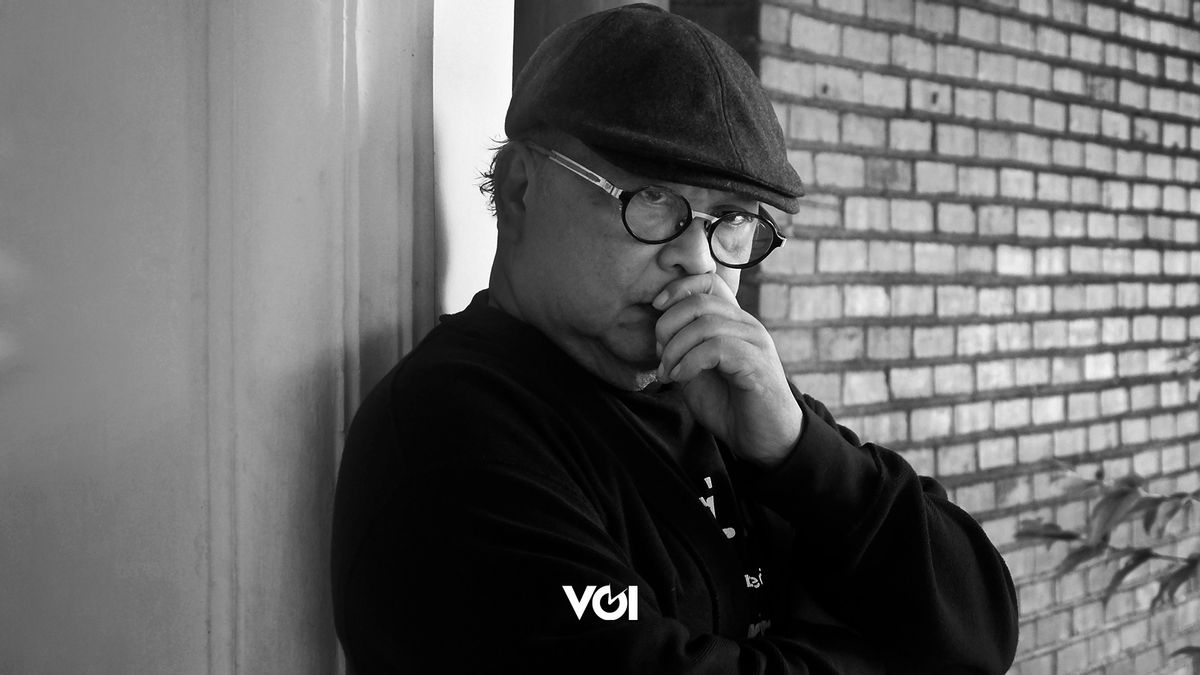


The Nahdlatul Ulama General Board (PBNU) crisis has not shown any signs of being over. Political observer who is also a NU figure, Dr. Muhammad AS Hikam, MA, APU, once called for both parties to be reformed. However, the proposal was not welcomed. The difference of opinion between the two parties has not found a common ground. Is there a difference in income so that reform is difficult?
***
The turmoil that occurred at PBNU surfaced after the circulation of a Circular Letter which was a follow-up to the PBNU Syuriah Daily Meeting, November 20, 2025, in Jakarta. The results of the meeting asked the General Chairman of PBNU Yahya Cholil Staquf (Gus Yahya) to resign from the position of general chairman within three days of receiving the decision of the Daily Syuriah Meeting. If within three days he does not resign, the PBNU Syuriah Daily Meeting decides to dismiss Gus Yahya.
Yahya and his kubunya strongly opposed the dismissal. He accused the decision was not based on the NU AD and ART. "I am still in my position as chairman of the general based on the organization's constitution and also based on the recognition of all NU management levels at all levels throughout Indonesia," he said.
Many parties are concerned about the turmoil that has occurred in PBNU, including the former Minister of State for Research and Technology of the National Unity Cabinet (Gus Dur President's Cabinet). He has called on the two camps to refrain from and avoid things that complicate the situation. What must be done is reform. "The solution is yes reform. All parties refrain and sit together to find a way out," said Hikam.
The conditions proposed by Muhammad AS Hikam, all parties must be in a position of empty-empty. The reason is, there has been a mutual firing from each camp. However, the call for reform, which has also been voiced by various parties, both internally and externally, has not attracted those who are at war.
With this constellation, he suspects that the issue will end up in the legal realm. If that happens, the energy expended is very large and will take time. "Both parties must know and be prepared for the consequences," he told Edy Suherli, Bambang Eros, and Irfan Meidianto from VOI when they were met in Ciputat, South Tangerang, Sunday, December 14, 2025.
The feud in PBNU has not subsided, what do you think is the root of the problem?
This question is indeed crucial for NU which has more than 100 million members spread throughout Indonesia and abroad. This issue must be overcome. If not, it could become a new problem that will affect this republic. This issue is not in NU, but in PBNU. However, it is PBNU who drives the organization with a very large member. In the end, people conclude that the internal conflict in PBNU is the NU conflict, because it can also affect the lower layers of NU members. The signs are already there, namely the emergence of differences of opinion among the lower masses of NU.
So, what is the essence of this issue according to your observation?
Seeing the turmoil that has hit PBNU cannot be from only one perspective. It can be seen from the structural, organizational, political, economic, and cultural sides. NU is an organization based on certain cultural values that are rooted in the pondok pesantren culture. Therefore, seeing the turmoil of PBNU today must be with an open perspective.
However, everything goes back to the cultural nature of the jamaah and the jam'iyyah organization. The structural issues are very influenced by this cultural perspective. All existing issues will be seen from a cultural perspective. NU has its uniqueness when compared to other organizations. There is a combination between the interests of maintaining culture with the values that I mentioned earlier - boarding schools, cultural values - and also pragmatic things in the sense of structural. This organization was established to continue the struggle of the ulama.
"The position of the ulama is very important, is this democratic?
The position of the ulama is central in NU. However, do not understand it as something undemocratic. The point is, there is another side that is related to Syuriyah and Tanfidziyah when it is related to the rules of the organization, namely AD and ART. In NU, ulama are positioned as a reference.
The conflict in PBNU is not the first time it has occurred. In the era of KH Idham Chalid, the era of Gus Dur, and the era of KH Hasyim Muzadi, there was also a conflict. The question becomes different when the question arises about how to solve this crisis. Because, if you look at the events in the previous era, generally conflicts can be resolved. People then conclude that is the way NU solves problems.
The use of ulama supremacy and legal-formal organization, both must be used to solve the current PBNU crisis. The question is, has this approach been used to solve the existing problems?
"Is there an institution of Kiai Sepuh that has been a reference, what is its role?
That's one of them. Formally, there are two institutions that have been mandated. First, the Syuriyah which is led by Rais Aam PBNU KH Miftachul Akhyar. Second, the mandate to the PBNU General Chairman as Tanfidziyah, namely Yahya Cholil Staquf. The two can indeed be distinguished, but cannot be separated. Because, there are rights that the Syuriyah has but the Tanfidziyah does not have, for example in overseeing the implementation of work programs by the Tanfidziyah.
In NU there is also a Mustasyar or advisor. In addition, there are also senior kiai who are not in the bureaucratic structure. Even so, they have a big influence because of their capacity and charisma. They are also often asked for their opinions when there is a crisis. There was a meeting of Kiai Sepuh in Lirboyo, Kediri, when a crisis occurred in PBNU. This meeting produced a solution that was conciliatory. Therefore, there was an appeal not to dismiss and reposition the management. If there is a problem in Tanfidziyah, it must be thoroughly investigated. So, the solution is not confrontation, but reform.
The issue of islah has also been voiced by several parties, but it seems to be less welcomed. Why is that?
Islah is a religious command when Muslims disagree with each other. Islah means taking the path of peace, because fellow Muslims are brothers. Why is islah acceptable in concept, but difficult to realize? In my opinion - please correct if it is not correct - people see islah as the only way, although there are many ways in it.
Islah means we want to solve this problem together in a peaceful way. However, there is one party who wants to immediately solve the problem with a confrontational nuance. This is what the Kiai Sepuh are trying to prevent.
Even though Kiai Sepuh has called, it still hasn't been heard?
That's what happened. The plenary still took place at the Sultan Hotel. As a reaction, the other side also held a plenary session at PBNU, although it did not end up. There was an action, then there was a reaction. When Gus Yahya wanted to accept the amendment, the other side did not. So, there was no meeting point. The question is, is the decision of the Syura plenary session valid organizationally? This is still a debate. This is what keeps the parties from making amendments.
This question finally came down as well. PWNU and PCNU each issued a statement. However, basically everyone supports that an amendment be made.
I finally, as an observer, have an analysis that the innovation that I voiced seems to have lost interest for those who are in conflict. Because, I use a very different formula: all parties must be in a position of zero-zero, no firing or rotation of management. The two camps sit together, accompanied by senior ulama, to find a solution.
So, what is the main problem?
In fact, there are two problems. First, the PBNU invitation to Peter Berkowitz who is allegedly affiliated with the Zionists. Second, the issue of mine management. These two issues can actually be used as a meeting material to find a solution. There are parties who feel that they are not given space to explain before the hammer is knocked. Without the willingness of the parties to solve the problem, this problem will not be resolved.
Will it eventually be settled legally?
If it is stuck, the legal steps that will be taken. The cultural umbrella that has been there will be ignored, and everything will be resolved through the legal framework. In 1999, Gus Dur once asked why Rais Aam PBNU always had a background of experts in fiqh or ushul fiqh. This is because the NU culture is very close to fiqh. The point is, on issues that are general - not only involving NU residents - there must be a strong foundation, whether it is religious law or state law. That is why fiqh is very important.
If there is a change, how can the two camps work together again while still solving the existing problems? One of them is by preparing the congress. According to the organization's rules, it is at the congress forum that the General Chair can be dismissed, either through a regular congress or an extraordinary congress. The congress is an organizational procedure that must be followed, and the time is only a year away. Then, why is there such a commotion? It is not necessarily the party that is appointed now who is able to solve the problem. Because, NU is a congregation, and problems must be solved together.
So, your prediction, this issue will end up in the legal realm?
If there is no meeting point, it is likely that this issue will be brought to the legal realm. If it has entered the legal realm, the process will be long. The parties involved will be very many, not only from NU, but also external parties.
Who are these external parties?
Court or government. The state has the right to participate in resolving the problem. NU is a national asset with very wide influence, not only in the organization, but also in the community. Therefore, the state can enter, especially if requested by the parties in conflict to bring the issue to the legal realm.
So, the external party will "cawe-cawe"?
There is a possibility. However, "gossip" is not always bad. If the issue goes into the legal realm, can it be resolved before the current term of office ends? I think not. One NU legal expert even predicts that this case will take at least two years. So, each party must be prepared for all the consequences.
Even though the lower currents want these PBNU elites to be reformed, right?
Yes, they really want to see the islah. However, once again, among the parties in conflict there are those who want and those who do not want. In the end, there is still no meeting point.
Seeing this feud among the PBNU elite, the masses at the grassroots are disappointed. Is it normal if they are like that?
It is understandable that they are disappointed. They do not understand the grammar in NU, namely the combination of cultural approaches based on ethics and the supremacy of ulama with the rules of the organization that apply. This is what makes the masses disappointed. Because, the quarrel of the elites took place very openly and can be accessed through various media. In the end, what is visible now is how these warring parties are trying to secure their respective positions.
English:
So, there is already an intention to secure each position, so that the reform is difficult to achieve?
Yes. If we look at it in a somewhat philosophical way, the paradigm used in PBNU management is now more inclined to a model that is political. This political approach relies on instrumentalist ways, namely an approach that prioritizes control, mastery, judgment, or judgment. This kind of approach is very far from an ethical and spiritual approach that actually frees people from being trapped in the things I mentioned earlier.
Unfortunately, the people who are in PBNU prefer instrumentalistic ways, both in the Syuriyah of PBNU and in the Tanfidziyah of PBNU. If people with this approach conflict, will they solve the problem in a moral way? Of course not. What they are looking for is victory, even if it has to be achieved in various ways. This is what usually happens in political organizations, not in civil society like NU, namely an organization established to maintain the Islamic call and uphold the common good.
Even though the path to reform is difficult, what are your expectations for the two camps?
"I try not to lose hope. I heard Sastro Al Ngatawi's opinion who still hopes for reform, as long as there is a meeting between the two camps. The Yahya Cholil Staquf camp and the Rais Aam camp who have raised the PJ Chairman of the General Assembly of PBNU in their version, namely Zulfa Mustofa. However, the two must meet first. If they meet, there will be a process of take and give. This is the NU tradition. There will be solutions that sometimes surprise.
Hopefully what we are talking about is heard by each of the warring parties.
Not only by the parties in conflict, but also heard by Nahdliyin residents wherever they are. I follow Kiai Ma'ruf Amin's dawuh that this NU organization belongs to all NU residents, not to a few people in PBNU. Maybe what we are talking about will not be heard by the NU elite, but for NU residents, I believe it is useful. NU residents can now convey their aspirations because the era is open. The PBNU elite must not close their eyes. They must see and listen to the aspirations of the people.
"This conflict among the PBNU elite makes young people cynical. What is your advice to young people so that they can see the problem fairly?"
Like it or not, the younger generation is the one who will continue the greatness of NU. They have the right to be cynical, pessimistic, and critical. Young people must remain critical, but also be able to sort and choose information. Because, in the current era there is too much information, there is also disinformation. The younger generation who will continue the greatness of NU; it's not enough to be pessimistic, it's not enough to be critical without providing solutions. They must engage and continue to be involved in this discourse.
NU is currently present throughout the world, with more than 40 special branches abroad. That is an extraordinary achievement in the context of NU history. In the future, NU must improve organizational management. It can no longer claim supremacy without being accompanied by modern management capabilities. We cannot ignore modern instruments in the midst of an increasingly advanced world.
What else needs to be improved from NU?
NU indeed upholds the charismatic leadership of the ulama. However, the development of time also requires strategic leadership. This is important because the world is increasingly complex. Those who sit in Tanfidziyah must have strategic leadership and effective leadership. Meanwhile, those who sit in Syura rely on charismatic leadership and transformative leadership - authoritative, but also able to move with moral and moral qualities.
Now, how can you move forward if managing the mine is complicated? Then the one who is blamed is the mine. NU does not have direct capacity to manage the mine. Therefore, it is necessary to involve outsiders, both corporations and individuals, to manage it. Five years with the help of outsiders, after that NU's human resources can learn. We need to emulate Muhammadiyah which has good organizational capacity and management.
"Does this mean that management in NU still needs to be improved?"
In NU, there needs to be a reform of the management system. Gus Yahya actually has a vision in that direction. Kiai Said Aqil has also done the same thing. However, in NU, everything must go slowly, because there are many people involved and many opinions. There is a joke among NU residents: NU people are used to having different opinions, what is unusual is different income, hehe. Maybe, the management of mines in NU is indeed related to the difference in income.
But the British say don't throw the baby with the bath water. Only the bath water is thrown away, the baby is taken. That we have to be critical of the state-sponsored mine management, I agree very much. And I also criticize the too harsh view, that those who criticize the mine are considered as Environmental Wahabis, that is also not true. Because they have a strong position and paradigm. The mine, if it is not managed with the principles of environmental protection, can indeed be damaging. In fact, the environmental damage that is happening now, although not all of it, there is a share from the management of the mine that is wrong. Therefore there must be a dialogue, so the pros and cons are discussed.
English:
English:
There are two things that Dr. Muhammad AS Hikam, MA, APU is very grateful for. First, he has a house with a village atmosphere. Second, he has good and caring neighbors. For him, the prayers of the neighbors are very mustajab alias granted.
When he is not teaching, he reads and follows the dynamics that occur through online and electronic media from his home. "I follow digital dynamics, read, and do research. I was also interviewed by media friends as a resource," said the man who was born in Tuban, East Java, April 26, 1958.
What he did, said Hikam, was an intellectual curiosity. "This is the call of the soul of a scientist who sees problems in reality, for example international problems and NU organizational problems, and so on," he said.
Teaching for Hikam is very important. "Because I am dealing with freshmen, children who have just entered college. I invite them not to be surprised by the campus world," said the owner of the full name Muhammad Atho'illah Shohibul Hikam.
English:
The house for Hikam is something that must be comfortable. Since 1991, he has lived in the Pamulang Timur area, South Tangerang City. "Because I am a wong deso (village person), so I really like the village atmosphere. That's why I'm so happy to be able to get a house and land here," said Hikam, who felt less comfortable with his first house in the Karawaci area which was on the side of a major road.
Once at home, he hardly hears the sound of passing vehicles. All he hears is the chirping of birds, and the sound of water gurgling from the river that flows near his house. "My land contour is left as it is, not dug. The bottom is made into a garden and fish pond, while the top is for the house," he explained.
In the yard of his house there are many plants, ranging from jackfruit, rambutan, petai, sukun, teak, bamboo, and others. "There used to be a durian tree, but it died. Now it has been planted again," he said.
Hikam is grateful to have a residence where he can plant various trees in the yard of his house. "My rule, no tree can be cut down, unless it's time," he said.
English:
Not only is his house comfortable, his neighbors are kind. "I am very grateful to have good neighbors here. Since I came here, nothing is more valuable than neighbors. I never lock the gate, because I believe the neighbors also take care of me," he said.
Hikam also believes that the prayers of neighbors are very mustajab. "The prayers they offer are very mustajab. Since my son was in high school, then he studied S1 to S3 in America, they prayed. Thank God everything went smoothly. That is also thanks to their prayers," he continued.
To young people, Muhammad AS Hikam called for diligence and hard work. "Like it or not, young people are the owners of this nation. They must be ready to be masters in their own country. The time is the employer of foreigners. Therefore, they must study diligently and work hard and use science and technology. Bung Karno is an example of a young generation that is worth emulating. At the age of 26, he has already led," he explained.
English:
English:
English:
Quote:
"Like it or not, the younger generation is the one who will continue the greatness of NU. It is their right to be cynical, pessimistic, and critical. Young people must remain critical, but also be able to choose and sort out information, because in the current era there is a lot of disinformation. The younger generation who will continue the greatness of NU - pessimism alone is not enough, critical alone without providing solutions is also not enough. They must engage and continue to be involved in this discourse. NU is currently in the world, with more than 40 special branches abroad. That is extraordinary in the context of NU history. "
The English, Chinese, Japanese, Arabic, and French versions are automatically generated by the AI. So there may still be inaccuracies in translating, please always see Indonesian as our main language. (system supported by DigitalSiber.id)


