
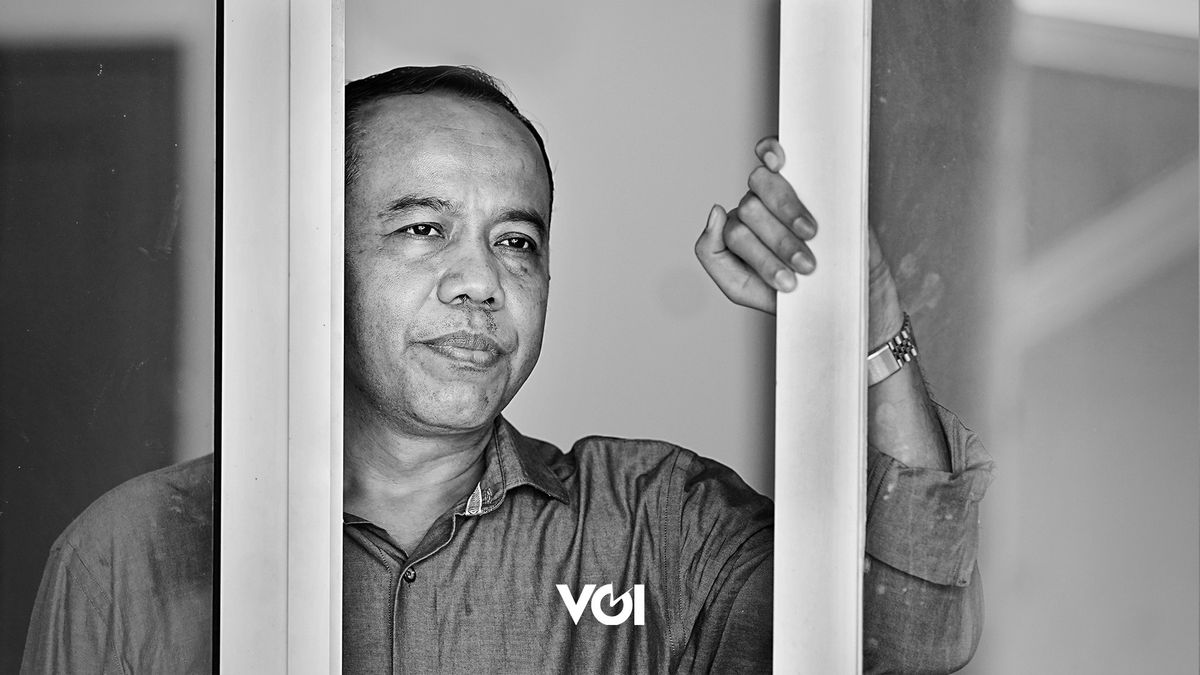


An irony has occurred in this country. A four-year-old boy named Raya in Sukabumi, West Java, lost his life. Tragically, an examination revealed his body has severe worm infection (Helminthiasis). The Deputy Chair of the Indonesian Child Protection Commission (KPAI), Dr. Jasra Putra, S.Fil., M.Pd., urged all parties to take responsibility for this incident.
***
Indeed, Jasra Putra did not point to any specific person or institution as responsible for the death of Raya (4), a resident of Padangenyang Hamlet, Cianaga Village, Kabandungan District, Sukabumi Regency. He stated that all parties, from state officials at the neighborhood level to the President of the Republic of Indonesia, the community, and all elements of the nation, must share responsibility.
"What happened to Raya must not be repeated in the future. Enough, there doesn't need to be another Raya," he stressed.
If this child health issue cannot be resolved, he is pessimistic about achieving larger goals, such as the Indonesia Emas 2045 program, which is already within reach.
"This is a hard blow for all of us. We must not let a similar case happen again tomorrow. There's no need to talk about the future and Indonesia Emas if this problem cannot be resolved," he said.
Raya's death, Jasra Putra continued, could be a catalyst for reconsidering the Child Care Bill, which was introduced 15 years ago. This bill was even included in the National Legislation Program (Prolegnas) at number 72.
"At that time, issues like this weren't a priority for council members. What was completed was Law No. 4 of 2024 concerning Maternal and Child Health. Hopefully, the Child Care Bill will receive attention," he expressed his hope to Edy Suherli, Bambang Eros, and Irfan Meidianto during a visit to the VOI office in Tanah Abang III, Central Jakarta, on August 22, 2025.

The public was deeply shocked and saddened by the death of a 4-year-old child named Raya in Sukabumi, where numerous worms were found in her body. How does the Indonesian Child Protection Commission (KPAI) view this case?
We are saddened to hear this tragic news. A toddler named Raya died in a truly heartbreaking and embarrassing situation for us all. This is a heavy blow for all of us; we must not allow a similar case to occur in the future. There's no need to talk about the future and a Golden Indonesia if this problem cannot be resolved.
For the KPAI, one case is too many. Therefore, there must be anticipation and mitigation measures to prevent a recurrence of this incident. The state must be present and take responsibility. The Child Protection Law emphasizes that the state is obligated to protect children's rights.
Looking at Raya's case, could it be called the tip of the iceberg, small on the surface but vast beneath the surface?
While many reported and surfaced cases are only a few, far more remain undiscovered. Moreover, over the past 10 years, the KPAI has been very concerned about the issue of stunting and has encouraged healthy lifestyles for all children everywhere. We urge relevant agencies to realize the high level of health care for children, as mandated by Health Law No. 17 of 2023.
Raya's case occurred in Sukabumi, which is not far from Jakarta. What about remote areas on the far side of the country?
Sukabumi is indeed relatively close to Jakarta, but from my observations, there is neglect. One indicator is that Raya is already 4 years old, but she doesn't even have a valid ID. As a result, she doesn't receive BPJS Health services. So where are the state officials who handle the identity of its citizens?
Identity is a form of state recognition for its citizens. State institutions, from the neighborhood unit (RT), community unit (RW), village/sub-district, sub-district, regency, and even the governor, where are they all? This is already the case in Sukabumi, let alone in the 3T (underdeveloped, frontier, and outermost) regions with limited resources. Indonesia's children constitute a third of the population (80 million); they must receive state services for optimal growth and development.
In your opinion, where is the "missing point" in Raya's case?
In Raya's case, we're like firefighters, only getting busy after the incident. Yet, before it happened, the closest and relevant authorities should have taken action. She's four years old, her mother is mentally unstable, and her father is in less than optimal health. All of these are indications that could serve as a basis for action.
We hoped that government agencies would step in to help, but in reality, that hasn't happened.
That's why the Indonesian Child Protection Commission (KPAI) is pushing for the immediate deliberation of the Child Care Bill, which was introduced 15 years ago, by the House of Representatives (DPR). Why is this important?
Because many children are in unfavorable situations, where their families cannot support their optimal growth and development. There must be another responsible scheme. The bill mandates that the state allocate resources for child development. There are sanctions for child neglect and abandonment.
What is the fate of this bill, 15 years after its introduction?
The Child Care Bill was included in the National Legislation Program (Prolegnas) at number 72. However, it has not yet been debated. Instead, the Maternal and Child Health Law is being discussed. In fact, the law only protects children for the first two years, while according to the Child Protection Law, the age of a child is up to 18 years.

In the case of Raya's death, KPAI Deputy Chairman Jasra Putra said it could be described as the tip of the iceberg. (Photo by Bambang Eros - VOI, Raga Granada - VOI)
Is it because child cases are less interesting or less viral?
Many child cases go viral. However, it seems this issue hasn't been a priority for our members of parliament. This is very sad. Hopefully, Raya's case can be a catalyst for further deliberations on the Child Care Bill.
We applaud our philanthropic friends who acted more swiftly in Raya's case. State officials should be ashamed; they should be more agile in handling issues like this.
So, the current Child Protection Law doesn't really accommodate this, which is why a Child Care Law is needed, right?
Both laws are equally necessary because they complement each other. Parents, for example, play a role in caring for, protecting, and preventing early marriage. How to carry out this role is not further regulated in the Child Protection Law. More detailed regulations are contained in the Child Care Bill.
The Child Care Bill also clearly divides the authority of state officials in child care. If implemented, it could prevent a recurrence of Raya's case.
Nowadays, our children are cared for not only by their parents, but also by institutions such as orphanages, foundations, and other institutions, including juvenile prisons. The most recent is the People's School. The care of children, wherever they are, must be clear. All of this needs to be regulated in the Child Care Bill.
I heard there were interesting findings in a survey conducted by the Indonesian Child Protection Commission (KPAI) regarding parenting. What were they?
We conducted that survey in 2000. Of 13,000 parents across 34 provinces, almost 60% did not understand how to properly raise children. Furthermore, most of the parents surveyed had only completed elementary school. So, there is a correlation between parental knowledge and education and the quality of childcare. This is homework we must address together.
Another issue is the Family School. In Indonesia, this does not exist. There is a Puspaga (Family Education Center) program in several districts, but this program has not yet become a favorite. This is certainly not easy; it can't be resolved in a day or two; it must be done continuously. If this upstream issue can be addressed, I'm confident that 80% of children's problems can be helped. Prevention is better than cure, because it's cheaper and involves all parties.
Before the Child Care Bill was processed, there was Government Regulation No. 44 of 2017. How supportive was this Government Regulation?
This Government Regulation could actually help push the Child Care Bill to be stronger and more comprehensive. We are still waiting for the goodwill of members of parliament who care about children's issues, so they are encouraged to discuss this Child Care Bill.
We can imagine it's like the 911 system in America, where all parties intervene when a complaint is received. If we work together, I think the impetus to resolve the problem can be faster. The police, psychologists, and relevant authorities will all be involved. If the case occurs in a poor family, the state will take over until the family can afford it again. In the meantime, we can only dream.
To prevent a recurrence of Raya's case, what must be done?
The Convention on the Rights of the Child (CRC) has four clusters.
- Cluster 1 (Civil Rights and Freedoms), such as the right to identity and freedom of expression. Currently, approximately 2–4% of our 70 million children do not have birth certificates. It is the responsibility of the relevant agencies to address this issue.
- Cluster 2 (Family Environment and Alternative Care), includes the right to family and protection from neglect. Currently, out of 1 million married couples, 30% divorce. Of the 973 complaints received by the Indonesian Child Protection Commission (KPAI) (January–July 2025), approximately 60% were family cases.
- Cluster 3 (Basic Health and Welfare) covers the rights to health, nutrition, and social security. The Indonesian Child Protection Commission (KPAI) has also received numerous complaints of alleged malpractice in our healthcare services.
- Cluster 4 (Education, Leisure, and Cultural Activities) covers the rights to education, rest, play, and participation in cultural activities. Why are there so many child marriages in Indonesia? Because many drop out of school.
If these four clusters can be addressed, I'm confident Raya's case won't happen again.
Has the state mobilized its resources to protect children?
Yes, but in reality, cases of neglected children like Raya's still occur. Hopefully, this can be a lesson for us all. Budgeted funds must be properly targeted, truly for children.
After all, if children are asked honestly, they certainly don't want to be born into poverty. Every child wants to be born into a palace, but who can choose? No one. Therefore, the state must be present to protect and defend children.
What are your concrete suggestions?
Since we're still in Independence Day, let's look at the issue of child protection here. To what extent are programs for children meeting their needs? We commend the government for being creative and implementing programs. However, it's important to remember that meeting children's needs isn't just for National Children's Day, July 23rd, but throughout the year.
We need Child-Friendly Districts. There should be special teams that can intervene when violence against children occurs. These teams must be trained and facilitated by the government.
Everyone must act; The government, state apparatus, society, and parents are all concerned. Our children are not doing well right now. There are many threats: pornography, online gambling, drugs, violence, and so on.
Given this reality, are you still optimistic that we can achieve Golden Indonesia 2045?
If we look at the RPJMN (National Medium-Term Development Plan), one way to achieve this is through Asta Cita. If this foundation can be implemented down to the neighborhood and community level, the prerequisites for achieving Golden Indonesia can certainly be met.
However, if children's basic rights are not fulfilled from the start, this is a cause for concern. We could end up giving birth to a "weak generation" or an "anxious generation." This must be our collective vigilance.
Remember, the only ones who can protect children 24/7 are their families. The Indonesian Child Protection Commission (KPAI), government officials from the neighborhood association to the president, can only monitor from the outside. Therefore, we ask that families play a real role in children's development. Collaboration and synergy are needed to prevent a repeat of Raya's case.
Jasra Putra and His Love for the World of Children

Regarding Raya's case, KPAI Deputy Chair Jasra Putra urged the reconsideration of the Child Care Bill. (Photo by Bambang Eros - VOI, Raga Granada - VOI)
The love of children by the Deputy Chair of the Indonesian Child Protection Commission (KPAI), Dr. Jasra Putra, S.Fil., M.Pd., grew from a young age. His interest in the plight of children deepened when he was a student majoring in Aqidah and Philosophy at IAIN (now UIN) Imam Bonjol in Padang, West Sumatra.
"Since my second semester, I've been working on street children in Padang City. The majority of the children we assisted were from the urban poor. At that time, there was no School Operational Assistance (BOS) funding like there is now. So we sought funding everywhere to run the program," said Jasra, who has consistently focused on children's issues for over 24 years.
Even after moving to Jakarta to pursue a Master's degree in Educational Administration at Prof. Dr. Hamka University (UHAMKA) Jakarta, he remained committed to children's issues. "I was able to become a KPAI commissioner because I come from the Child Care Community," said the man born in Maligi, West Pasaman, on July 17, 1980.
Jasra, who has been active in Muhammadiyah since his youth, has remained consistent. At the Central Executive Board of Muhammadiyah Jakarta, he is part of the Social Welfare Development Council. "Here, I also handle issues related to children, families, and institutions. We have 610 social institutions that care for children with disabilities and the elderly. I also handle special issues such as victims of human trafficking," said the 2021 graduate of the Doctoral Program in Educational Management at the University of Jakarta (PPs).
Street Children

Indonesian children currently make up a third of the population, and therefore, according to KPAI Deputy Chairman Jasra Putra, they deserve government attention to ensure healthy and optimal growth. (Photo by Bambang Eros - VOI, Raga Granada - VOI)
According to Jasra Putra's observations, there are similarities between street children in Padang and those in Jakarta and the surrounding areas.
"The children busk after school. In Padang, it's about two to five hours. But in Jakarta, the problem is more complex. Some children no longer want to live with their parents. They chip in to rent a house. This is even more dangerous in terms of childcare," said Jasra, who is also a lecturer at Muhammadiyah University of Bogor Raya, teaching Educational Administration.
In addition to focusing on the children, Jasra and his colleagues in Padang also provided guidance and awareness to the children's parents. "It's true they're busy at sea or working other jobs. But we tell parents that no matter how busy they are, they must still pay attention to their children," recalled Jasra, who was once a package A, B, and C teacher.
The biggest challenge, Jasra continued, is the risk of children who busk or earn money on the streets dropping out of school. "They think, why go to college if the goal is just to make money? After all, they can earn money by busking. So the challenge lies there, dealing with street children," he said.
Attention to Children

Despite his busy schedule, KPAI Deputy Chairman Jasra Putra remains committed to his family. He will give special attention to his children. (Photo by Bambang Eros - VOI, Raga Granada - VOI)
According to Jasra, childcare must involve the family. "Children can't go backwards as they grow; they continue to progress. Therefore, the family must be present in their childcare. No matter how busy parents are, they must pay attention to their children," she hoped.
Technological advances, she continued, can be utilized to communicate with children. "Now there's no excuse not to be able to communicate with children. Smartphones can be used for phone or video calls with our children," explained Jasra, who is also continuing to learn how to be a parent and raise children.
The first 1,000 days after birth are crucial for a child's growth and development. "After that, until the age of seven, it's a golden period for a child's development. The later years, including adolescence, are also crucial, as parents learn to connect with their children," said Jasra Putra, who continues to pay attention to their child's development despite being busy with various activities.
"In Raya's case, we're like firefighters, only getting involved after something happens. Yet, the closest and most relevant authorities should have taken action before it happened. After all, she's four years old, her mother is mentally unstable, and her father is in less than optimal health. These are all indications that could be used as a basis for action."
The English, Chinese, Japanese, Arabic, and French versions are automatically generated by the AI. So there may still be inaccuracies in translating, please always see Indonesian as our main language. (system supported by DigitalSiber.id)


