
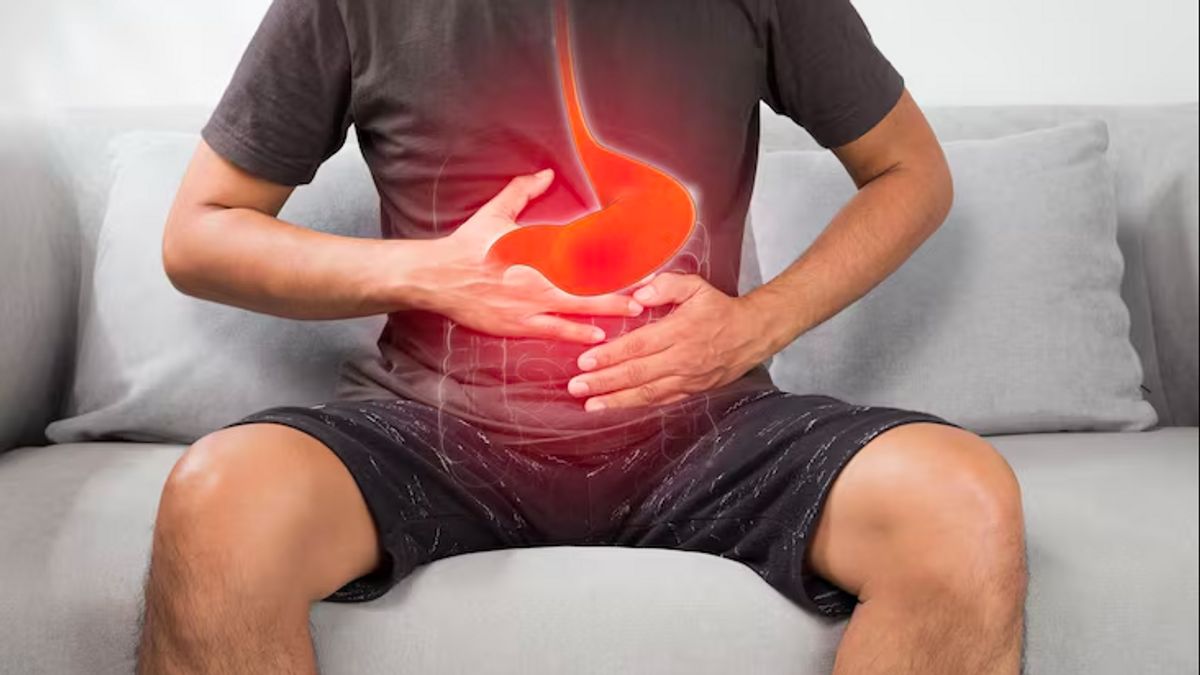


Jakarta - Gastroesophageal reflux disease (GERD) is a disorder of the digestive system that occurs when stomach acid goes back up the esophagus. This condition often causes a hot sensation in the chest (heartburn), heartburn, to a sour taste in the mouth.
If it continues, GERD can interfere with daily activities and risk triggering complications in the digestive tract.
Professor of Internal Medicine, Consultant in Gastroenterology-Hepatology, Faculty of Medicine, University of Indonesia and a doctor at RSCM, Prof. Dr. Ari Fahrial Syam, SpPD-KGEH, said that GERD can basically improve if the risk factors that trigger the disease are controlled and the patient undergoes treatment to the end.
"GERD can be cured if the risk factors are reduced and the treatment is completed," said Ari in a health discussion about GERD as quoted by ANTARA.
He explained that GERD treatment is not only focused on drugs, but also lifestyle changes. Some habits that need to be improved include stopping smoking, avoiding alcohol consumption, losing weight, and implementing a low-fat diet.
"If he smokes he has to stop, if he drinks alcohol he also has to stop. Weight must be reduced, then a low-fat diet must be followed. So lifestyle must be improved," he said.
According to Ari, these lifestyle changes need to be supported by regular exercise, adequate sleep time, and stress management skills. These steps can help reduce the frequency and severity of GERD symptoms.
Based on the research he conducted, GERD sufferers are generally men over 40 years old who have the habit of smoking and are obese.
However, in recent years, cases of GERD have also begun to be found in younger age groups, even children. This is often associated with unhealthy diets and certain habits since childhood.
"Excessive consumption of chocolate and cheese since childhood, then the habit of eating directly to sleep, can trigger GERD in children," said Ari.
He also highlighted the reduced physical activity in children due to excessive use of gadgets. This condition makes children less likely to move so that it has the potential to increase the risk of digestive disorders.
"Now children are also less mobile because of gadgets. So the use of gadgets needs to be reduced, they have to play more often and be active," he said.
To confirm the diagnosis, doctors usually perform an endoscopy to see the condition of the esophagus and stomach directly. This examination helps assess the level of damage caused by stomach acid as well as seeing the condition of the stomach valve which serves to hold acid so that it does not rise to the esophagus.
Ari suggested that a person should immediately see a doctor if they experience complaints such as chest pain, a hot feeling in the chest, heartburn, or repeated vomiting.
In addition to helping establish a diagnosis of GERD, an endoscopic examination can also detect possible more serious complications, including tissue damage that is at risk of developing into cancer if not treated.
In medicine, patients are usually given acid suppressing drugs that must be consumed according to the recommendations until the therapy is completed. Currently, new therapies from the potassium-competitive acid blocker (P-CAB) group such as vonoprazan, tegoprazan, and fexuprazan are also available, which are considered alternatives for patients who do not respond to previous treatment.
"Now it has entered the P-CAB era. Around 20 percent of patients who use previous drugs do not get optimal results, so this drug is a breakthrough for GERD," said Ari.
In addition to medical treatment, he added that dietary adjustments are also important to help control GERD symptoms, including maintaining protein intake and implementing regular diets such as intermittent fasting.
The English, Chinese, Japanese, Arabic, and French versions are automatically generated by the AI. So there may still be inaccuracies in translating, please always see Indonesian as our main language. (system supported by DigitalSiber.id)


