
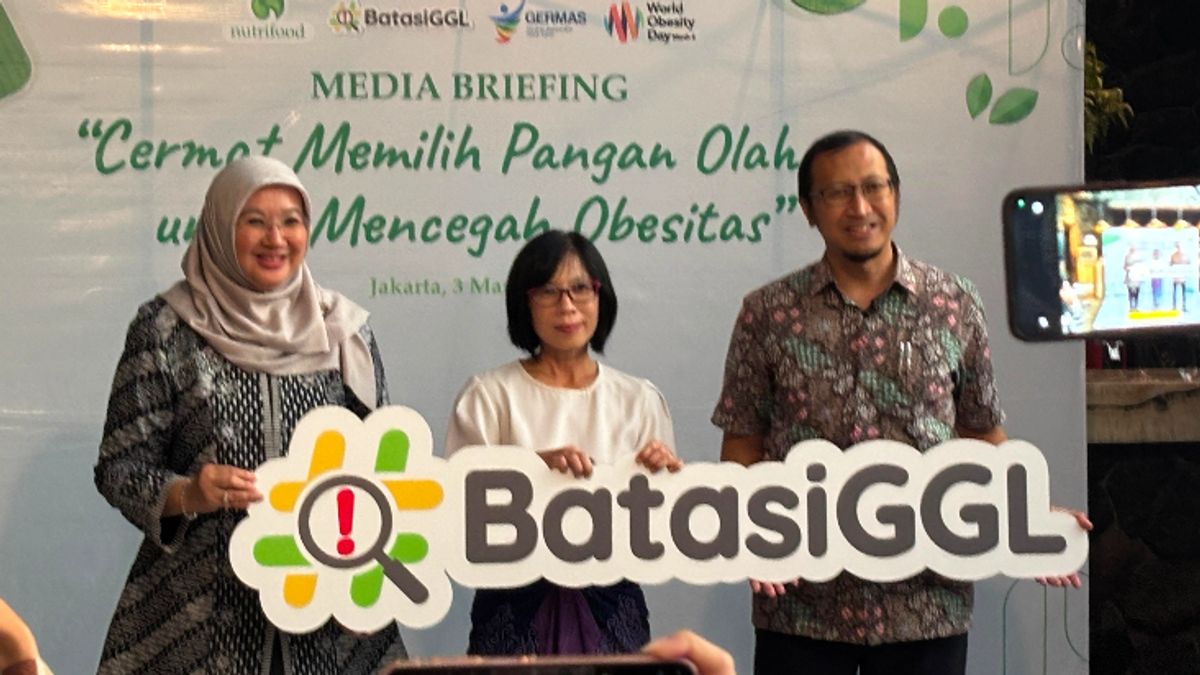


JAKARTA - The fast-paced lifestyle, lack of physical activity, and the habit of consuming high-calorie foods are increasingly encouraging an increase in excess weight or obesity in the community.
This condition is certainly no longer a trivial matter, but a real threat to long-term health. The latest data shows that the prevalence of obesity in the population aged 18 years and over in Indonesia has increased from 21.8 percent in 2018 to 23.4 percent in 2023. This figure reflects a trend that needs to be watched.
The Director of Prevention and Control of Non-Communicable Diseases at the Ministry of Health, dr. Siti Nadia Tarmizi, M.Epid., emphasized that obesity is a chronic disease that has serious impacts.
"Obesity is not just a matter of appearance. This is a chronic disease with a high risk to health. In fact, according to studies, obesity can be a gateway to chronic diseases such as heart disease to diabetes," he said at the Nutrifood Media Briefing entitled "Choosing Processed Food Carefully to Prevent Obesity" in Central Jakarta, recently.
According to Nadia, obesity occurs due to excessive calorie intake that lasts a long time, both from ready-to-eat foods and processed foods. In a modern lifestyle, the consumption of processed foods is indeed difficult to avoid, so a more realistic approach is to regulate the amount and frequency of consumption.
The Ministry of Health together with a number of stakeholders continues to encourage restrictions on the consumption of sugar, salt, and fat (GGL).
This educational campaign has been running since 2013 through collaboration with Nutrifood and the Food and Drug Supervisory Agency (BPOM), with a focus on increasing public awareness of the importance of controlling the intake of GGL and understanding information on the packaging label.
"The most important thing is to recognize the information on the nutritional value and composition on the packaging, so that processed foods that are consumed can actually help reduce the risk of obesity," said Nadia.
He also invited the public to take advantage of the Ramadan momentum to start reducing the consumption of sugar, salt, and fat gradually, so that changes in eating patterns can last more consistently.
"Take advantage of the Free Health Check (CKG) as an initial screening to monitor our health and take advantage of Ramadan to train ourselves to reduce the consumption of sugar, salt and fat, not just to hold hunger and thirst," he said.
Meanwhile, the Director of the Southeast Asian Food and Agricultural Science and Technology Center of IPB University, Dr. Puspo Edi Giriwono, STP., M.Agr., explained that modern food technology is designed to ensure the safety, quality, and shelf life of products.
According to him, processed food is part of a science-based food system that aims to increase safety and ease of consumption.
"Food additives listed on the packaging have undergone safety studies and have safe limits of consumption, so they are safe to use according to regulations," he said.
He assessed that the main problem was not merely the existence of packaged food, but rather the lack of public understanding in reading composition and nutritional value information. Packaged food is not always a cause of obesity if consumed wisely and according to needs.
Therefore, the habit of reading food labels is an important step to understand the sugar, salt, fat, and calorie content contained in products.
The public is also asked to be more careful about this information, so that they can adjust their food choices to their body's needs and maintain a more balanced diet to reduce the risk of obesity.
The English, Chinese, Japanese, Arabic, and French versions are automatically generated by the AI. So there may still be inaccuracies in translating, please always see Indonesian as our main language. (system supported by DigitalSiber.id)


