
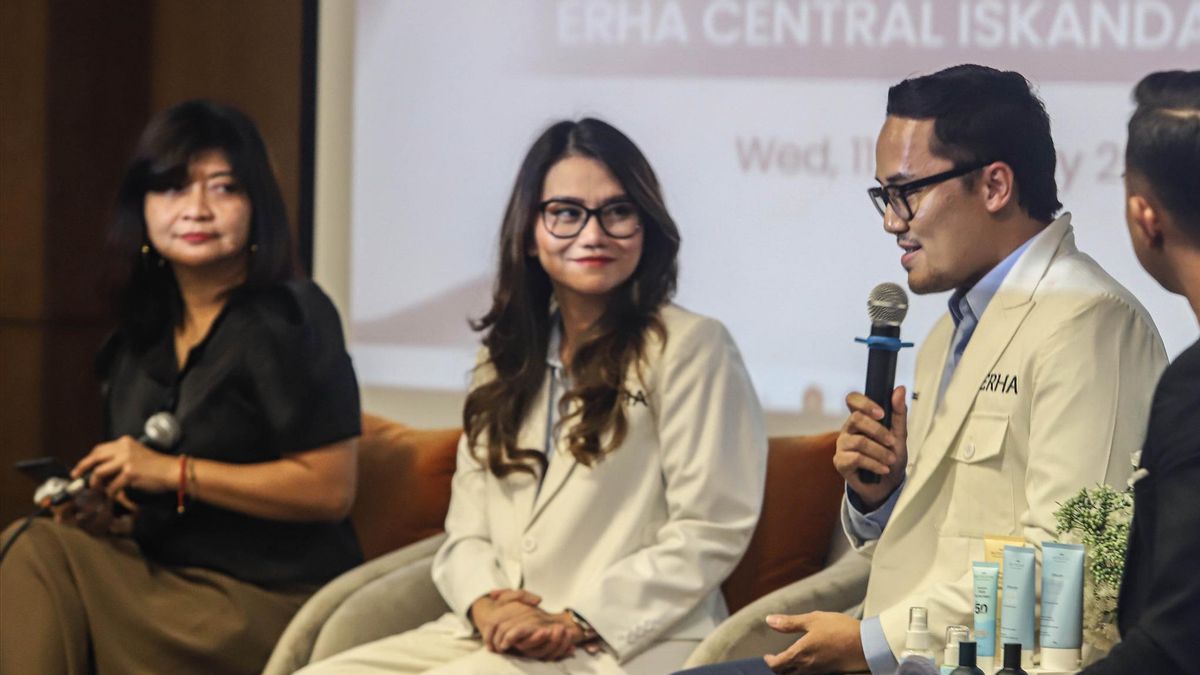


JAKARTA - Indonesia has now officially confirmed its position as a key player in the beauty industry in Southeast Asia. The latest data shows that Indonesia holds a 43.5% market share in sensitive skincare in ASEAN, a figure that reflects the high consumer demand for safe and medically tested skin care solutions.
As the market is projected to reach US$ 2.29 billion by 2030 in the ASEAN region, new challenges arise for consumers: distinguishing between products that merely follow marketing trends and products that are actually born from clinical practices.
Beyond the "Dermatologist-Tested" Claim
Amid the flood of products labeled "dermatologically tested", the industry is now beginning to move towards a stricter standard, namely Clinically Created. Unlike ordinary cosmetic testing, which generally involves small samples over a short period of time, clinically based products are developed based on real observations of thousands of patients over the long term.
"The fundamental difference is not only about being tested, but how the product is formulated by experts who handle various skin conditions every day," said Afril Wibisono, an industry practitioner from ERHA Skincare Group. He added that medical authenticity is very crucial because it concerns the long-term health of the consumer's skin.
Real Solution-Based Innovation
Responding to the increasingly specific market needs, product development is now focused on three main pillars:
Sensitive Skin Protection: Through soothing sunscreen technology (ultracalm).
Acne Management: Effective facial cleansing while maintaining skin barrier integrity.
Men's Care: Transforming men's grooming products towards a more functional premium standard.
This step was taken considering that medical-grade formulation standards have advantages in terms of active ingredient concentration, raw material purity, to pH level optimization which often fall short in mass cosmetic production.
Integration of Medical Personnel and Technology
The growth of this industry is also driven by the synergy between research laboratories and professional medical personnel. The presence of more than 200 medical personnel who validate products is a guarantee that the innovations that are born are not just media or marketing decisions, but medical decisions that can be accounted for.
With a track record of more than 25 years in dermatological practice in Indonesia, this standard strengthening is expected to provide education for the public to be more selective in choosing products, especially for those who have specific skin conditions in tropical climates.
The English, Chinese, Japanese, Arabic, and French versions are automatically generated by the AI. So there may still be inaccuracies in translating, please always see Indonesian as our main language. (system supported by DigitalSiber.id)


