
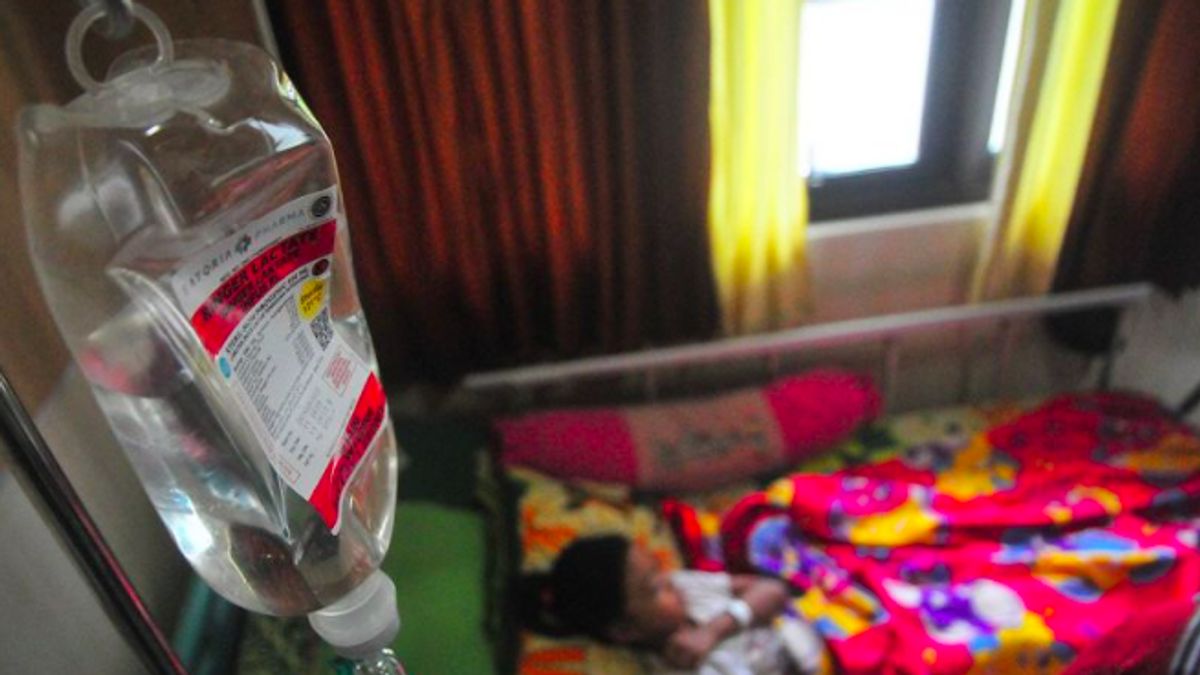


JAKARTA - Kawasaki disease is one of the inflammatory diseases of the blood vessels that attack children and often go unnoticed because the symptoms resemble common infections.
In fact, this disease can have serious effects, especially on the heart, if it is not treated quickly and properly. Kawasaki can cause coronary artery disorders that are at risk of causing long-term complications that can threaten life.
The Indonesian Pediatric Association (IDAI) reminds the public to increase vigilance against Kawasaki disease in children. Without optimal treatment, this disease has the potential to cause severe complications in the heart blood vessels.
Children's specialist and children's cardiologist as well as Professor of Children's Health Sciences at the Faculty of Medicine, University of Indonesia, Prof. Dr. dr. Najib Advani, Sp.A, Subsp.Kardio(K), M.Med(Paed), explained that Kawasaki disease is a systemic vascular inflammation that can attack various organs of the body.
However, the most dangerous impact occurs when inflammation affects the coronary arteries that supply blood to the heart.
"The most worrying complication is coronary artery dilation or aneurysm. If it is not treated, the risk can occur in about 15 to 25 percent of patients," said Najib in an online IDAI seminar themed Kawasaki in children which was attended from Jakarta, as quoted by ANTARA.
The coronary artery has a vital role in delivering blood and oxygen to the heart muscle. If this vessel experiences dilation or flow disorders, the condition can trigger the formation of blood clots that can cause heart attacks, even in children.
Kawasaki disease was first reported in Japan in 1967 by the doctor Tomisaku Kawasaki. To this day, the exact cause of this disease is unknown. However, a number of studies suspect its connection with infectious factors as well as genetic predisposition.
"This is systemic vasculitis or inflammation of blood vessels throughout the body. It can affect many parts, but what determines the safety of the patient is the involvement of the heart blood vessels," said the professor, also known as the Father of Indonesian Kawasaki.
Globally, Najib said that more than one million cases of Kawasaki disease have been recorded. In Indonesia alone, he began to socialize and handle it since 1999 and has handled more than 2,000 cases.
As part of the IDAI Cardiology Coordination Working Unit, Najib assessed that Kawasaki disease is often considered a rare disease. In fact, the number of cases is quite significant and potentially undiagnosed, especially if the child comes to the doctor in a condition that has already experienced abnormalities in the coronary artery due to delayed treatment.
He added that the provision of therapy significantly reduces the risk of coronary artery abnormalities by about two to three percent. Therefore, he emphasized the importance of parental vigilance and health workers to the early symptoms of Kawasaki and the need for rapid referral to pediatric specialists and pediatric cardiologists.
The English, Chinese, Japanese, Arabic, and French versions are automatically generated by the AI. So there may still be inaccuracies in translating, please always see Indonesian as our main language. (system supported by DigitalSiber.id)


