
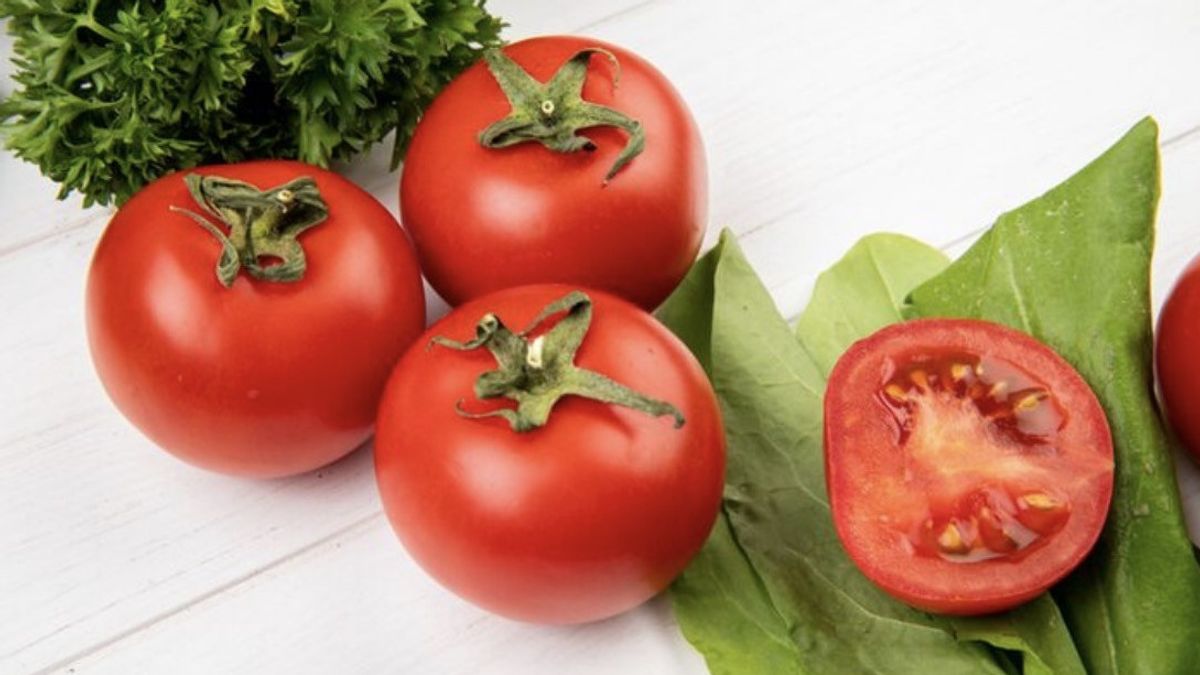


JAKARTA - Recent research shows that nutritional compounds found in tomatoes may play an important role in maintaining gum health in the elderly. A newly published study reports that elderly people in the United States who do not get enough lycopene from their food have a much higher risk of developing severe periodontitis, a serious infection of the gum tissue.
Reported by the SciTech Daily website, this finding applies to people aged 65 to 79 years, and the risk level varies depending on gender and race. This research was published in the journal The Journal of Nutrition, Health and Aging.
The study was led by Katherine Kwong of the Department of Human Development at Connecticut College. She collaborated with researchers from several major universities in the United States and China.
The researchers analyzed health and dietary data from 1,227 people who took part in the US National Health and Nutrition Examination Survey between 2009-2014.
The results showed that gum disease is still very common in this age group. Almost half of the participants, namely 48.7 percent, suffered from periodontitis in various degrees of severity. On the other hand, 77.9 percent of participants turned out not to consume enough lycopene, an antioxidant from the carotenoid group that is abundant in tomatoes and other red-colored fruits.
After taking into account other factors such as age, gender, race, smoking habits, and education level, researchers found a strong association between lycopene intake and gum conditions.
Elderly who consume enough lycopene are much less likely to experience severe periodontitis. Their risk is only about a third compared to those who are deficient in lycopene.
This study also showed a fairly clear difference in the group most affected by severe gum disease. Men were recorded as having more severe periodontitis than women. In addition, non-Hispanic black adults were also found to have a higher rate of severe gum disease than other racial groups.
Another important finding reinforces this picture. Adequate lycopene intake is known to be associated with a much lower risk of severe periodontitis, only about one-third compared to those who are lycopene deficient. On the other hand, non-Hispanic black adults are almost three times more likely to have severe periodontitis than non-Hispanic whites. Women generally have a much lower risk than men.
In the non-Hispanic white group, the two factors that were both associated with a lower risk were female sex and adequate lycopene intake. However, this pattern was not clearly visible in the non-Hispanic black group, suggesting that the relationship between lycopene and gum health may differ between groups.
The study's authors say that lycopene from food could be a modifiable factor to help prevent severe gum disease in the elderly. This means that improving your diet may be one of the simplest preventive measures.
However, it's important to remember that this study is cross-sectional in nature, so it can't confirm that lycopene directly causes a reduced risk. Further research is still needed.
The study also highlights differences in risk based on race and gender. Therefore, researchers suggest that future prevention strategies consider more specific nutritional approaches according to specific groups.
They also encourage long-term research or controlled clinical trials to determine whether increased lycopene intake can actually reduce the risk or slow the progression of gum disease.
In short, adding more lycopene-rich foods such as tomatoes, watermelon, or red guava to the daily menu may not only be good for the heart, but also potentially help maintain gum health in old age.
The English, Chinese, Japanese, Arabic, and French versions are automatically generated by the AI. So there may still be inaccuracies in translating, please always see Indonesian as our main language. (system supported by DigitalSiber.id)
Most Popular Tags
#Prabowo Subianto #donald trump #Febrie Adriansyah #8791 #giias 2026Popular


