
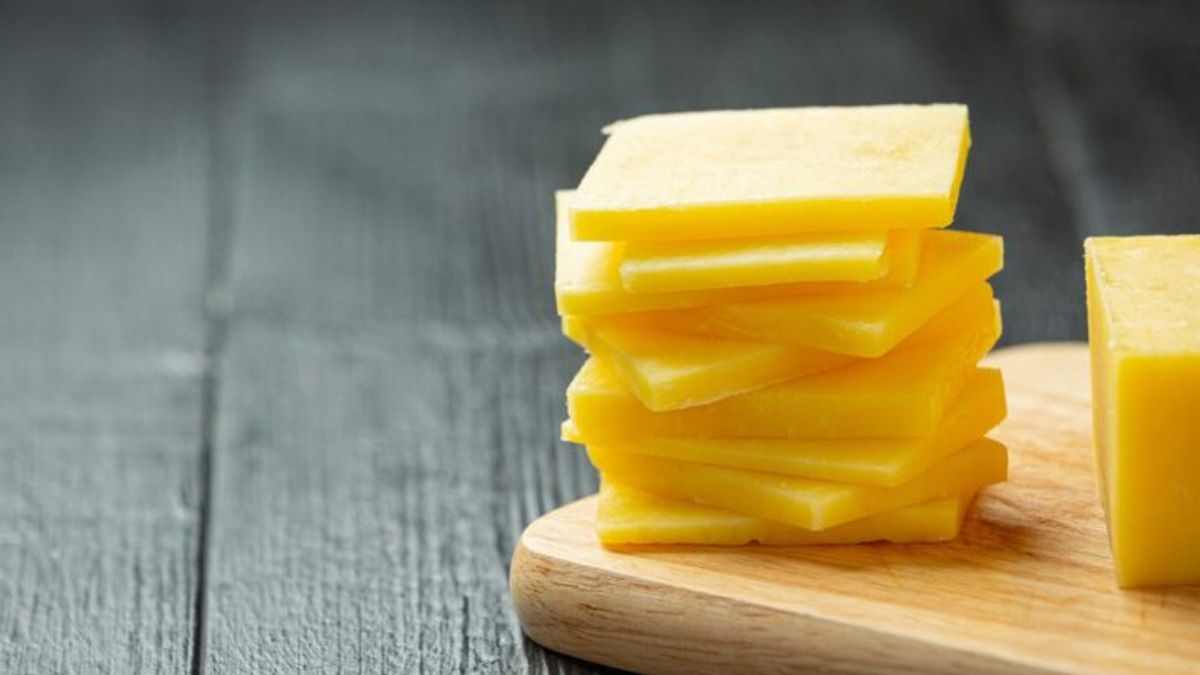


JAKARTA - Cheese and high-fat milk cream have recently been touted as potentially protecting the brain from dementia. This claim emerged from a recent observational study that followed nearly 28 thousand people in Malmö, Sweden over a period of up to 25 years.
The study found that high-fat cheese consumption such as cheddar, Brie, and Gouda containing more than 20% saturated fat was associated with a slightly lower risk of dementia. However, experts warn that these findings are not strong enough to be used as an excuse to increase the consumption of full-fat dairy products.
"The findings about cheese are only at the statistical significance limit, and researchers assess many types of food at once. It could be that the results appear by chance," said Dr. Walter Willett, a leading nutritionist from Harvard T.H. Chan School of Public Health, quoted from the CNN website.
He emphasized that he was not interested in directly buying more cheese just because of the results of this study.
One of the main weaknesses of the study was that the participants' diets were only recorded at the start of the study, that is, in 1991. Most of the participants were not thoroughly monitored over the next 25 years.
When a follow-up analysis was conducted on a small portion of participants after five years, the relationship between high-fat cheese, cream, and dementia risk actually became insignificant.
This was highlighted by Dr. Tian-Shin Yeh of Taipei Medical University in an accompanying editorial to the study. According to him, the findings raise major questions about the strength of the study's conclusions.
Yeh also added that the benefits of high-fat cheese are most visible when the cheese is used as a substitute for foods with poorer nutritional quality, such as fatty red meat or processed meat.
This means that it is not the cheese itself that directly protects the brain, but rather cheese is a lower risk choice than other foods.
The study, published in the journal Neurology, found that people who ate at least 50 grams of high-fat cheese per day had a 13% lower risk of dementia than those who ate less than 15 grams.
Meanwhile, consumption of about 20 grams of high-fat cream per day is equivalent to approximately one and a half tablespoons, associated with a 16% reduction in the risk of dementia.
Lead researcher, Emily Sonestedt from Lund University, stressed that these results do not prove that cheese can prevent dementia. However, the findings at least challenge the assumption that all high-fat dairy products are necessarily bad for brain health.
Even so, this study did not find similar benefits in butter, milk, fermented milk products such as yogurt and kefir, or low-fat dairy products.
Interestingly, the group who consumed low-fat dairy products actually had a higher burden of health problems from the start, such as diabetes, cholesterol disorders, and heart disease.
According to Dr. David Katz, a preventive medicine expert, this could mean that the risk of dementia is more influenced by overall chronic health conditions. Switching to low-fat products may be just a survival attempt from those who already feel at risk.
Another factor that makes the results of this study difficult to apply in other countries is the difference in farming patterns. In Sweden, dairy cows are given more grass feed than in the United States. Cows fed grass tend to produce milk and cheese with higher omega-3 content.
According to Dr. Richard Isaacson, a neurologist from Florida, omega-3 is known to be good for brain health, especially in people with the APOE4 gene who are at higher risk of Alzheimer's. However, this study actually found greater protection in those who did not have the gene, so the results were confusing.
Isaacson stressed that although his findings are interesting, he would not advise people to eat high-fat cheese in order to prevent Alzheimer's.
Sonestedt also admitted that this study is not necessarily applicable to people in the United States or other Western countries. Even though the amount of cheese consumption per person is relatively the same, the types of cheese consumed are different. In Sweden, hard cheese that is fermented is more common, while in the US processed cheese and cheese in fast food are more dominant.
"We want to see these results tested in more countries and communities before drawing any really definitive conclusions," Sonestedt concluded.
The English, Chinese, Japanese, Arabic, and French versions are automatically generated by the AI. So there may still be inaccuracies in translating, please always see Indonesian as our main language. (system supported by DigitalSiber.id)
Most Popular Tags
#Prabowo Subianto #donald trump #Febrie Adriansyah #8791 #giias 2026Popular


