


JAKARTA - Have you ever felt that you've slept enough, but still wake up tired and difficult to focus all day? It could be that the problem is not only on the duration of sleep, but on your chrontype, which is the body's natural tendency to feel sleepy and awake at certain times. Verywell Mind's article, quoted on Monday, November 17, explains that chrontype is a built-in biological clock that affects when you feel the most energetic, when to start slowing down, and when the body is really ready to rest.
Understanding chrontype is not just a technical matter of sleep, but the key to aligning lifestyles with the body's rhythm to make sleep sounder, moods more stable, and days feel lighter.
Broadly speaking, chrontypes are often known as morphing type (the morning owl or early bird), evening type (the night owl or night owl), and the type among them tends to be more flexible. People with morning chrontypes usually get up early, feel the most focused in the early hours of the day, but get tired quickly at night.
On the other hand, the night chrontype tends to 'hot' in the late afternoon, has difficulty sleeping faster, and feels heavy getting up early. Most people are in the middle of this spectrum, not entirely morning or evening, but have favorite hours when the body feels the most 'living'. Interestingly, this chrontype is heavily influenced by biological and genetic factors, so it's not just a matter of discipline or laziness.
You seem to have a real impact on the quality of sleep and everyday life. When your life schedule is in line with chrontypes, for example, morning type workers who do work in morning hours, sleep usually feels better, sleep is easier, sleep is easier, and waking up feels fresher. However, when there is a collapse' between biological clocks and social demands, what is called social jetlag emerges, namely the condition when the body feels like it constantly changes time zones due to forced sleep patterns. People with night chrontypes who have to wake up very early for school or work, for example, often feel sleep deprived, lethargic, and difficult to focus, even though the total sleep hours seem enough.
This article also highlights how chrontype affects the ability to adapt to schedule changes. Those with morning types tend to adapt more easily to changes in sleep hours and rest duration, but it can be difficult if they often have to stay up late for social events or work overtime at night. On the other hand, the type of night may be more comfortable with activities until late, but will be more prone to sleep disorders, sleep drowsiness during the day, and difficulty meeting the schedule that demands getting up early. In the midst of this pattern, the body tries to maintain the rhythm of circadiance, a 24-hour biological clock that regulates sleep, hormones, body temperature, and mood.
SEE ALSO:
-
 | KESEHATAN SEKSUAL
8 Manfaat Tidur Telanjang untuk Kesehatan Tubuh dan Pikiran
23 Oktober 2025, 21:25

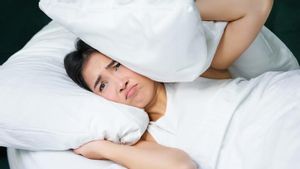

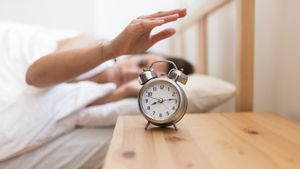
Getting to know chrontype also helps you organize strategies to keep sleep of quality even though the schedule is not always ideal. Verywell Mind emphasizes the importance of habits that support the body's natural rhythm, such as maintaining consistent sleep and waking time, reducing exposure to light (including gadgets) ahead of sleep, and maximizing exposure to morning light to help reorder' biological clocks. For night-types forced to wake up early, small but consistent adjustments, for example advancing hours of sleep little by little, not staying up extremely at the weekend, and creating calming rituals before bed' can help the body adapt slowly.
However, if you constantly feel tired, experience prolonged sleep difficulties, or are suspicious of having sleep disorders such as insomnia or sleep apnea, this article reminds you of the importance of consulting health workers or sleep specialists.
Goodminton does explain the natural tendency, but it's not an excuse to ignore complaints that interfere with the quality of life. In the end, understanding chrontype is about making peace with your own rhythm: compiling a work schedule, learning, and resting as close as possible to a biological clock, so you no longer feel 'against yourself' every time a morning alarm sounds. That way, sleep is not only a sum, but also quality and supports mental or physical health.
The English, Chinese, Japanese, Arabic, and French versions are automatically generated by the AI. So there may still be inaccuracies in translating, please always see Indonesian as our main language. (system supported by DigitalSiber.id)


