



JAKARTA - Awareness of breast cancer is now becoming increasingly important amid the increasing incidence of this disease worldwide. Although many educational campaigns have been carried out, there are still many women who have not routinely conducted their own breast tests (SADARI) or medical screening, even though early detection has proven to be able to save lives.
According to data from the 2022 Global Cancer Observatory (GLOBOCAN), breast cancer is the most common type of cancer that attacks women in the world. Every year there are around 2.3 million new cases, or about 11.6% of all cases of cancer in women, with 666 thousand deaths from this disease.
In Indonesia, the situation is also worrying. Every year there are an estimated 400,000 new cases of cancer, with 240 thousand of which leading to death. The number of cases is estimated to increase by 70 percent by 2050 if preventive measures and early detection are not strengthened. This condition certainly has a major impact, not only on the health system, but also on the social and economic burdens of the community.
dr. Agnes, Head of the Medical Check Up Department of MRCC Siloam Hospitals Semanggi, said that many cases of breast cancer were found accidentally when patients underwent routine health checks.
"Often new patients are aware of breast cancer when it is in advanced stages, because there are no symptoms that are felt. Even though this can be prevented if SADARI's examination is carried out regularly, or with emmography once a year after the age of 40 years," he explained.
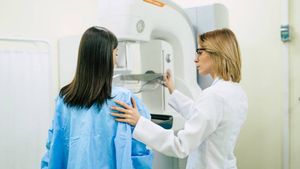
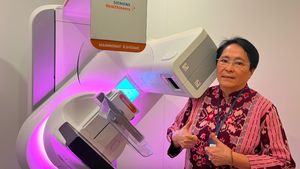
Meanwhile, dr. Nina ISH Supit, Sp.Rad PRP (K), Head of the Department of Radiology MRCC Siloam Hospitals Semanggi, emphasized that the emmography is still the most accurate (gold standard) method for breast cancer screening.
"With the latest technology, the mammography can detect very small tumors, even up to 0.2 millimeters," explained dr. Nina.
However, according to him, the biggest challenge lies in public access and education. There are still many women who are reluctant to do emmography because of the myth that is circulating, such as being afraid of illness or worrying that the examination will actually worsen conditions.
"Currently, more convenient and faster mammographic technology is available, such as Mammomat B.brilliant at MRCCC, which produces high-quality images without excessive discomfort," he added.
Furthermore, dr. Nina emphasized the importance of sustainable education regarding early detection.
"For those under 40 years of age, examinations can be carried out with breast ultrasound, while those over 40 years of age should routinely undergo mammography. Early detection will prevent cancer from being found in advanced stages that are difficult to treat and require high costs," he explained.
In terms of public policy, Dr. Siti Nadia Tarmizi, Director of Infectious Diseases of the Indonesian Ministry of Health, explained that breast cancer is not only a medical problem, but also a social and economic problem.
"The high cost of treatment and psychological impact for patients and families make breast cancer a big challenge. Most patients come during advanced stages, so that the success of treatment decreases. Therefore, we launched the 2024-2034 National Cancer Action Plan to strengthen screening and early detection," he said.
Currently, the coverage of mammographic examinations in Indonesia is still relatively low. Of the approximately 3,000 hospitals, only about 200 have emmographic tools.
"We are committed to ensuring that every provincial hospital has a mammographic tool. In addition, we also continue to encourage SADARI ( own breast examination) and SADANIS (clinical breast examination) so that early discovery of cases is increasing," added Dr. Siti Nadia.
SEE ALSO:
-
 | INFO SEHAT
Risiko Kanker Payudara Lebih Rendah pada Perempuan yang Pernah Menyusui, Benarkah?
03 Oktober 2025, 04:25


For patients with advanced breast cancer, the multidisciplinary approach is now the main handling strategy. DR. dr. Andhika Rahman, SpPD-KHOM, Specialist for Diseases in Medical Oncology Hematological Subspecies MRCC Siloam Hospitals Semanggi, explained that this cross-field collaboration provides more optimal results for patients.
"The multidisciplinary approach involves various specialist doctors and support staff to provide comprehensive care not only to treat their illness, but also to maintain the patient's physical, mental, and quality of life," he said.
In advanced cancer, where disease has spread to surrounding tissues or other organs (metastasis), treatment is no longer focused solely on major tumors.
"The goal is to control the spread of cancer, reduce symptoms such as pain or shortness of breath, maintain organ function, and ensure patients still have good quality of life," said dr. Andhika.
A multidisciplinary approach is now recognized as a gold standard in advanced cancer treatment in various major world hospitals, including in Indonesia. Cross-field collaboration, patients are expected to be able to undergo a more personal, effective, and humane treatment to provide new hope for those who are battling breast cancer.
The English, Chinese, Japanese, Arabic, and French versions are automatically generated by the AI. So there may still be inaccuracies in translating, please always see Indonesian as our main language. (system supported by DigitalSiber.id)


