
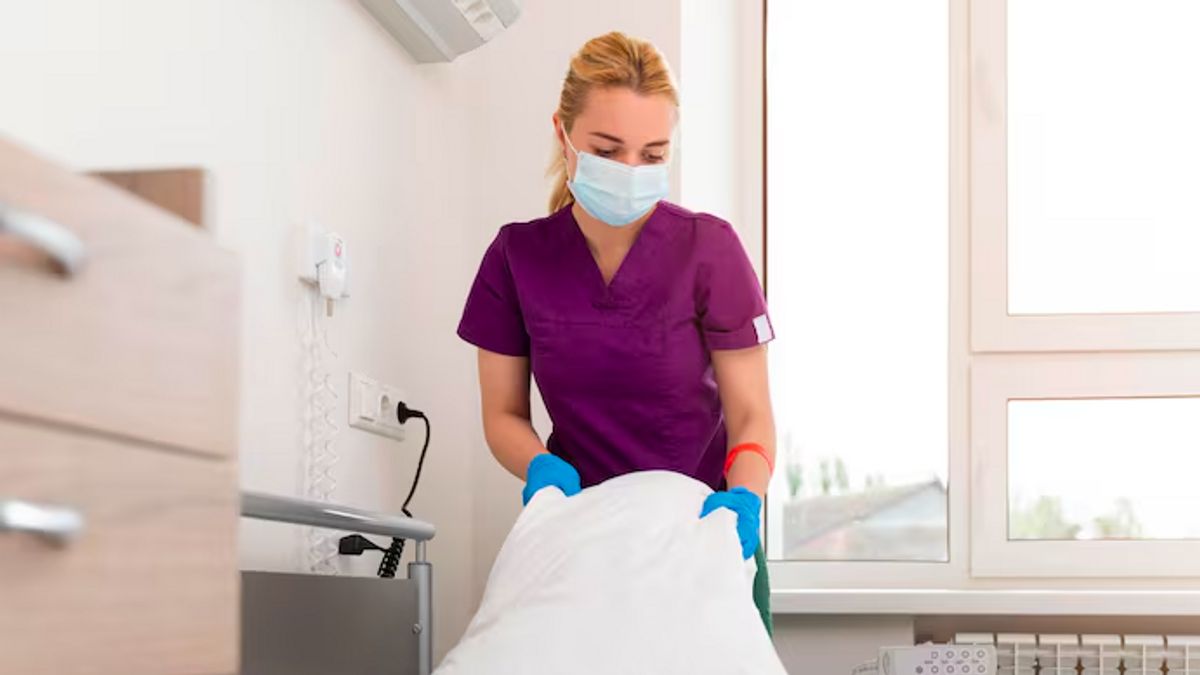


JAKARTA - Behind the medical services we know ranging from inpatient rooms to emergency units, there is one important element that rarely gets attention, namely medical linen.
Seprai, curtains, and patient clothes do not only function for comfort, but also as an additional layer of protection against the risk of disease transmission in hospitals.
Basically medical linen is different from regular cloth. This ingredient should have much higher standards of cleanliness, resilience, and security. Unfortunately, there are still many people and even some health facilities that do not fully understand how vital the role of medical linen is in maintaining biological security and supporting the patient's healing process.
This awareness prompted Anagata Textile to innovate through the development of medical linen with anti-virus technology which became the first breakthrough to be introduced in Indonesia.
Anegata Textile founder, Dian Chrisna Murti, is aware of medical linen is not just a hospital requirement, but an important part of the health care and patient protection system.
"I saw that medical cloth is not an ordinary cloth. It cannot be equated with a common cloth. Finally, we were moved to design textiles that were used specifically for medical purposes. In this case, what we prioritize is protection," said Dian Chrisna Murti when met at ICE BSD, Tangerang, recently.
Anegata also collaborates with HeiQ Materials AG, a Swiss technology company that has been recognized globally. This collaboration produces fabrics with antiviral technology that can disable viruses and microorganisms on textile surfaces, thereby reducing the risk of cross infection in the medical environment.
Not only viruses, a number of embedded technologies can also work to reduce the infection rate of microorganisms on the textile surface, providing additional protection for medical personnel and patients in environments susceptible to cross-infection.
"We carried out various tests until we were finally able to create an antiviral cloth whose method could weaken the virus defense system so that the level of infection spread could be reduced. The way it works is like that," added Dian.
Dian emphasized that the perception of sterile so far is often only limited to the operating room or ICU. In fact, the risk of transmission can also occur in other areas of the hospital. Thus, the cloth used can be designed and used for the needs of various services in the hospital, ranging from nursing clothes, sheets
Not stopping at antiviral technology, Anagata has also made innovations to the operational management system. They implemented RFID (Radio Frequency Identification) to track Tehran movements in real-time.
Through this innovation, hospitals can monitor inventory, washing cycles, and financial management more accurately. The results are not only efficiency, but also better transparency and accountability in health services.
"This RFID can be used for operations in hospitals because every medical linen has a service period. We can find out whether the medical linen is still suitable for use or it has to be waste," he concluded.
Furthermore, this step also affirms Anagata's commitment to becoming a pioneer of medical textiles in Indonesia, as well as opening up opportunities to introduce textile-based health technology to the international market.
The English, Chinese, Japanese, Arabic, and French versions are automatically generated by the AI. So there may still be inaccuracies in translating, please always see Indonesian as our main language. (system supported by DigitalSiber.id)
Most Popular Tags
#Prabowo Subianto #donald trump #firearm #8791 #giias 2026Popular


