
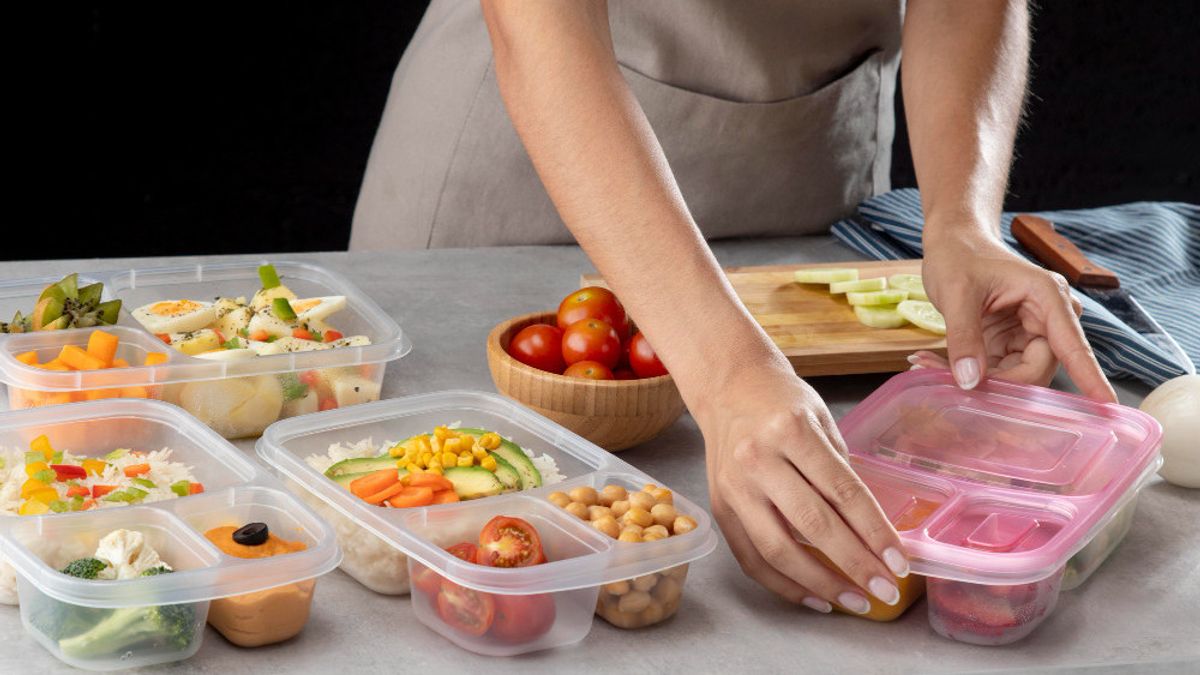


YOGYAKARTA - Do you know, how much is the safe temperature for storing food so that it is not stale? Many people still underestimate this, even though the wrong temperature can trigger breeding bacteria and cause food poisoning.
Cases of poisoning due to stale food often occur due to inappropriate storage. Many do not know that storing food for too long at room or refrigerator temperatures with the wrong arrangement can make it lose nutrients, smell bad, and even become a source of disease.
According to the US Department of Agriculture, bacteria reproduce very rapidly at temperatures between 4 degC to 60 degC.
Thus, after the food is cooked safely, the hot food must be kept warm at a minimum temperature of 60°C to prevent bacterial growth.
Then within a maximum of 2 hours after finishing cooking or after being removed from the heating device, the food remains must be stored in the refrigerator immediately.
It is important to get rid of all the easy-to-break foods left at room temperatures for more than 2 hours (or 1 hour if the air temperature is above 32°C, for example during a summer picnic).
Then for cold foods such as chicken salads or processed meat, store at a temperature of 4°C or lower. When serving food invillage, keep the hot food warm with a heating container, slow cooker, or heating reservoir.
Meanwhile, for cold foods, place a container on ice or use a small portion that is often replaced. Throw all the rest of the cold food left at room temperature for more than 2 hours (1 hour if the air temperature is above 32°C).
Also Read articles discussing Lemes' Fast Body? Know How To Meet Daily Protein Properly
Reporting from the US Food and Drug Administration page, there are at least a few things you need to pay attention to when storing food, here are:
Immediately store foods that are easily damaged in the refrigerator or freezer. Foods that need cooling must immediately enter the refrigerator as soon as they arrive home.
Comply with the 'two hours' rule, namely, don't let meat, chicken, seafood, eggs, vegetables, or other foods that need cooling be at room temperature more than two hours or an hour if the air temperature is above 32°C.
This tip also applies to food residue, package food, and take-away. When storing, do not fill the refrigerator or freezer too dense so that air circulation remains smooth.
Make sure the refrigerator temperature is not more than 4°C, while the freezer must be at -18°C. Check the temperature periodically with the refrigerator thermometer, which is now quite affordable.
Not only meat, vegetables, and dairy products must also be stored cold. Many other products also need a refrigerator. Well, if it's too late to cool the food, you should waste it to avoid risks.
Products ready to eat in refrigerators, such as processed meat, should be consumed immediately. Please note, the longer it is stored, the greater the risk of Lyteria bacteria growing, especially if the refrigerator temperature is above 4°C.
If food looks or smells suspicious, throw it away immediately. The mushrooms can grow even in the refrigerator. Although not always dangerous, mold makes food unfit for consumption. So it is safer if moldy foods are immediately thrown away.
Remember, food can cause pain even if it appears, smells, or feels normal. The cause is pathogenic bacteria that are different from rotting bacteria.
Bad bacteria are found in raw meat, chicken, seafood, milk, eggs, polluted water, as well as fresh fruit and vegetables. However, proper cooling will slow the growth of bacteria.
BACA JUGA:
-
 | INFO SEHAT
Orang Tua Lebih Sayang Anak Sulung atau Bungsu? Penelitian Ungkap Faktanya
22 Januari 2025, 13:55 -
 | LIFESTYLE
Indonesia Nomor 2, Ini Daftar 17 Negara dengan Konsumsi Mi Instan Terbanyak di Dunia
01 Januari 2025, 17:50 -
 | INFO SEHAT
7 Makanan untuk Orang Diare yang Aman Dikonsumsi agar Cepat Pulih
11 November 2024, 21:25

Then to reduce the risk of illness, always wash your hands, clean your equipment and foodstuffs, separate raw food from those who are ready to eat, and cook at a fairly safe temperature.
In addition to discussing how much temperature is safe for food storage, follow other interesting articles on VOI, to get updated news, don't forget to follow and monitor all of our social media accounts!
The English, Chinese, Japanese, Arabic, and French versions are automatically generated by the AI. So there may still be inaccuracies in translating, please always see Indonesian as our main language. (system supported by DigitalSiber.id)
Most Popular Tags
#Prabowo Subianto #donald trump #2026 World Cup #Febrie Adriansyah #8791Popular


