
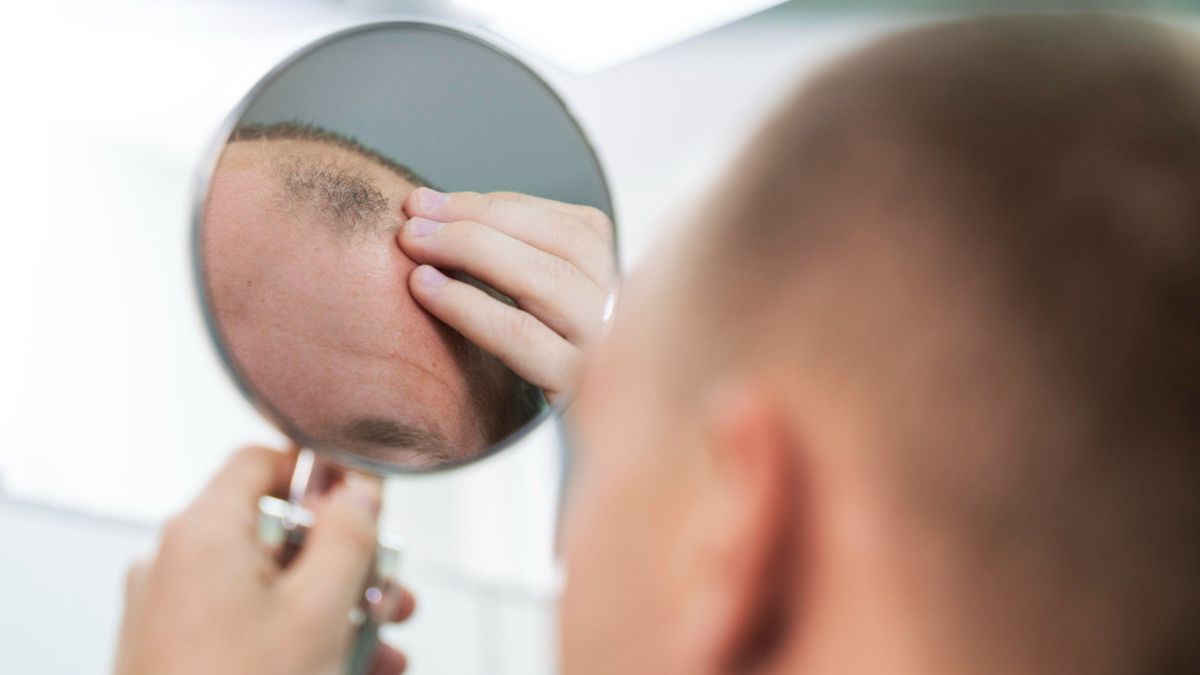


Too heavy to fall out often makes you anxious, especially if you start to look thin in certain areas. If you are one of those people who experience this, let's get to know more androgenetic alopecia.
Although it sounds scary, alopecia androgenetics can actually be recognized early on and managed properly. By understanding the symptoms, trigger factors, to treatment options, you can maintain hair health and prevent worsening.
Reporting from the National Library of Medicine page, alopecia androgenetics is one form of hair loss that is common in men and women. In men, this condition is often called male pattern weighting, while in women it is known as the pattern of women (female pattern loss).
In men, hair loss usually follows a clear pattern, starting from the temple area. However, over time, the hair line will recede until it forms a distinctive pattern resembling the letter M. Hair at the top of the head (mahkota) is also running low, which can develop into partial or even total furniture.
As for women, the pattern will be different. Hair tends to run low at the top of the head, with the hair cleavage widening. However, hairlines rarely back, and alopecia androgenetics in women almost never cause total furniture.
Then in men, this condition is often associated with other health problems, such asteger heart disease, prostate enlargement, prostate cancer, insulin resistance disorders (such as diabetes and obesity), to high blood pressure.
Meanwhile, in women, androgenetic alopecia is associated with the increasing risk of polyxyclic ovarian syndrome (PCOS). PCOS itself is characterized by hormonal imbalances that can cause irregular menstruation, acne, excess hair growth in other areas of the body (hyrsutism), and weight gain.
Alopecia androgenetics is estimated to affect around 50 million men and 30 million women in the United States. This condition can start to emerge from a young age, and the risk increases with age. More than 50% of men over the age of 50 experience certain levels of hair loss. In women, the most frequent dredges occur after menopause.
Also read the article that discusses Bloody Defecation but Doesn't Hurt, Is It Dangerous? This Is The Medical Explanation
SEE ALSO:
-
 | LIFESTYLE
Noda Cat Rambut Membandel di Kulit? Begini Cara Mudah Menghilangkannya
11 September 2025, 17:25 -
 | LIFESTYLE
Rambut Pirang Dicibir, Kini Kate Middleton Kembali Berambut Coklat
10 September 2025, 11:25 -
 | LIFESTYLE
Budaya Kerja Sehat yang Bikin Karyawan Betah dan Semakin Produktif
28 Agustus 2025, 19:35

Various genetic and environmental factors are believed to play a role in the occurrence of alopecia androgenetics. However, until now the researchers continue to study the risk factors because most of them are still unknown.
Interestingly, in men hair loss is related to hormones called androgen, especially hydrotestosterons (DHT). Meanwhile, in women, androgen also plays a role, although other factors that have not been identified also affect them.
Please note, androgen plays an important role in men's sexual development from before birth to retirement. In addition, androgen also regulates other functions in men and women, including hair growth and sexual impetus.
The researchers also suspect that there are variations (or mutations) of certain genes that play a role in androgenetic alopecia. Studies have so far confirmed that variations in AR genes have something to do with these conditions.
Gen AR gives instructions to create androgen receptor proteins, namely body parts that respond to DHT and other androgens. Variations in this gene make receptors more sensitive, so that hair follicles are more easily stimulated and lead to decays. Even so, the exact mechanism is still not fully understood.
In addition, the researchers also continue to research the alopecia androgenetic connection with other health problems, such asteger heart disease and prostate cancer in men, as well as polyxytic ovarian syndrome (PCOS) in women. Allegedly, this condition is related to high levels of androgen, which may explain why these diseases often appear along with hair loss related to hormones.
In addition to discussing getting to know androgenetic alopecia, follow other interesting articles on VOI, to get updated news, don't forget to follow and monitor all of our social media accounts!
The English, Chinese, Japanese, Arabic, and French versions are automatically generated by the AI. So there may still be inaccuracies in translating, please always see Indonesian as our main language. (system supported by DigitalSiber.id)


