
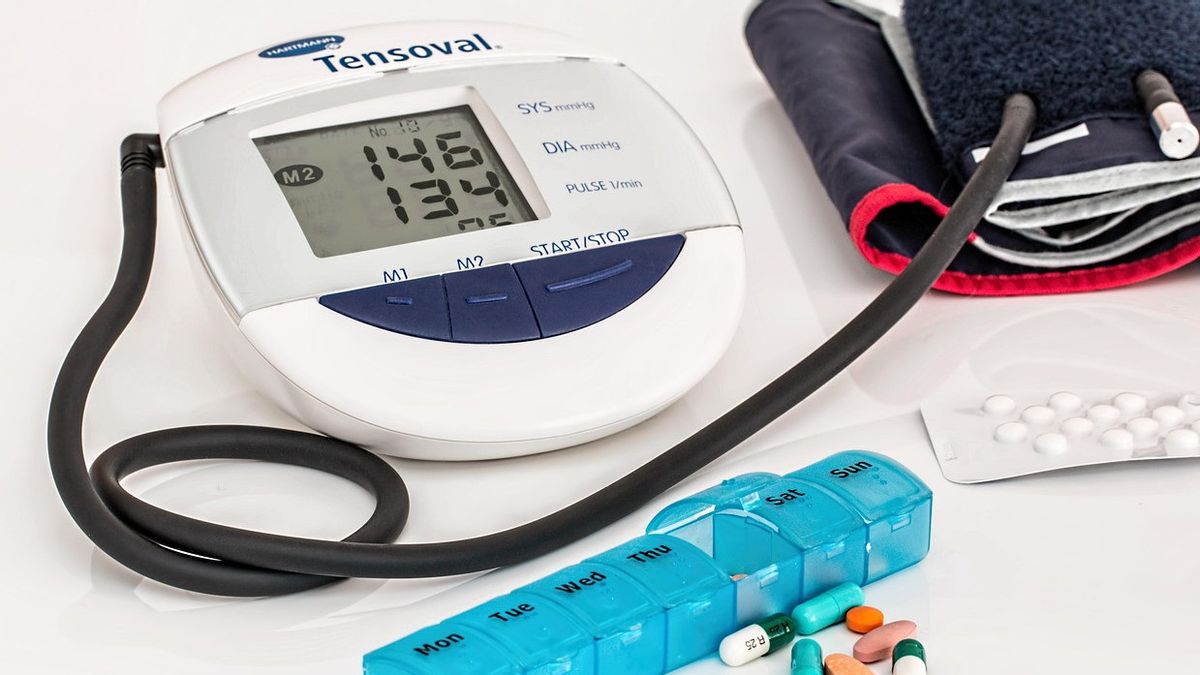


YOGYAKATA High blood pressure (hypertension) can cause serious health problems, such as heart disease and stroke. When blood pressure is too high, arterial vessels in charge drain oxyen-rich blood from the heart to the whole body, getting pressure that exceeds the normal limit. As a result, the heart will work harder to pump blood. So, how much high blood pressure is dangerous? To find out the answer, let's look at the explanation in the following article.
Quoted from the FDA page (Food and Drug Administration / United States Food and Drug Administration Agency), blood pressure is defined as blood pressure that drives arterial walls when the heart pumps blood. If this pressure exceeds the normal limit, this condition is referred to as hypertension.
Hypertension is a serous disease because it can cause various complications such as heart disease, stroke, and damage to other organs of the body.
In the examination of blood pressure, the reference is sistolic and diastolic blood pressure. Systolic pressure measures blood pressure in arterial vessels when the heart beats. Meanwhile, diastolic pressure, namely blood pressure in the arteries when the heart rests between beats. The number of systolic pressures will always be higher than the diastolic pressure.
Blood pressure is said to be normal if the systolic figure is less than 120 millimeters of mercury (mmHg) and is stationary to less than 80 mmHg), or can be written at 120/80 mmHg.
If the results of the blood pressure measurements are between 120/80 mmHg to 139/89 mmHg, this condition is called prehipertension. Under these conditions, blood pressure is not as low as it should be, but it has not yet been categorized as hypertension.
Blood pressure, which is in the range 140/90 mmHg to 159/99 mmHg, is categorized as stage 1 hypertension. Individuals whose blood pressure is in this range already need treatment, because the risk of damage to the organs becomes higher.
Furthermore, blood pressure that exceeds 160/100 mmHg is categorized as stage 2 hypertension. In this condition, the sufferer usually needs more than one high blood drug. Body damage may have occurred, as well as cardiovascular disorders, although not necessarily symptomatic.
Meanwhile, blood pressure that exceeds 180/120 mmHg is referred to as a crisis hypertension. In this condition, the sufferer must immediately contact the doctor, especially if he experiences signs of organ damage such as chest pain, shortness of breath, back pain, numbness, changes in vision, or difficulty speaking.
What is the dangerous high blood pressure? From the explanation above, a person needs to be vigilant if his blood pressure is in the range of 140/90 mmg to 159/99 mmHG. If this condition is not addressed immediately, hypertension can develop into stage 2 hypertension, even triggering a hypertension crisis.
In addition, uncontrolled hypertension can damage blood vessels and organs such as the heart, brain, kidneys, and eyes, quoted from the Mayo Clinic.
Controlling blood pressure is part of a healthy lifestyle. Damage caused by hypertension in the internal organs is often asymptomatic to serious damage. Therefore, you need to know how to prevent high blood pressure in order to avoid this disease.
SEE ALSO:
-
 | EKONOMI
BRI Life Dorong Literasi Asuransi, Klaim Rp 2,85 Triliun Telah Dibayarkan
30 Agustus 2025, 03:03 -
 | LIFESTYLE
Budaya Kerja Sehat yang Bikin Karyawan Betah dan Semakin Produktif
28 Agustus 2025, 19:35


Here are some tips that can help lower or prevent high blood pressure:
That's a review of how high blood pressure is dangerous. Hopefully the information above can add insight to readers. To get other selected news updates, keep reading VOI.ID.
The English, Chinese, Japanese, Arabic, and French versions are automatically generated by the AI. So there may still be inaccuracies in translating, please always see Indonesian as our main language. (system supported by DigitalSiber.id)


