



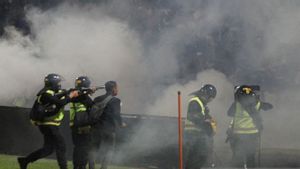
JAKARTA - For the past few days, the authorities have returned to using tear gas to disperse the demonstration in front of the DPR RI Building, Senayan, Jakarta. This chemical is designed as a mass controller, but the effect on the body can be very painful, ranging from pain, burning, to difficulty breathing.
Unfortunately, there are still many myths surrounding the handling of tear gas exposure. For example, some participants in the demonstration applied toothpaste to the face to reduce the pain. In fact, this method does not provide any protection at all, causing damage to the skin.
Although called 'gas', tear gas is actually not pure gas. Reporting from the Medical News Today page, tear gas is in the form of solid or liquid chemicals that are distributed in the form of powder or solution.
When reacting with moisture, this substance triggers pain and irritation, especially in moist parts of the body such as the eyes, mouth, throat, and lungs.
Types of chemicals commonly used include CN (chloroacetophenone), CS (chlorobenzylidenemalononitle), PS (chloropicrin), CA (bromobenzylcyanide), CR (dibenzoxazepine), and other chemical mixtures.
Tear gas is also known by other names such as mace, pepper spray, capsicum spray, orriot control agents. Originally developed for the military, its use is now prohibited in war, but security forces still often use it to control crowds.
Short-Term Effects
Exposure to tear gas usually causes immediate symptoms, such as:
- Watery, stingy, and red eyes
- Disbursed views
- Sensation of burning in the mouth and nose
- Nausea or vomiting
- Cough, tightness, and chest feel dizzy
- Irritation and skin rash
Most of the symptoms subsided in 15'20 minutes after staying away from the source of exposure. However, the tear gas cylinder itself is also dangerous because it can cause burns, head injuries, face, or eyes due to collisions.
SEE ALSO:
-
 | BERITA
Pengadaan Perangkat Gas Air Mata Rp49 Miliar, Polri Sebut Sesuai Ketentuan
15 Juli 2023, 07:15


Long-Term Effects And Death Risks
Research is still limited, but intense exposure, especially in closed spaces, can give rise to:
- Glaukuma or blindness
- Chemical burns
- Breathing failure
A study (2017) analyzed 5,910 cases of exposure to tear gas for 25 years. The results:
- 2 deaths from respiratory failure and head injury from gas cylinders
- 58 permanent defects, including chronic respiratory problems, mental problems due to trauma, blindness, brain injury, amputation and loss of body parts function, to prolonged skin problems.
Risk Factors That Exacerbate The Impact Of Eye Gas
Some conditions can make the effect of tear gas more severe, including:
- Respiratory diseases such as asthma or COPD
- Exposure in a closed room
- Concentration of high substances due to the large number of gas cylinders
How To Handle When Exposed
Necessary emergency measures:
- Stay away from the source of the exposure and seek fresh air, preferably in higher places.
- Cover the mouth and nose with a clean cloth or the inside of the outfit. Dust masks and protective glasses can help.
- Take off the contaminated clothes, avoid taking them off through the head. Then, keep them in a closed plastic bag.
- Washing the body and face with soft soap and running water as much as possible.
- Dispose of the eyes with clean water 10'15 minutes. If you are wearing a contact lens, immediately let it go.
- If there are chemical burns, rinse with water, cool it, then cover the sterile bandages.
There is no scientific evidence that the 'home' method such as toothpaste, vinegar cloth, or inhaling onions is effective against tear gas.
Immediately seek medical help if serious symptoms appear, such as severe shortness of breath, chemical burns, visual problems, and severe skin reactions.
The English, Chinese, Japanese, Arabic, and French versions are automatically generated by the AI. So there may still be inaccuracies in translating, please always see Indonesian as our main language. (system supported by DigitalSiber.id)


