
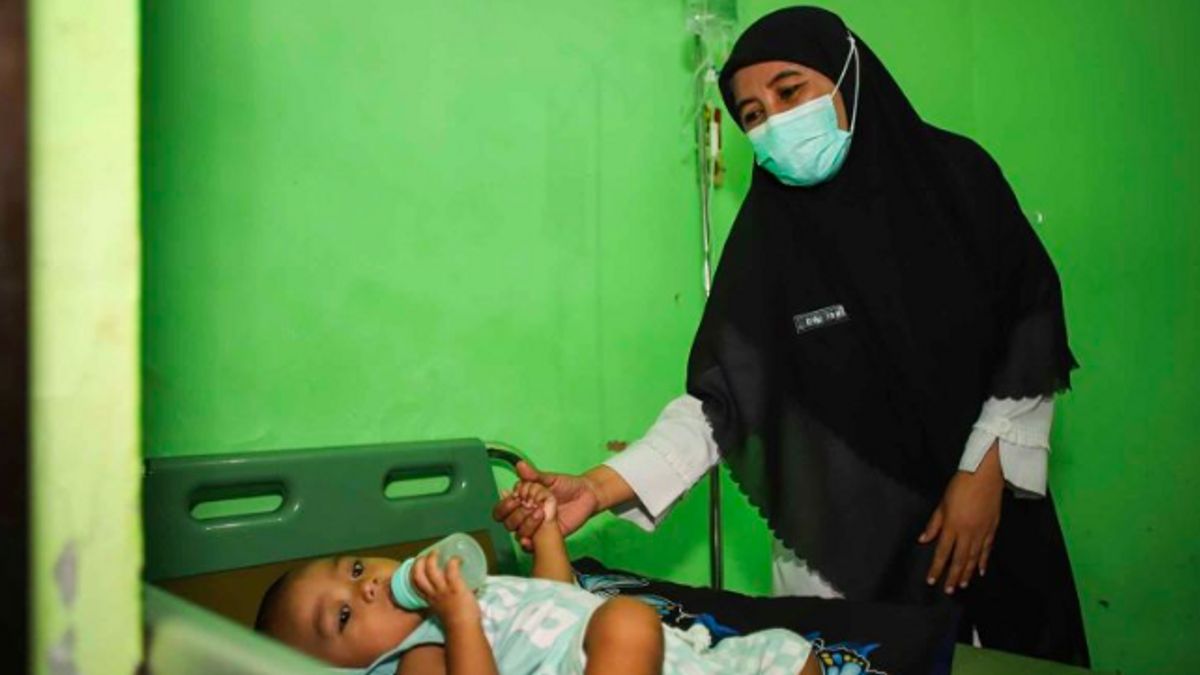


JAKARTA - Campak is still one of the infectious diseases that is prone to attack children. In addition to symptoms that can make children uncomfortable, ranging from high fever, red rashes on the skin, to coughs andembiracy red eyes also have a very high risk of transmission.
That is why isolation steps are an important part so that this disease does not spread to other people.
"In principle, if a child is infected withembike, it should be isolated ... because the risk of transmission is high," said the Head of the IDAI Tropical Disease Infection Coordination Working Unit, Prof. Dr. dr. Edi Hartoyo, Sp.A, Subs.IPT(K), in Jakarta, Wednesday.
Edi explained that isolation needs to be carried out until the fever drops and the rash on the skin begins to turn into hyperpigmentation or blackening. When compared to COVID-19, the transmission ofemia is much higher. In COVID-19, one person can infect eight to 10 people, while terangs can infect up to 12'18 people.
Measles virus usually has an incubation period of 10'12 days from entering the body until symptoms appear. Infected children generally experience high fever on the first 1'3 days. Entering the fourth to sixth day, a rash appears from the head and then spreads to other parts of the body, accompanied by coughs, runny nose, and conjunctivity (red eye).
SEE ALSO:



In the healing phase, around the third or fourth day after the rash appears the fever will decrease and the rash begins to fade. The affected skin will be black, peeling, and if there are no complications, the child can fully recover.
Edi emphasized that until now there is no special therapy for Measles. Treatment is more focused on administering hot-reducing drugs to treat fever. Antibiotics are only given when secondary infections appear, while antiviral drugs are not needed.
In addition, parents are advised to ensure that their children get enough fluids and nutrition during illness. Vitamin A is also recommended to accelerate recovery, help the health of the eyes affected by conjunctivitis, and improve skin condition.
Edi explained that the dose of vitamin A is given quite high according to age: 50,000 IU for infants under 6 months, 100,000 IU for ages 6 11 months, and 200,000 IU for children over 12 months.
The English, Chinese, Japanese, Arabic, and French versions are automatically generated by the AI. So there may still be inaccuracies in translating, please always see Indonesian as our main language. (system supported by DigitalSiber.id)
Most Popular Tags
#Prabowo Subianto #donald trump #Febrie Adriansyah #8791 #giias 2026Popular


