
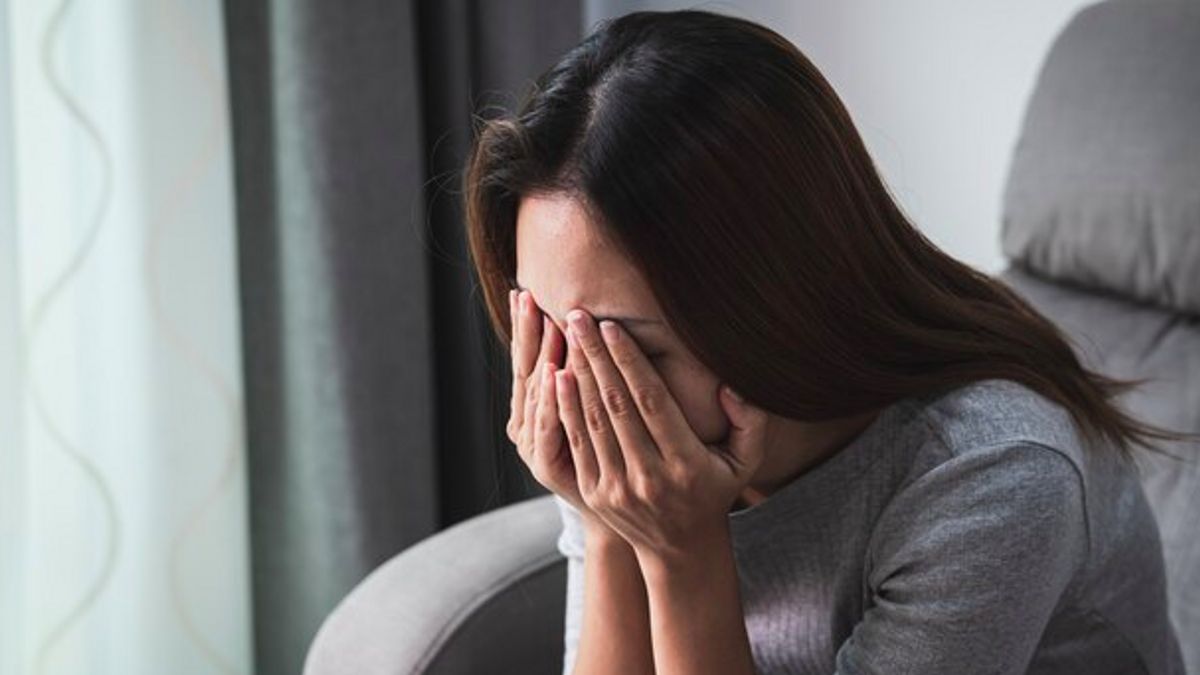


JAKARTA - A recent study revealed surprising facts that more than half of women aged 30 to 35 years experienced moderate to severe symptoms of menopause. In fact, menopause is usually associated with women aged 45 years and over.
Experts fear that many women will experience these symptoms without receiving medical assistance. Menopaus itself marks the end of the women's fertile period, where menstruation and ovarians no longer produce the hormone estrogen.
However, fertility has started to decline during permenopaus due to changes in hormone levels. This means that women in their 30s who experience these symptoms may find it difficult to get pregnant.
Reporting from the Daily Mail page, researchers from the University of Virginia Health System also found that younger women tend to often experience mental disorders due to menopause, such as difficulty concentrating (the fog brain).
These mental symptoms appear years before physical signs such as hot fights and vaginal dryness.
In this study, experts teamed up with Flo's menstrual tracking app and asked nearly 4,500 women to take standard tests to assess their menopause symptoms.
This test asks participants to assess their experience of menopause symptoms, such as hot fights, on a scale of zero to four. With zero means no symptoms and four means the symptoms are very severe.
As a result, 55.4% of women aged 30-35 years recorded a high enough score to be categorized as moderate to severe menopause symptoms.
This figure is increasing to 64.3% in women aged 36-40, although it is still far from the average age of permenopause.
However, more than 90% of women from these two age groups have never met a doctor regarding the possible symptoms of the menopause or periopause they experienced.
When the data was analyzed based on the type of symptoms, researchers who published their findings in the journal Women's Health found that the psychological symptoms of menopause, such as anxiety, depression, and anger, were more often experienced by younger women.
These symptoms peaked at 41-45 years old and generally disappeared after 56 years of age.
In contrast, more well-known physical symptoms such as hot fights and vaginal dryness are mostly experienced by women aged 51 years and over.
SEE ALSO:
-
 | INFO SEHAT
Negara dengan Rata-Rata Usia Menopause Termuda dan Tertua di Dunia
15 November 2024, 17:25



Dr. Jennifer Payne, co-author of the study and reproductive psychiatrist from the University of Virginia Health System, said that these findings need to be considered by women and medical personnel.
"This study is important because it shows when we can expect symptoms of perimenopaus to emerge, as well as warns that women experience these symptoms earlier than we thought," he said.
"The physical and emotional symptoms of perimenopaus are still poorly studied and are often ignored by doctors," he added.
Liudmila Zhaunova, director of science at Flo, added that further research is needed so that young women with these symptoms can get the right treatment.
"We found a large number of women who were considered too young for permenopaus. They told us they were experiencing symptoms related to perimenopaus," he said.
This study has some limitations. Since data is collected through surveys, there is no way to verify the accuracy of participant reports. In addition, the number of samples in this study is relatively small.
There is also the possibility that symptoms such as anxiety, depression, or bladder disorders are caused by other health problems that are not related to menopause.
According to NHS, perimenopausity occurs when a woman experiences menopause symptoms but is still menstruating.
A woman is considered to have menopause if she does not have a period for one full year.
NHS stated that both menopause and perimenopauuse greatly interfere with women's lives, including influencing their relationship and work.
Menopaus itself is a natural process characterized by a decrease in estrogen hormone levels and usually occurs between the ages of 45 to 55 years.
However, menopause can occur earlier in a small fraction of women naturally or due to certain health conditions and treatment, such as cancer therapy.
Some women go through this period without many symptoms, while others experience hot fights, sleep disturbances, mood swings, and difficulty concentrating for months or years.
Women are advised to see a doctor if their symptoms are severe enough to interfere with their daily activities.
According to the British Menopaus Society, the average woman began to experience symptoms of perimenopaus at the age of 47.
The English, Chinese, Japanese, Arabic, and French versions are automatically generated by the AI. So there may still be inaccuracies in translating, please always see Indonesian as our main language. (system supported by DigitalSiber.id)
Most Popular Tags
#Prabowo Subianto #donald trump #firearm #8791 #giias 2026Popular


