



JAKARTA - In the midst of the hype of industrial downstreaming, creative economy, and strengthening of regional MSMEs, a grassroots initiative in Sumbawa, West Nusa Tenggara, has actually survived with limited support since it was initiated in 2018.
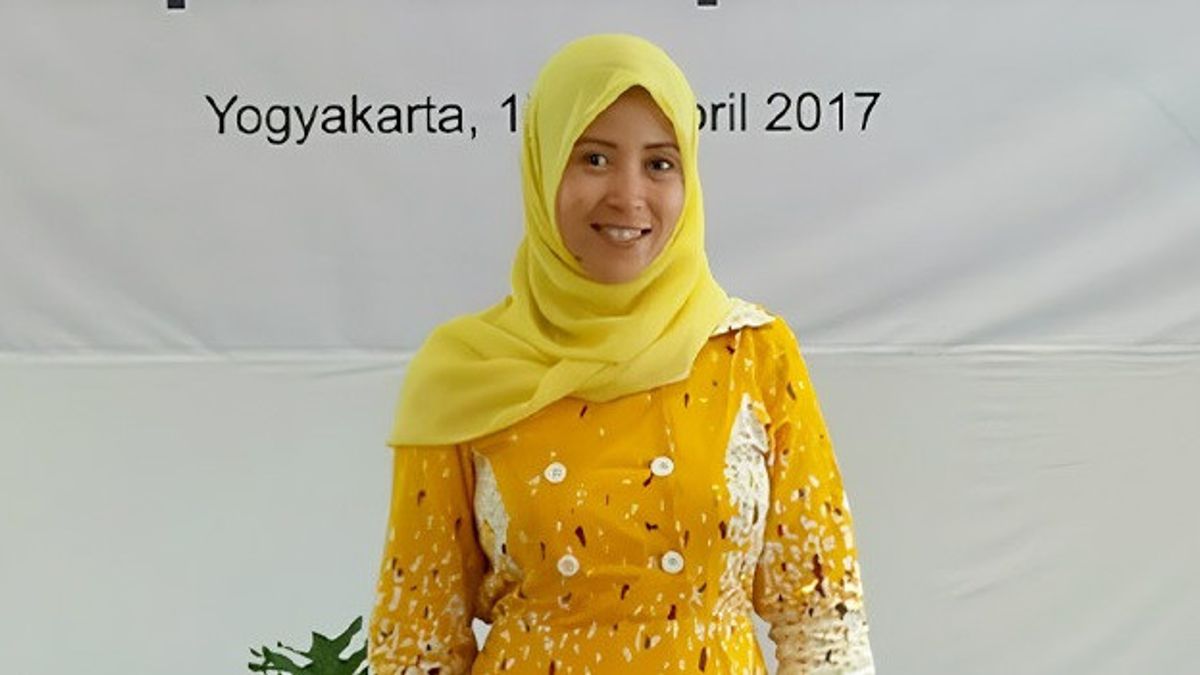
The initiative is the Dadara Boto Weaving School which was established by Mila Rosalia, a cultural-based economic empowerment space that targets village women, former migrant women, and other vulnerable groups.
Unlike the ceremonial training program, Dadara Boto is designed as a creative economy ecosystem that includes learning, production, and marketing of typical Sumbawa woven fabrics.
"This weaving school was designed from the beginning as a learning house, a production house, and a marketing house for Sumbawa cultural art works," said Mila Rosalia.
According to Mila, the development of nesek weaving is no longer enough to be positioned as a cultural preservation, but must enter the chain of modern creative industries in order to have sustainable economic value.
He encouraged the integration of contemporary design and digital technology to expand the market for Sumbawa's traditional woven products.
"I as a daughter from Sumbawa feel responsible for the sustainability of the culture of our region, how traditional weaving can be maintained but also can innovate through the application of digital machines," he said.
The weaving school was also directed to become an alternative economic solution for women who have migrated in NTB, one of the largest sending areas of migrant workers in Indonesia.
Until now, many female migrant workers have returned to the area without adequate access to jobs, so they choose to return to work abroad.
Dadara Boto tries to break the cycle by opening up local economic spaces based on skills and culture.
"This school is expected to become a meeting place for Sumbawa women to grow together in strengthening family capacity and economy," said Mila.
Even though it has been running for almost eight years, Mila admitted that concrete support from the government is still minimal.
In fact, according to him, what is needed is not a big project, but policy alignment, space facilitation, to access promotion.
"Economic independence is the reason why this weaving school must be realized immediately," he said.
In the midst of the government's push for the national creative economy, the existence of Dadara Boto shows that the cultural sector has the potential to become a new economic engine if it is seriously and sustainably supported.
The English, Chinese, Japanese, Arabic, and French versions are automatically generated by the AI. So there may still be inaccuracies in translating, please always see Indonesian as our main language. (system supported by DigitalSiber.id)
Most Popular Tags
#Prabowo Subianto #donald trump #Febrie Adriansyah #8791 #giias 2026Popular


