

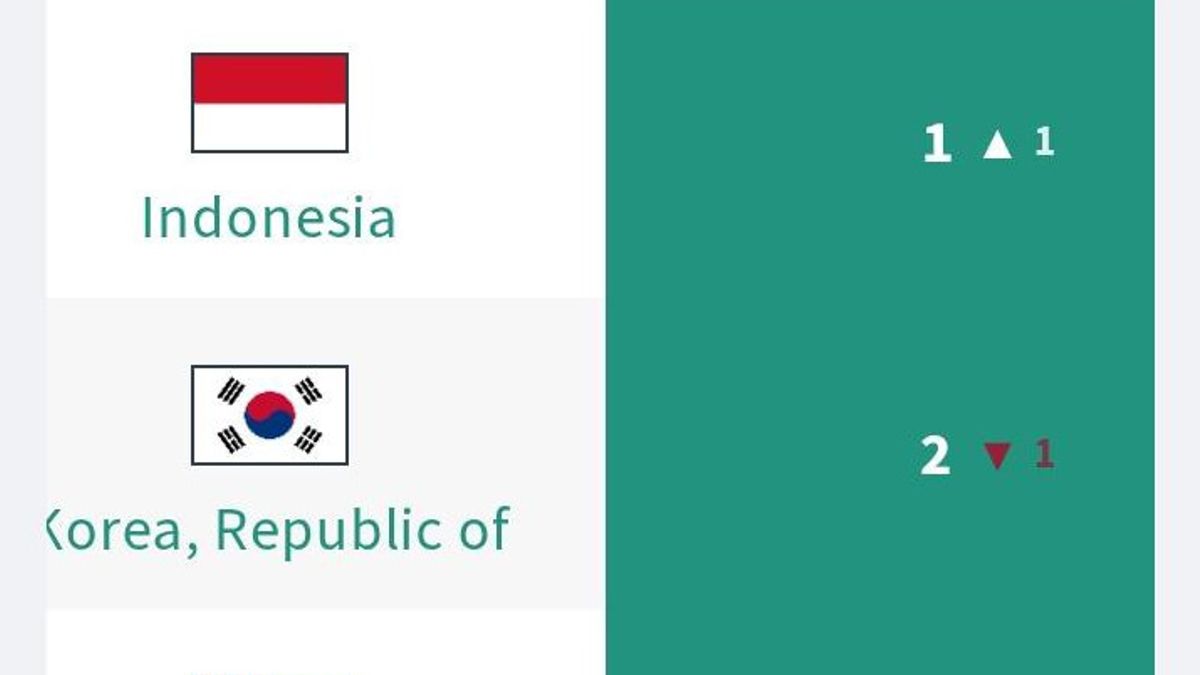


JAKARTA - Indonesia ranks first in the world in transparency in reporting tax spending. This achievement is important because it concerns the government's openness in reporting tax incentives that have a direct impact on the state budget.
The ranking was recorded in the Global Tax Expenditures Transparency Index or GTETI which was released on May 11, 2026. Indonesia is in first place out of 116 countries with a score of 79.9 points.
To note, GTETI or the Global Tax Expenditures Transparency Index is a global index that measures how open a country is in reporting tax incentives. This index is compiled by the Council on Economic Policies (CEP), an economic policy research institute based in Switzerland, together with the German Institute of Development and Sustainability (IDOS) from Germany.
Indonesia outperforms a number of developed countries. Australia is in third place, France is ninth, and the United States is 17th.
GTETI assesses the practice of reporting incentives or tax spending in various countries. The assessment includes the regularity of reports, data quality, and information coverage. This includes the availability of data for the public, policy explanations, and evaluation of tax spending.
Tax expenditure is a potential state revenue that is not collected because the government provides tax incentives. The form can be in the form of exemption, reduction, or tax facilities for certain groups and sectors.
Indonesia's performance shows a rapid increase. When the index was first launched in 2023, Indonesia was in 15th place. In 2024, Indonesia rose to second place. This year, Indonesia became the first.
The Ministry of Finance stated that the quality of reporting would continue to be strengthened. The government will also monitor and evaluate the use of incentives so that the benefits are more measurable.
"These efforts will continue to be strengthened through improving the quality of reporting, as well as monitoring and evaluating the use of incentive policies so that they are more measurable and provide optimal benefits for the economy," the Ministry of Finance wrote in its official statement, Monday (18/5).
The Ministry of Finance said that this achievement shows that Indonesia's tax incentive policy is carried out selectively, directed, and measured. The government also assessed that the incentive still supports economic stability and growth without neglecting the national fiscal capacity.
In 2025, more than 70 percent of the total Rp389 trillion of tax expenditures in the Tax Expenditure Report will be allocated to households and micro, small, and medium enterprises or MSMEs.
The Ministry of Finance said the incentive was aimed at supporting basic needs, including food and housing. The facility is also said to help reduce the cost of education, health, and transportation.
"The incentive also supports the creation of employment in the community and the increasingly quality life of the people," wrote the Ministry of Finance.
The English, Chinese, Japanese, Arabic, and French versions are automatically generated by the AI. So there may still be inaccuracies in translating, please always see Indonesian as our main language. (system supported by DigitalSiber.id)
Popular


