

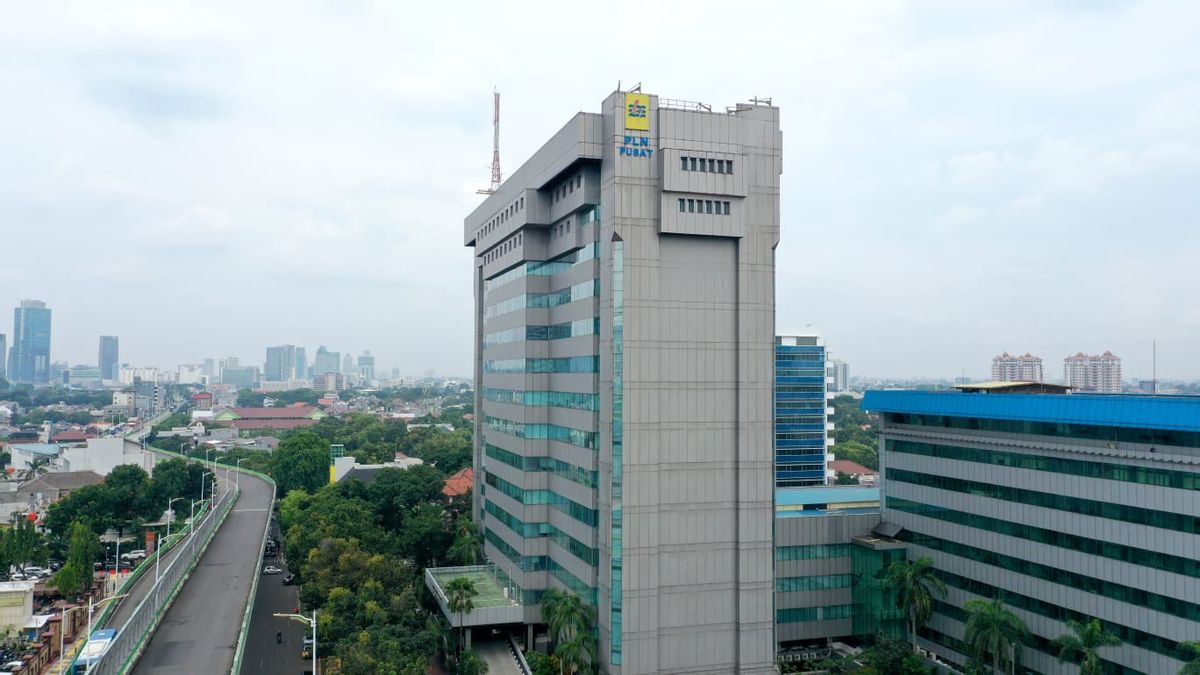


JAKARTA - PT PLN (Persero) invites the public to understand energy consumption patterns and various components that affect electricity payments, so that the public can manage electricity use more wisely, efficiently, and according to daily needs.
PLN's Executive Vice President of Corporate Communications and Social and Environmental Responsibility (TJSL), Gregorius Adi Trianto, explained that the amount of customer electricity payments can be different in each period or transaction because it is influenced by the level of electricity energy consumption and a number of applicable cost components according to the provisions in each region.
"PLN supports customers to understand that electricity payment is not only influenced by electricity tariffs, but also energy usage patterns and other components that follow the provisions of local governments and applicable regulations. With this understanding, customers can more easily manage electricity consumption according to their needs," said Gregorius, Friday, May 15.
He added that household electricity tariffs have not changed since July 2022. Therefore, if there is a difference in the amount of payment, it is generally influenced by changes in electricity consumption patterns and other cost components.
For postpaid services, the total electricity bill is calculated based on the amount of electricity energy (kWh) recorded on the customer meter, then added to other components such as Street Lighting Tax (PPJ) which varies in each region, stamp duty, and Value Added Tax (PPN) for certain groups.
Meanwhile, for prepaid services, the nominal electricity token purchased by customers is not entirely converted directly into electricity. Some are first allocated for payment of PPJ in accordance with local government regulations, then the remainder is converted into the number of kWh that customers can use.
As an illustration, a 2,200 VA power customer who buys an electricity token worth Rp200,000 will be charged the Jakarta PPJ 2.4 percent so that the value converted into electricity is Rp195,200. With the electricity tariff of Rp1,444.70 per kWh, customers will receive 135 kWh of electricity.
In the postpaid system, the calculation also still refers to the amount of electricity consumption. This means that if the customer's electricity consumption is at 135 kWh, then the total bill paid will also be the same after adding the PPJ component according to the applicable provisions.
Customers can now monitor their electricity usage history and token purchase history more easily through the PLN Mobile application. In addition, postpaid customers can also utilize the Swacam (Swadaya Catat Angka Meter) feature to independently record meter numbers as a form of control over monthly electricity usage.
Through the Swacam feature on PLN Mobile, postpaid customers can record the number of stand meters by opening the Swacam menu, selecting the Customer ID, taking a photo of the stand meter number on the kWh meter, then sending the results of the record through the application according to the specified period. This feature helps customers monitor the appropriateness of electricity use in a more transparent manner.
"Through a better understanding of consumption patterns and electricity payment components, customers can use electricity more efficiently, conveniently, and according to daily needs," concluded Gregorius.
The English, Chinese, Japanese, Arabic, and French versions are automatically generated by the AI. So there may still be inaccuracies in translating, please always see Indonesian as our main language. (system supported by DigitalSiber.id)
Most Popular Tags
#Prabowo Subianto #donald trump #2026 World Cup #Febrie Adriansyah #8791Popular


