


JAKARTA - In the midst of easy access to digital finance, Dompet Dhuafa reminds the public to be wise in fulfilling the ritual of sacrifice, especially regarding the use of paylater services and online loans (pinjol) which are now increasingly used.
The phenomenon of sacrificing with a debt scheme is being discussed as the public's desire to continue to worship increases even though in a limited financial condition. On the one hand, this reflects the high spirit of worship, but on the other hand raises questions regarding the law and ethics in its implementation.
Ahmad Juwaini as the Chairman of the Board of Trustees of the Dompet Dhuafa Republika Foundation, explained that in Islam, the ritual of sacrifice is a sunnah muakad practice that is recommended for those who are financially able.
"The main principle in sacrifice is the ability or istitha'ah. If someone has to owe to sacrifice, then basically he is not included in the recommended category," he said, quoted Tuesday, April 28.
He added that the use of paylater or online loans needs to be examined more deeply, especially if it contains elements of riba. In a number of fiqh studies, riba-based transactions are declared haram, even if used for worship purposes.
"Legally, the sacrifice that is carried out is still valid if the conditions and rukun are met. However, if the financing process contains prohibited elements, then this can reduce the value of the goodness of the worship itself," he explained.
Furthermore, the Dhuafa Wallet emphasizes that Islam does not encourage its followers to force themselves to worship until it creates financial burdens. Basic needs such as food, housing, education, and other obligations must remain the top priority.
Dai Dompet Dhuafa, Ustaz Zul Ashfi, S.S.I, LC, also explained that in the rules of fiqh there is a principle that places basic needs above the sunnah worship.
"In the rules it is stated that basic needs must be prioritized over sunnah practices. This means that a person does not need to force himself to sacrifice if he still has more urgent financial obligations," he said.
In this context, sacrifice is not only seen as a spiritual need, but also must consider the aspect of economic ability. Islam gives flexibility to its followers not to sacrifice if they are not able, without reducing the value of one's faith.
As an alternative, Dompet Dhuafa encourages the public to plan the Eid al-Adha worship more carefully, for example by saving up in advance or participating in a more affordable collective Eid al-Adha program. With good planning, the Eid al-Adha worship can be carried out without having to rely on debt.
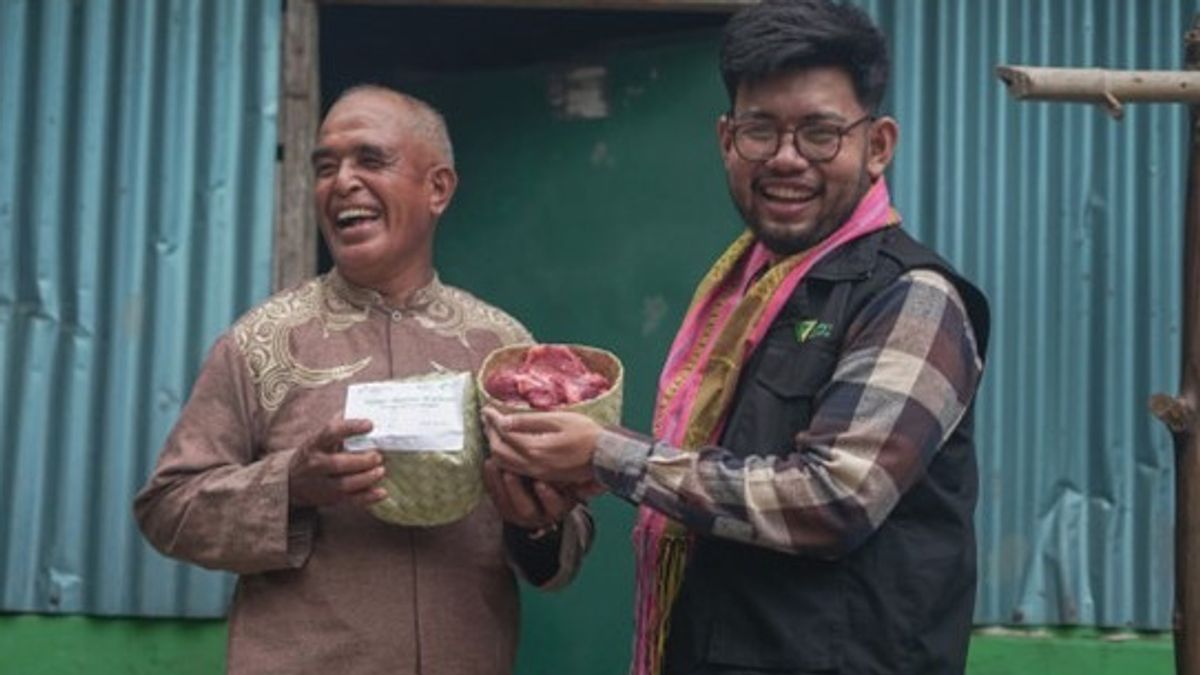
In addition, Dompet Dhuafa also presents a sacrificial program that emphasizes the principles of transparency and usefulness. The sacrificial animals are guaranteed to meet health and sharia standards, and are distributed to remote areas in need. Donors also receive a complete report on the slaughter and distribution process.
"Through this program, we want to ensure that the sacrifice is not only valid in terms of sharia, but also provides a wide social impact. At the same time, we invite the public to carry out worship in a wise way and not burden," he added.
With the increasing literacy of Islamic finance, Dompet Dhuafa hopes that the community can better understand that worship does not have to be done in a way that is financially risky. The sacrifice is ideally carried out in an open space, so that the value of sincerity and blessing can be felt optimally.
The English, Chinese, Japanese, Arabic, and French versions are automatically generated by the AI. So there may still be inaccuracies in translating, please always see Indonesian as our main language. (system supported by DigitalSiber.id)


