

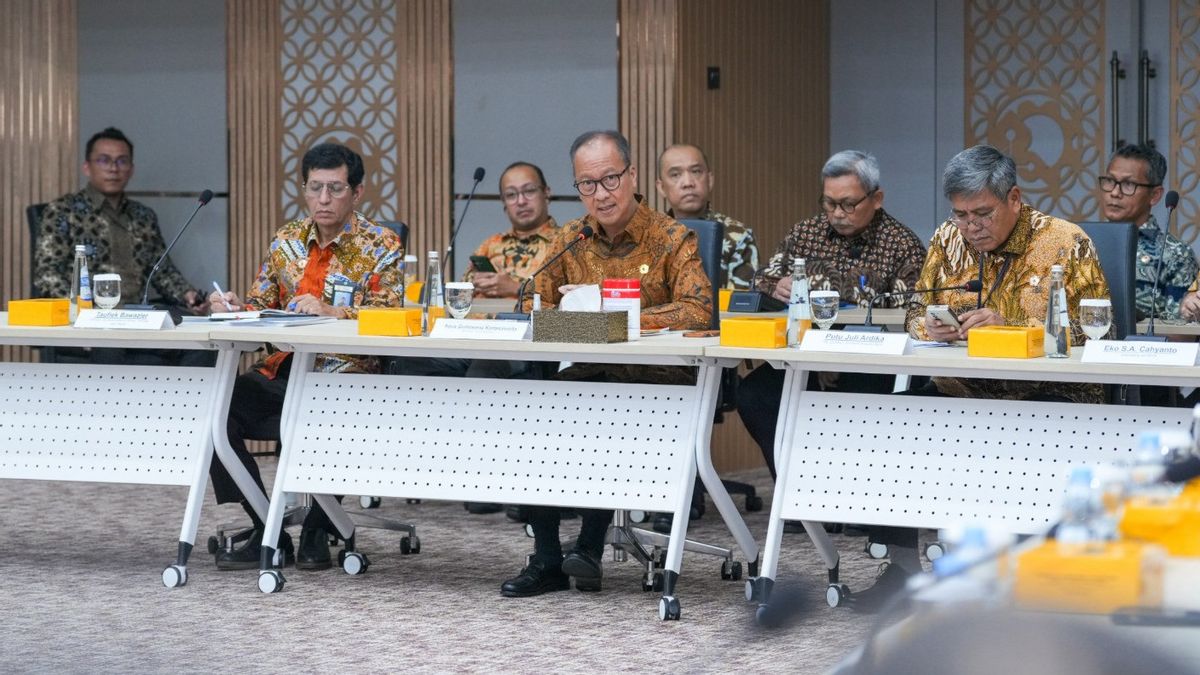


JAKARTA - The government through the Ministry of Industry (Kemenperin) is committed to maintaining the stability of the supply of petrochemical and plastic industry raw materials in the country. This step was taken in response to the increasing global geopolitical dynamics, especially the situation in the Strait of Hormuz which has the potential to disrupt the global supply chain.
In a strategic meeting with all stakeholders in the plastic industry, Minister of Industry Agus Gumiwang Kartasasmita emphasized that the government continues to mitigate the impact of international logistics disruptions.
Optimism in the Availability of Domestic Plastic Stock
Minister of Industry Agus Gumiwang said that the results of coordination with industry players showed positive signals regarding the availability of raw materials.
"We have assurances from the industry that plastic stocks should not be a problem. However, the government will continue to monitor the global situation closely because the impact is very real on the production and stocks of this sub-sector," said the Minister of Industry in Jakarta, Thursday (16/4).
Apart from the availability of stocks, the industry is also committed to maintaining the continuity of supply for Small and Medium Enterprises (SMEs) so that they still have strong competitiveness in the domestic market.
Logistics Challenge: Delivery Time Bulges 50 Days
Although the stock is claimed to be safe, the Ministry of Industry does not deny the pressure on prices due to distortions in the Strait of Hormuz. Some of the main challenges currently facing include:
Increase in logistics and port freight costs. The imposition of a premium surcharge on shipments. Delivery delays: The travel time, which is usually 15 days, has now jumped to 50 days.This condition directly increases the cost burden of production for manufacturers in Indonesia.
Industrial Independence and Substitution of Crude Palm Oil (CPO)
The Minister of Industry emphasized that the current global situation is an important momentum to strengthen the independence of the national petrochemical industry. One of the strategies being explored is the use of domestic resources as an alternative to raw materials.
"We see the potential for the development of substitution of naphtha from alternative sources such as Crude Palm Oil (CPO). Although the challenge of its economic value still needs to be calculated carefully, this option is worth exploring to reduce dependence on imports," added Agus.
The government also promised to maintain a balance between the needs of the energy sector (fuel) and the needs of industrial raw materials for manufacturing to ensure that both continue to run in tandem.
List of Associations and Companies that Attended
This mitigation meeting was attended by the ranks of petrochemical industry giants and plastic associations, including:
Associations: INAPLAS, ADUPI, IPR, GIATPI, AEIXIPINDO, Rotokemas, PASTI, ABOFI, and APHINDO. Upstream & Intermediary Companies: PT Chandra Asri Petrochemical, PT Lotte Chemical Indonesia, PT Asahimas Chemical, PT Polytama Propindo, Indorama Group, and PT Trinseo Materials Indonesia. Downstream & Recycling Companies: PT Polyplex Films Indonesia, PT Kofuku Plastic Indonesia, PT Astina Indah Abadi, PT Bumi Lestari Unggul, PT Pelita Mekar Semesta, and PT Supernova Flexible Packaging.With this collaboration, the Ministry of Industry ensures that it will continue to be present to maintain the resilience of the national manufacturing sector from the impact of global dynamics.
The English, Chinese, Japanese, Arabic, and French versions are automatically generated by the AI. So there may still be inaccuracies in translating, please always see Indonesian as our main language. (system supported by DigitalSiber.id)


