

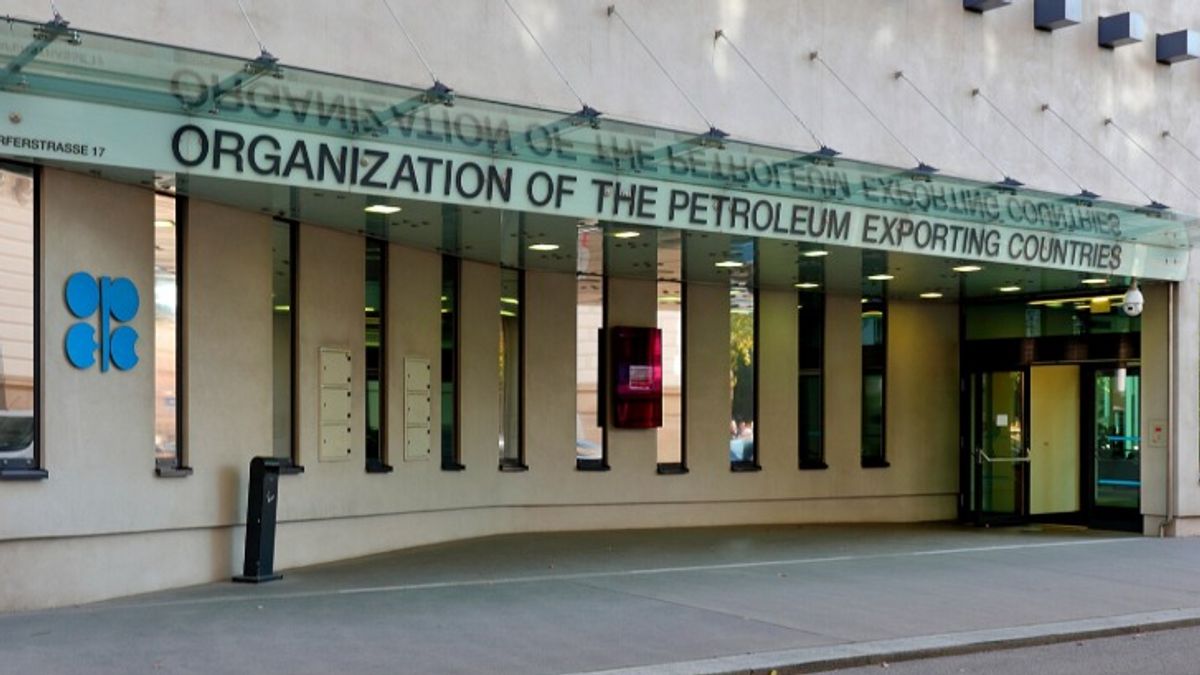


OPEC has cut its forecast for global oil demand for the second quarter of 2026 by 500,000 barrels per day. Citing an Arab News report that launched Reuters, Tuesday, April 14, the revision was made because the war in the Middle East began to put pressure on global oil demand growth.
In its latest monthly report, OPEC estimated that global oil demand in the second quarter averaged 105.07 million barrels per day. This figure is down from last month's projection of 105.57 million barrels per day.
OPEC said this downward revision applies to both OECD and non-OECD countries. The main cause is a temporary weakening of oil demand growth amid the ongoing situation in the Middle East.
Even so, OPEC has not changed its full-year oil demand growth projection. The organization assessed that the weakness in the second quarter could be covered in the second half of the year.
The same report also showed that Russia's oil production in March remained relatively unchanged. The country's output was recorded at 9.167 million barrels per day, up only 3,000 barrels per day from February. Arab News, citing an OPEC report, wrote that Russia was still able to keep its production stable despite facing Western sanctions and Ukrainian drone attacks on energy infrastructure, including major export routes in the Baltic Sea and the Black Sea.
On the other hand, Kazakhstan's oil production actually rose more sharply. OPEC recorded Kazakhstan's output last month increased by 251,000 barrels per day to 1.733 million barrels per day. The increase was supported by the recovery of production at the Tengiz oil field, which is the largest field in the country.
OPEC lowered its II quarter oil demand projection amid the war in the Middle East. However, in the same report, Russian production was relatively stable, while Kazakhstan's production increased.
Despite the downward revision of the second quarter projection, OPEC has not changed its forecast for oil demand growth for the full year. This shows that OPEC still sees the weakness in the second quarter as a temporary symptom, not a change in the overall direction of global demand.
The English, Chinese, Japanese, Arabic, and French versions are automatically generated by the AI. So there may still be inaccuracies in translating, please always see Indonesian as our main language. (system supported by DigitalSiber.id)


