

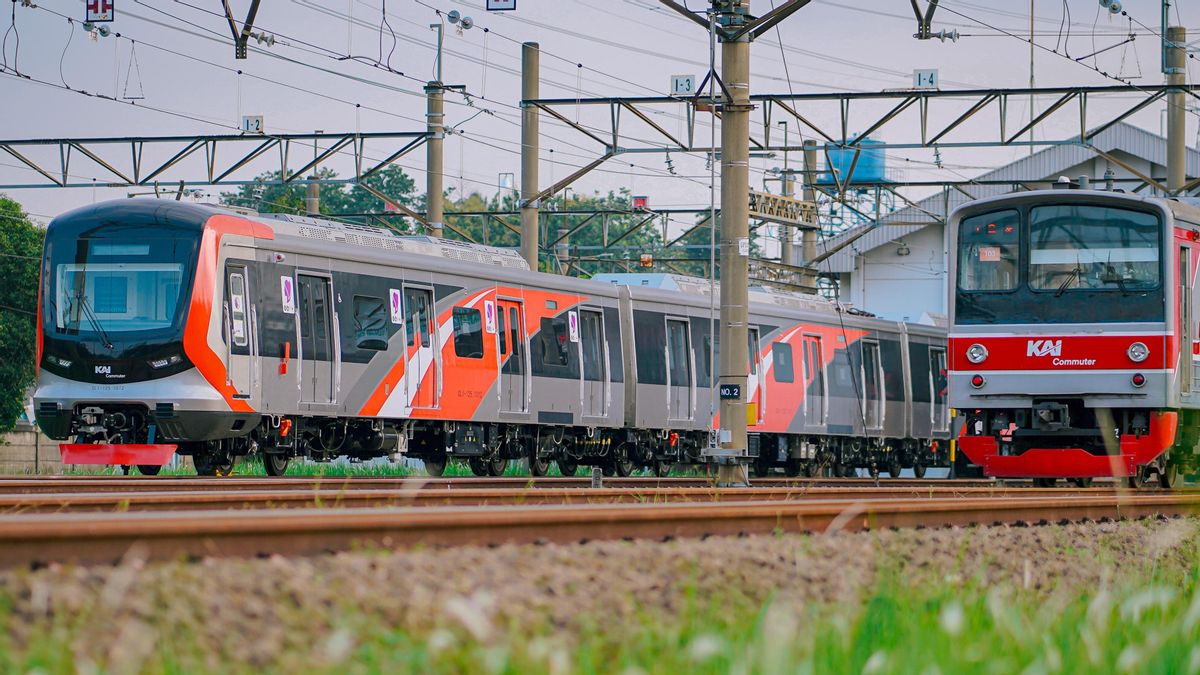


JAKARTA - The volume of passengers on the Cikarang Line KRL continues to show a significant increase trend as the community's mobility in the eastern Jabodetabek area expands. Until 2025, the number of users of this service was recorded to have reached 85.9 million people.
PT Kereta Api Indonesia (Persero) or KAI recorded this figure increased from 55.6 million users in 2022, to 71.6 million in 2023, then 84.4 million in 2024, before finally reaching 85.9 million in 2025.
This increase is in line with the increasing public demand for reliable, affordable, and capable mass transportation modes that can reach various activity centers, ranging from residential areas to industries.
KAI's Vice President of Corporate Communication, Anne Purba, said the trend reflected changes in people's travel patterns, which are now increasingly widespread and also cross-regional.
"People's travel is now wider. Many live in one area and are active or working in other areas. Transportation services need to follow these needs so that travel remains comfortable and affordable," Anne said in an official statement, Thursday, April 9.
In addition to the increase in the number of passengers, KAI also recorded an increase in the frequency of travel on the Cikarang Line KRL. If in 2015 there were 158 trips per day, now the number has increased to 281 trips per day in 2025.
The strengthening of these services is also supported by the development of infrastructure, including the electrification of the line from Tanah Abang to Cikarang which has reached 40.310 kilometers. This project is the result of collaboration between KAI and the Directorate General of Railways of the Ministry of Transportation.
On the other hand, community mobility is also expanding to the Cikampek and Purwakarta areas, which is reflected in the increase in the number of Walahar Express train users, which reached more than 4 million passengers in 2025. Meanwhile, the Jatiluhur train connection between Cikarang and Cikampek also recorded significant growth with the number of users reaching 1.19 million in 2025.
According to Anne, this trend is an important basis for the development of advanced services, including plans to expand the electrification of the line towards Cikampek so that it can accommodate the needs of the community more optimally.
"With an increasingly wide range of services, people can save travel time, have more schedule options, and stay connected to various activity centers such as industrial areas, trade centers, and daily workplaces," he explained.
This development is also in line with the government's policy direction in strengthening mass transportation connectivity as part of national development. President Prabowo Subianto previously emphasized the importance of the railway system to serve the mobility of the community more broadly.
In addition, the integration of transportation with residential areas is also being encouraged so that the public has more housing options that are still connected to mass transportation for housing development.
"Well-connected transportation is one of the keys to ensuring that people can live in more locations, without having to be far from their workplaces or activity centers," said Anne.
Anne said that the expansion of electrification to Cikampek is expected to open access to more areas, support community activities, and help form more scattered residential areas.
"KAI sees that this development needs to be continued gradually so that services can continue to follow the needs of the community. Support from various parties will accelerate the presence of wider services and reach more areas," concluded Anne.
The English, Chinese, Japanese, Arabic, and French versions are automatically generated by the AI. So there may still be inaccuracies in translating, please always see Indonesian as our main language. (system supported by DigitalSiber.id)


