
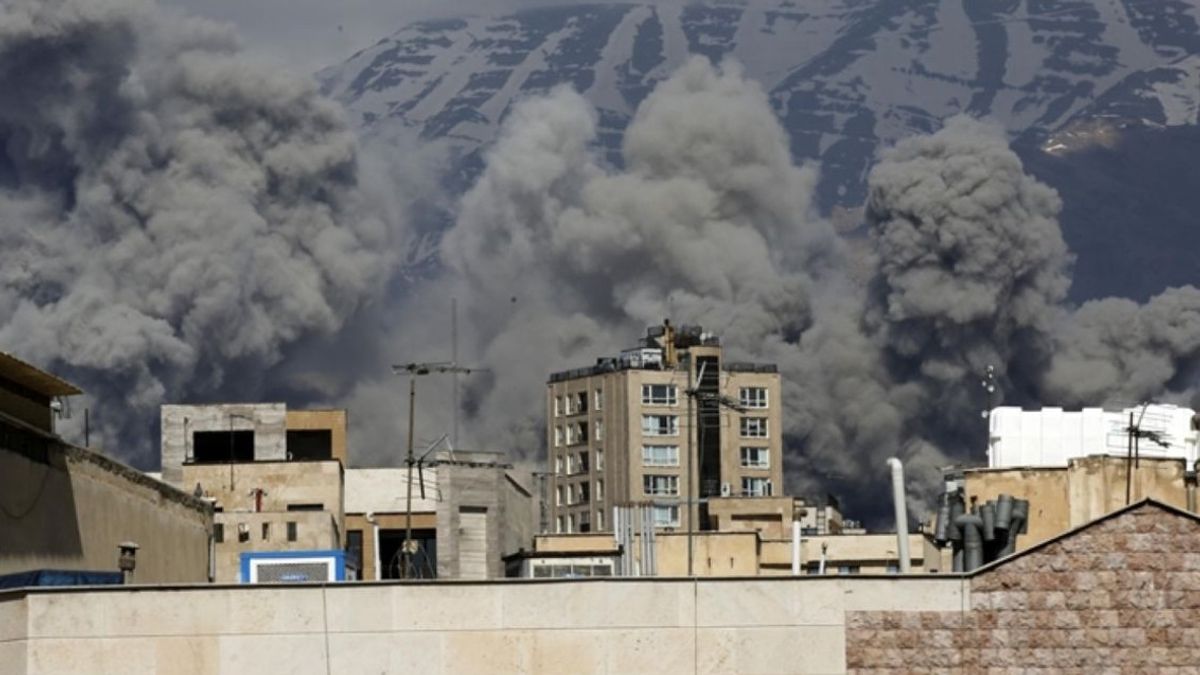


JAKARTA - Chairman of the Saudi Bilateral Committee of the Indonesian Chamber of Commerce and Industry (Kadin) Mohamad Bawazeer revealed that the war between Iran and the United States (US) supported by Israel has greatly disrupted economic activities in the Middle East (Middle East), especially in the Gulf region.
"I suggest that if this Gulf area is safe from attacks, then automatically trade is better," Bawazeer said in his statement in Jakarta, quoted by Antara, Saturday, April 4.
According to him, the impact of the Iran-US war has damaged economic activities in the Middle East region, ranging from ocean rates or basic tariffs for the cost of international shipping goods by sea, which have increased by approximately three times.
Then some shipping companies did not dare to issue booking numbers for fear of the risk of war, so they took a wait-and-see attitude. Some shipping companies traveled to avoid Bab-el-Mandeb (Red Sea) and turned through the African continent to enter through the Suez Canal (Egypt).
This causes the delivery time to be up to two months, whereas in normal circumstances it only takes 15-20 days to arrive at the Dammam and Jeddah ports.
In addition, there are thousands of containers that are stuck at the Jabal Ali Port because they cannot exit through the Strait of Hormuz, unless there are some shipping that can exit or enter the Strait of Hormuz with the approval of local authorities.
This of course is very disturbing for business conditions in Saudi Arabia, both finished products or raw materials for trade or industrial needs, and will definitely result in rising prices.
"So actually this condition is caused by unclear war conditions," said Bawazeer.
For information, the Minister of Trade (Mendag) Budi Santoso said that the escalation between the United States and Iran was considered potentially suppressing a number of Indonesian trade sectors, especially those directly related to energy and logistics costs.
Budi said the biggest impact would be felt if there was a global oil distribution disruption, including the possibility of closing the Strait of Hormuz. According to him, the energy sector would be the first to be affected.
He said the manufacturing sector was one of the most vulnerable. Indonesia's processing, which relies on energy for the production process, will face an increase in operating costs.
In addition, the increased production costs are considered risky to suppress business margins or drive up the price of goods. This condition has the potential to reduce the competitiveness of Indonesian products in the global market.
Furthermore, the export sector will face double pressure, namely an increase in production costs and a weakening of global demand due to economic uncertainty.
The English, Chinese, Japanese, Arabic, and French versions are automatically generated by the AI. So there may still be inaccuracies in translating, please always see Indonesian as our main language. (system supported by DigitalSiber.id)
Most Popular Tags
#Prabowo Subianto #donald trump #2026 World Cup #Febrie Adriansyah #8791Popular


