



JAKARTA - Food spending in the UK is threatened to swell again. After having declined, food inflation is now expected to jump again to almost 10 percent this year, and the Iran war is said to be the direct trigger.
Quoted from The Independent, Wednesday, April 1, the Food and Drink Federation (FDF) raised its 2026 food inflation projection from 3.2 percent to a range of 9 to 10 percent. FDF represents 12,000 food and beverage manufacturers in the UK. According to the agency, the largest spike is expected in the second half of this year.
The figure brings Britain close to the worst time during the cost of living crisis. FDF data shows that food inflation reached 10.9 percent in 2022 and even 14.6 percent in 2023. After falling to 2.7 percent in 2024 and 4.2 percent in 2025, this year was originally expected to be calmer. Now the direction has turned.
The FDF called the current situation "unprecedented and difficult to predict", but one thing was clear: food prices would rise again in the coming months.
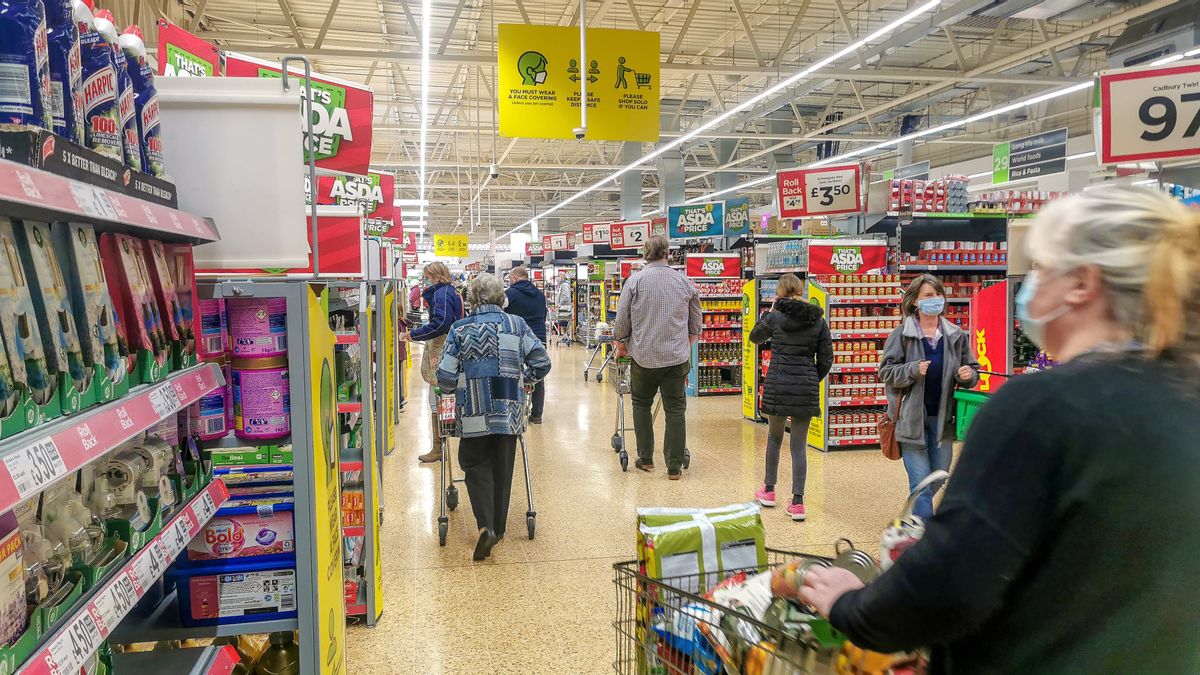
The impact on households is not small. According to a report by The Independent, based on a number of estimates, average shopping bills could increase by around 588 pounds sterling per year. The price monitoring site Which? noted that at the beginning of 2026, a shopping cart containing an average of 89 products was priced at 161.56 pounds at Aldi and 217.02 pounds at Waitrose. If food inflation hits the midpoint of the FDF projection, namely 9.5 percent, the value could rise to 176.91 pounds at Aldi and 237.64 pounds at Waitrose.
The confused.com research which also showed the average British household spends £119 a week on food shopping, or £6,188 a year. If it rises by 9.5 per cent, the additional cost is £588 a year, or a total spend of more than £130 a week.
The problem is not just on supermarket shelves. For manufacturers, pressure comes from many directions at once. Solar for agricultural machinery is said to have risen by 80 percent since the war began. Fertilizer costs are threatened to rise further, supplies are dragged along, and many shipments to the Middle East have been canceled. Even though British companies routinely export cheese, cereals, chocolate, and other products to the region.
Head of FDF's economist, Liliana Danila, said the food and beverage sector had felt the direct shock of this geopolitical situation. According to him, manufacturers face a surge in energy bills, rising transportation and packaging costs, and major supply chain disruptions simultaneously.
"The food and beverage sector has already felt the strong impact of this geopolitical shock. As one of the industries that use a lot of energy in the UK, producers are facing ever-increasing energy bills, rising transportation and packaging costs, and disruptions in the main supply chain," he said, quoted from The Independent. "The current situation is unprecedented and difficult to predict. However, given the magnitude and rapid increase in these costs, and even though companies have tried hard not to pass on the price increase, it is clear that food inflation will rise in the coming months," he continued.
FDF said its new projection was made on the assumption that the Strait of Hormuz could be reopened to cargo traffic in two to three weeks, as Donald Trump said this week, and that most commodities would return to normal within a year. If that is missed, the price pressure could be heavier.
The British government, in this case, the British Finance Minister Rachel Reeves is scheduled to meet with supermarket leaders, including Sainsbury's and Tesco, to assess the impact of rising prices on the cost of living.
The English, Chinese, Japanese, Arabic, and French versions are automatically generated by the AI. So there may still be inaccuracies in translating, please always see Indonesian as our main language. (system supported by DigitalSiber.id)
Most Popular Tags
#Prabowo Subianto #donald trump #2026 World Cup #Febrie Adriansyah #8791Popular


