

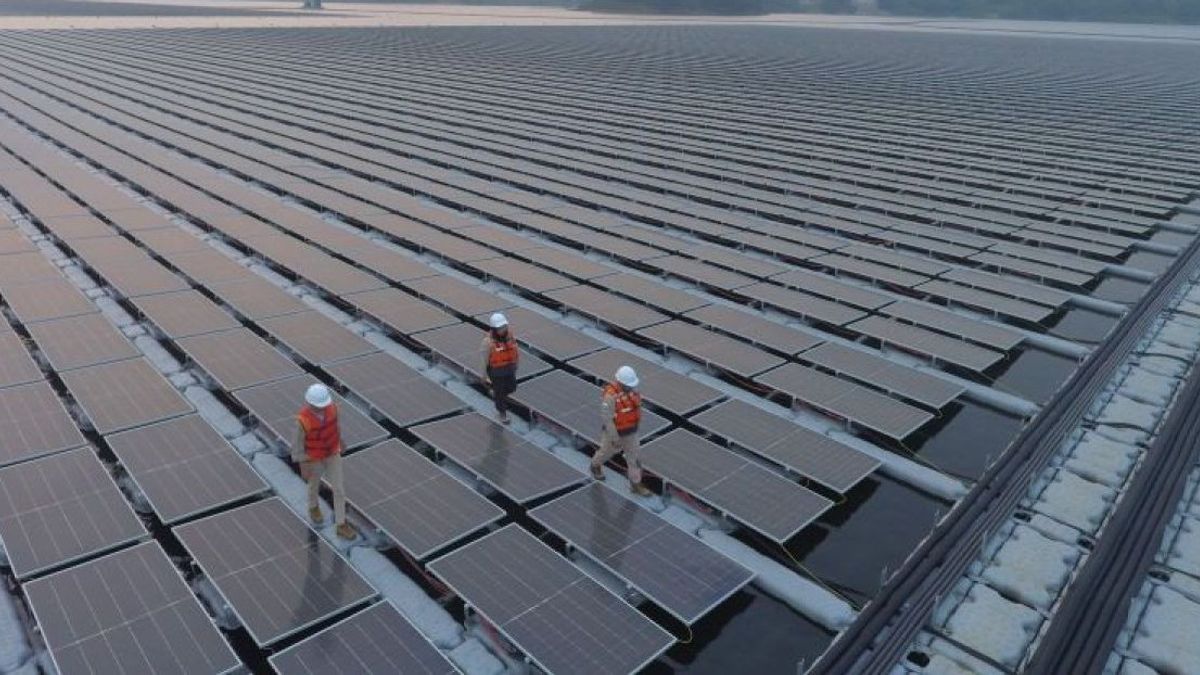


China is beginning to rely on market-based reforms to maintain energy resilience amid rising new and renewable energy (EBT) capacity, especially solar and wind power, which are considered to be increasingly putting pressure on the stability of the electricity grid.
Based on a report by China Daily quoted Wednesday, March 25, the head of the China National Energy Administration, Wang Hongzhi, said the government wants to build an integrated national energy market and use price signals to promote a green transition while maintaining reliable energy supplies.
According to Wang, the main challenge ahead comes from the rapid expansion of renewable energy. As the share of solar and wind energy increases in the energy mix, the unstable nature of its supply puts pressure on the electricity grid.
Therefore, China wants to use market mechanisms and price signals to direct investment to more flexible base load support resources and regulators. This step is considered important to maintain supply reliability while encouraging the gradual replacement of fossil fuels.
The policy will be part of China's 15th Five-Year Plan for the period 2026-2030. The goal is to overhaul the electricity, oil, gas, and coal market systems to connect in a single national energy market.
The Chinese government also wants to encourage what it calls "new quality productive forces" in the energy sector. Through a pricing system that reflects technological advances and efficiency, capital is expected to flow into important innovations such as the integration of artificial intelligence with energy, smart microgrids, and green hydrogen.
The foundation for this, according to data from the CNPC Economic and Technology Research Institute reported by China Daily, is beginning to be seen. China's domestic energy production has grown an average of 3.6 percent per year in the past decade. This increase has also contributed to an energy self-sufficiency rate of around 0.5 percentage points per year.
The institute's president, Lu Ruquan, said China's energy self-sufficiency is expected to reach 83.1 percent by the end of 2025. In the same period, China's new installed wind and solar power capacity has exceeded 100 million kilowatts for six consecutive years and is expected to account for more than half of the total global capacity by the end of 2025.
The problem China is now facing is no longer just adding solar and wind plants. What is more complicated is to keep the electricity from the ever-increasing EBT from entering the system without disrupting the supply.
The English, Chinese, Japanese, Arabic, and French versions are automatically generated by the AI. So there may still be inaccuracies in translating, please always see Indonesian as our main language. (system supported by DigitalSiber.id)
Popular


