
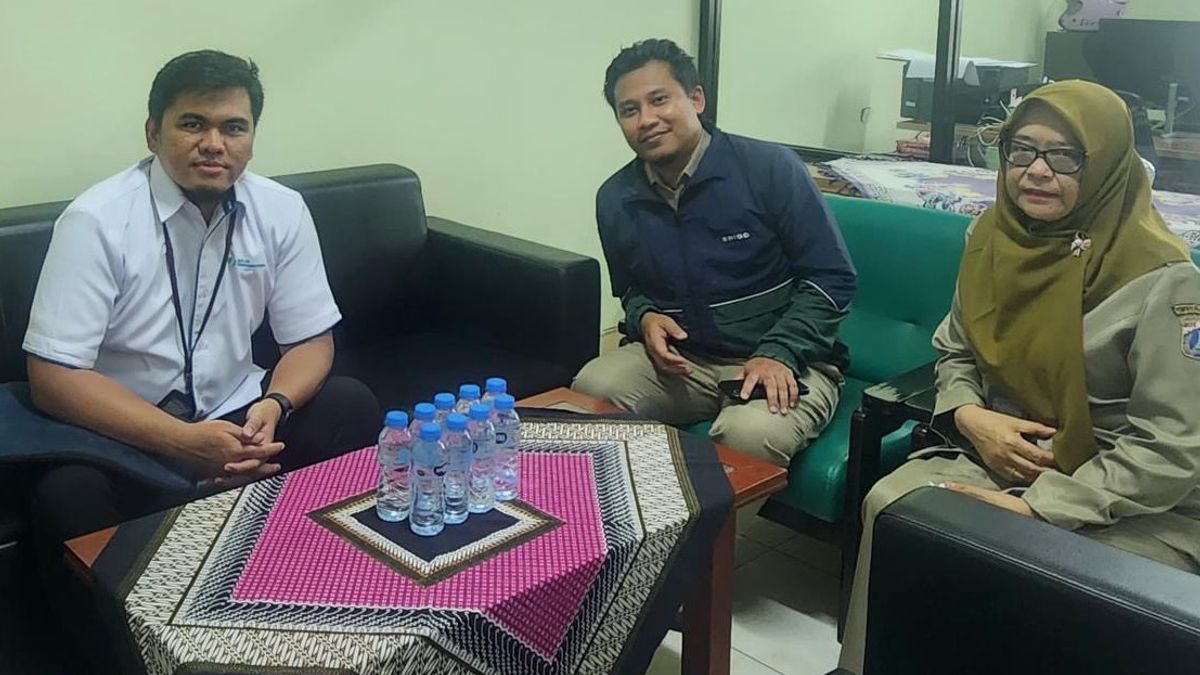


JAKARTA - The government continues to strengthen protection for workers in the construction services sector through the optimization of the BPJS Employment program. Given that this sector has a high risk of occupational accidents, comprehensive and sustainable social security protection is an urgent need for workers.
Head of the BPJS Employment Jakarta Cilincing Branch Office, Rita Mariana, emphasized that every construction project has a legal obligation to ensure the safety of its workers.
"All construction projects, both small and large scale, are required to register all their workers in the employment social security program. This is in line with national regulations which require employers to provide protection against workplace risks," said Rita, in a statement, Tuesday, February 24.
The construction sector is known to have complex work characteristics, such as working at heights and using heavy equipment. To accommodate this, BPJS Employment implements a value-based and project-based protection scheme.
"Through this scheme, daily wage workers and contract workers still have full access to protection benefits. We want to ensure that no one worker is neglected during the project," added Rita.
Until now, BPJS Employment Jakarta Cilincing has recorded a positive trend in the coverage of construction workers. A total of 21,545 active workers in the construction services segment have been officially registered. These workers are protected in two main programs, namely the Occupational Accident Insurance (JKK) and Death Insurance (JKM).
In addition to providing a sense of security for individuals, compliance with this program is considered to increase the credibility and professionalism of the company. With clear protection, the potential for industrial relations conflicts due to work risks can be effectively minimized.
To maintain this consistency, BPJS Employment continues to strengthen supervision and socialization by partnering with ministries, institutions, local governments, and construction associations throughout the region.
The English, Chinese, Japanese, Arabic, and French versions are automatically generated by the AI. So there may still be inaccuracies in translating, please always see Indonesian as our main language. (system supported by DigitalSiber.id)
Most Popular Tags
#Prabowo Subianto #donald trump #Febrie Adriansyah #8791 #giias 2026Popular


